
White House Public Relations

The Presidency of the United States is probably the most important job in the country. And the person who represents the President to the press, and to the public, is the press secretary—likely the most important (and most difficult) public relations job in the country.

Last weekend’s shakeup in the White House resulted in the resignation of Sean Spicer as press secretary, with Sarah Huckabee Sanders taking his place. This is not a job for the faint of heart. While Spicer, who was the butt of numerous SNL jokes, had a brief tenure, five previous press secretaries served even shorter terms.

As only the third woman to fill the role, Sarah Sanders faces a challenging job as the primary spokesperson for this highly controversial, and some would argue highly undisciplined, administration. The first female press secretary was Dee Dee Myers who served under President William J. Clinton. The second female press secretary was Dana Perino, who served out the final years of the presidency of George W. Bush after the sudden death of Tony Snow. Perino’s stint as the President’s spokesperson is of particular interest because she is a 1993 graduate of the mass communications department at CSU-Pueblo (University of Southern Colorado at the time). Now a TV commentator for Fox News, Dana Perino is arguably the most successful graduate of our department.

Public Relations departments and PR practitioners can be found at every level of the job market and in every kind of industry. Private sector businesses, non-profit organizations, and governmental agencies all need professional communicators who understand the power and influence of the media. The field needs people who are effectively in both spoken and written communications, people who know how to function at every level of communication from face-to-face to mass media, and who can do so with the ethical and moral judgement necessary to wield the power of influence for good.

The mass communications department at CSU-Pueblo (formerly USC) is proud of all of our graduates who perform ably in their professions. Some serve faithfully for years in jobs that never gain public recognition, while others, like Dana Perino, experience the scorching heat (and the recognition) that comes from standing in the brightest of spotlights.
Advice from Perino to Sanders


Influencer Marketing: It’s Not Just for Celebrities Anymore

It used to be that you had to be a bonafide celebrity to land a celebrity endorsement deal. Win a gold medal, release a gold album, or star in a blockbuster movie and advertisers would line up asking you to pitch their products. The association principle of advertising works by associating a brand, product, or service with an intangible, but desirable, positive attribute. And celebrity status is a particularly attractive association that many brands crave.

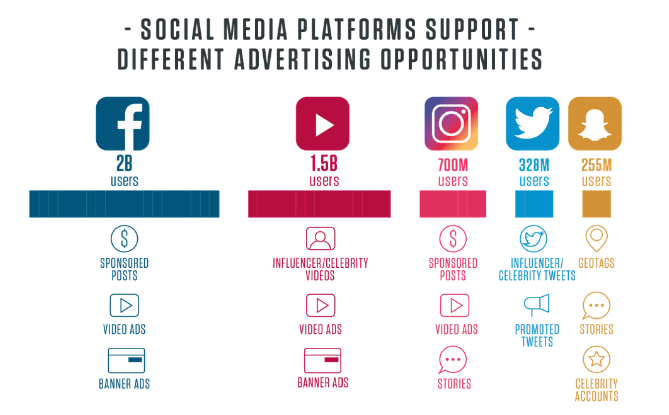
Things have changed. Celebrity endorsements have given way to influence marketing. If you have influence, no matter how you’ve earned it, you can cash that in for…well, cash. You’ve got thousands reading your [insert hobby here] blog on a daily or weekly basis? …great, how about mentioning our brand and we’ll send you some free product.  One hundred thousand subscribers to your beauty secrets YouTube channel? Fantastic…how’d you like to represent our product line for a nice monthly salary? A million or so followers on Twitter? We need to talk!

The reason why this is such a thing is because of the power and reach of social media. At the same time, traditional advertising has been suffering from shrinking audiences and diminishing credibility. We’re more likely to believe a friend’s recommendation than an advertising pitch-man’s exaggerated promises. Word of mouth (or online word of “mouse”) is where it’s at. This graphic is from an informative post by Aaron Orendorff on the Mashable website.


The title of this blog suggests that this new form of marketing is not just for celebrities anymore. Maybe the point is that the barrier to becoming a celebrity is much lower in this digital, social-mediated landscape. However, if you want to play, you need to know the rules. The Federal Trade Commission (FTC) recently published guidelines governing endorsement deals and has been cracking down on influencers engaging in unethical behavior.

Media Conglomerates, Comedians, and Political Influence

If you’ve watched John Oliver’s show Last Week Tonight you know that he has a knack for discussing pithy issues by injecting more than a smidgen of sarcasm and irreverence. His show last week was about Sinclair Broadcast Group, a media company that owns numerous local TV stations and which is poised to grow even larger by buying up the Tribune Media network of stations.

Here’s the show.  (CAUTION: language)

You’ve already seen how Clear Channel became the powerhouse of radio consolidation and how that led to cookie-cutter formats and a loss of local control. That is part of what is causing anxiety for those watching the Sinclair deal unfold.

But there is another factor in this equation. Sinclair Broadcast Group is known for holding conservative political positions. In a media world that tends to skew to the liberal side of the political spectrum this is giving some media pundits a severe case of heartburn.

While cable TV news networks have historically leaned to one end or the other of the political spectrum (e.g. Fox News leans right while CNN and MSNBC lean left), local television stations and their news programs historically reflect the political diversity of their local viewers. It is unusual for local TV news to take a clear position on a politically hot-button issue for the obvious reason that they stand to alienate a significant portion of their viewers, which is bad for ratings, which is bad for the bottom line.

The fact that much of John Oliver’s criticism of Sinclair is delivered with a heavy dose of alarmism suggests that Oliver is himself well to the left of not just Sinclair but a significant segment of the American public. Oliver is not alone. He is joined on the left by former comedic journalist Jon Stewart and current late-night comic Stephen Colbert (both alumni of Stewart’s The Daily Show).  All three (as well as many other comedians throughout history) have been effective messengers for various progressive political causes.

Media companies and media stars can exert political influence overtly or covertly. But if there’s one thing that comedians have shown time and time again it is that getting us to laugh at the absurdities of the target of our scorn may be the most powerful political weapon of all.


css.php