Computer Bang for the Buck

The phrase “bang for the buck” refers to performance relative to cost. Higher bang for the buck means that you get more performance for less cost. For computer technology, this has been a logarithmic curve of greatly increasing performance with a falling price tag.

The increasing performance has largely been attributed to the gains in processor speed and reduction in size of integrated circuits, aka microchips. You may have heard of Moore’s Law, named for Gordon E. Moore of Intel. Moore predicted in 1965 that processor speed would double every 1-2 years for the foreseeable future. It has been said that if automotive technology followed the same trajectory as microchips, the average car would travel at 300,000 mph, get over 2 million mpg, and cost only $0.04 to make.

I recently decided to organize my many hard drives and was reminded of how the cost of storage has fallen at a remarkable rate over the years. My first external hard drive, purchased in the early-mid 1990s, held 1 GB (yes, gigabyte) of data at a cost of $1,000. Here’s what more than 100 TB of storage looks like today.

More than 100 TB of removable storage

If this amount of storage was purchased at early 1990s prices, it would cost $100 million! If you look back further, the numbers are even crazier.

Now, think about your smart phone and the processing power that it contains. Your phone has millions of times more computational power than the computers used in 1969 by the Apollo scientists when they put a man on the moon. If you were to pay for that much computing power at prices from just 30 years ago, you’d have to spend 10s of millions of dollars. I know the cost of a new smart phone is pretty steep when you’re trying to pay rent, tuition, your streaming media subscriptions, and an occasional trip to Chipotles…but it really is a bargain when you look at it through the lens of computer history.

Stern & Depp is not a Law Firm

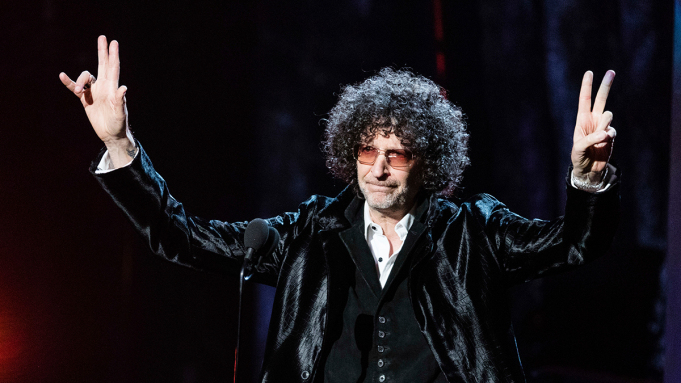
Howard Stern and Johnny Depp are two familiar names in the media business…and they’re both making news. Stern, the self-proclaimed “King of All Media” just signed a new contract for SiriusXM satellite radio for something like $120M/year for 5 years. That’s a lot of $$ for a radio host who talks smack for a living. According to the Hollywood Reporter, Stern announced the deal on his show yesterday morning…

Howard Stern acknowledges the audience at the 2018 Rock and Roll Hall of Fame Induction Ceremony at Cleveland Public Auditorium, Saturday, April 14, 2018, in Cleveland. (Photo by Michael Zorn/Invision/AP)

“Fifteen years ago, I joined SiriusXM, a fledgling group of broadcasters. I had been in a toxic relationship with terrestrial radio,” Stern said. “And no matter how well I treated the medium, no matter how successful I made them, they abused me. Going to SiriusXM liberated me. I felt like Tina Turner freeing myself from Ike.”

Stern has never been at a loss for words…including spicy words that are much more welcome on satellite radio than terrestrial radio where FCC regulations placed some restraints on his speech.

But whether Stern is worth $600M is yet to be proven. Again, according to Hollywood Reporter, “…a recent report estimated that 15 percent of Stern listeners could cancel their SiriusXM subscriptions if he left the company, ‘implying a potential subscriber loss of 2.7 million.’”

Johnny Depp is also in the news, but no doubt wishes he were not. Depp had filed a defamation lawsuit against the British tabloid The Sun for an article describing him as a “wife beater.” According to the ruling judge, as reported in the Hollywood Reporter, “The claimant has not succeeded in his action for libel. Although he has proved the necessary elements of his cause of action in libel, the defendants have shown that what they published in the meaning which I have held the words to bear was substantially true.” The burden of proof for celebrities to win defamation lawsuits has always been a challenge, but in cases where the accusations are true, they’re nearly impossible. Depp plans to appeal.

The times, they are a-changin’

Bob Dylan, one of the most iconic singer, songwriters of our era, is cashing in. Today it was announced that Dylan was selling his song library to Universal Music Group for upwards of $200M (some are reporting closer to $300M). With more than 600 songs spanning a career of nearly 60 years, Dylan’s prolific contribution to folk, pop, and rock music is unmatched. You don’t have to take my word for it: Dylan is the only songwriter in history to win a Nobel Prize for Literature, “for having created new poetic expressions within the great American song tradition.”

The massive deal is a great example of why copyright of intellectual property exists. Without copyright protection, Dylan’s musical accomplishments would be worth a mere fraction of its market value. And without the financial incentives provided by copyright protection, artists would be less motivated to create original work.

It does seem counter-intuitive that the counter-culture icon would sell out to a corporate media conglomerate. Universal Music Group is owned by French media oligopoly Vivendi. According to NPR, “[the company] will collect money any time another musician covers any of those songs, and it will earn revenue for allowing the songs to be used in commercials and movies as well as when the songs are streamed, sold commercially on such formats as CDs, or broadcast.” But Dylan has always resisted labels…even the label of non-conformist.

Again according to NPR, citing Universal, “Dylan’s songs have already been recorded by other artists more than 6,000 times, including such famous versions as Jimi Hendrix’s cover of ‘All Along the Watchtower‘ and Guns N’ Roses’ version of ‘Knockin’ on Heaven’s Door.‘”

css.php