YouTube is turning 15, and to celebrate, the Morning Brew put together this nice package of stats:
It’s been 15 years to the day since YouTube cofounder Jawed Karim uploaded the platform’s first-ever video, 18 seconds of him pontificating about elephant trunks at the San Diego Zoo. Here’s a brief timeline on what’s happened since:
2005: YouTube launches its public beta in May, and with $3.5 million from Sequoia Capital it goes beyond beta by the end of the year.
2006: Google acquires YouTube for $1.7 billion.
2007: “Charlie bit my finger” becomes the first viral video, proving babies are cuter than cats, and YouTube goes mobile-friendly the same month the first iPhone hits stores.
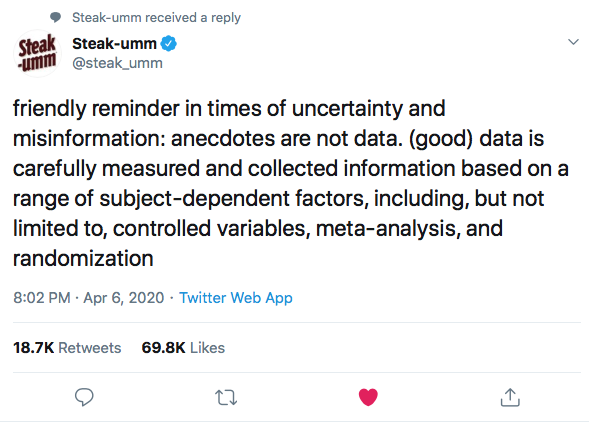
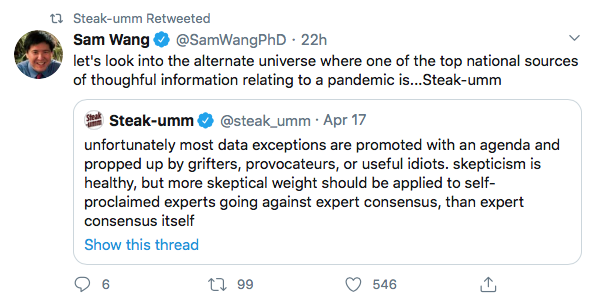
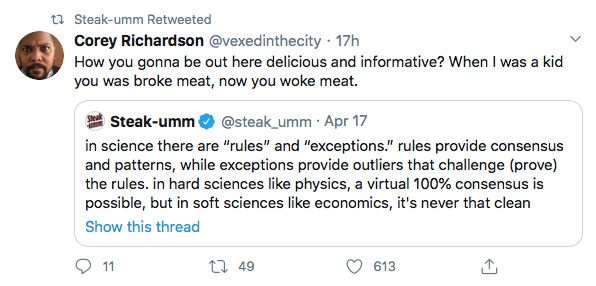
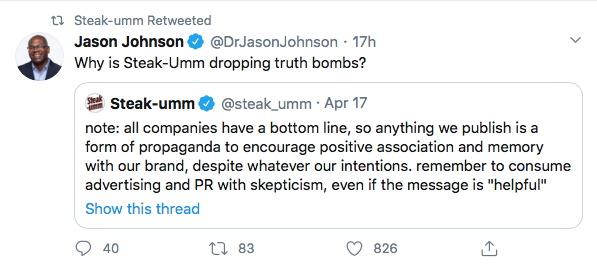
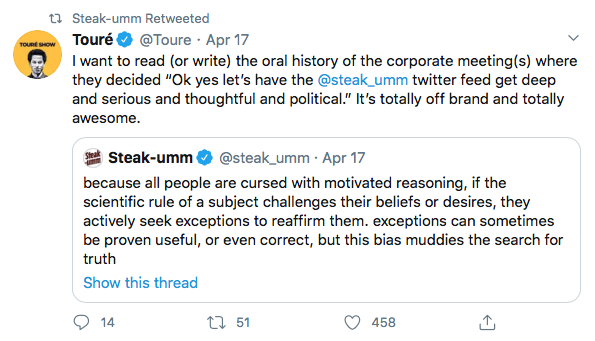
If you’re not following @steak_umm on Twitter, you’re missing out on some amazing takes on promoting thinly sliced beef. Their tagline might as well be, “come for the social media marketing, stay for the science.”
Here’s just a sampling of some of the tweets, and responses from readers:
When your product is thinly-sliced beef, delivering your product wrapped in scientific wisdom and philosophical musings turns out to be not such a terrible idea.
It is still early to be performing a critical analysis of the handling and reporting on the Covid-19 pandemic of 2020. But that won’t stop others from doing so…so let’s take a minute to reflect on how journalists are doing, and whether there are lessons to be learned.
Lesson #1: most journalists are woefully unprepared to report on complex medical issues under crisis-induced deadlines. Economic realities on the ground mean fewer reporters overall, and fewer with the kind of specialized training needed when reporting on the most complicated topics, e.g. science/medicine, international policy, and economics, all of which are part of this complex story. That’s why we need more specialized journalism outlets like Stat to turn to for expert reporting.
Lesson #2: experts consulted by journalists were either intentionally or unintentionally misreporting the data, and the level of skepticism by journalists was insufficient. Taking the word of China’s authoritarian leadership, the World Health Organization, and our own medical experts and policy leaders has turned out to be, on some level, a mistake.
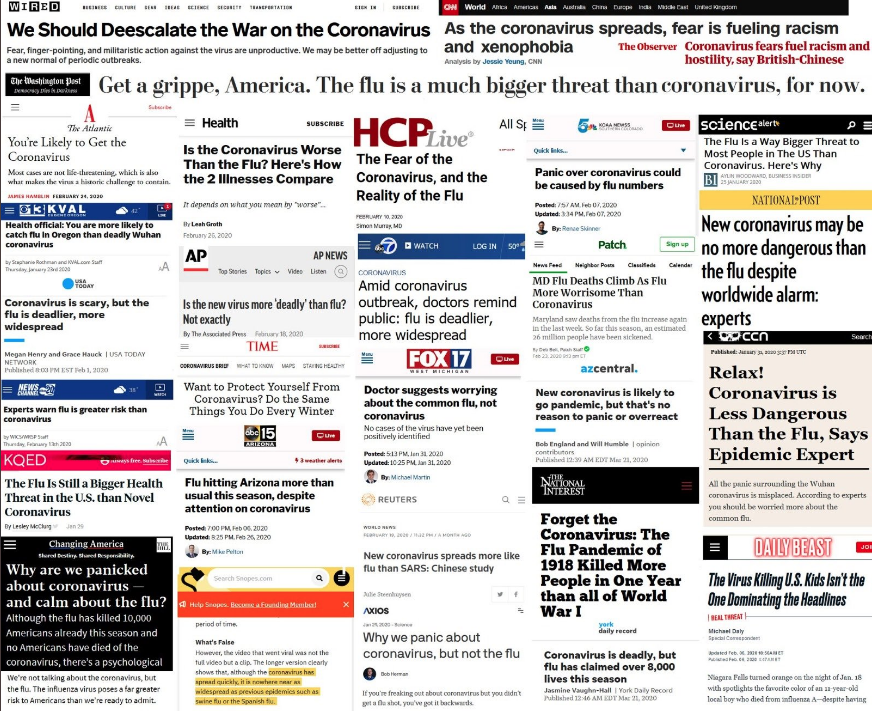
Lesson #3: political partisanship has clouded the reporting. The hyper-partisan climate in our country, and the partisan divide that separates news consumers into left/right echo-chambers, has made it extremely difficult to separate fact from opinion. The collage below was put together for partisan reasons by someone who was trying to deflect the current blame game about “who knew what and when did they know it.” It is easy to see how bias creeps into reporting when so much is at stake in an election year.
Collection of dubious news headlines
There are plenty of additional lessons to be learned, and there will be plenty of time to learn them once the crisis has been averted. But for now it would do us all well to have a bit more humility when confronting what we don’t know, and a bit more skepticism when “experts” declare their “truth” about this deadly pandemic.
UPDATE: This quote from Recode captures another dilemma facing journalists.
This core challenge for journalists won’t go away after the pandemic: There are always going to be threats that could eventually lead to disaster, but most of them don’t. If we holler every time we see one, we’ll be wrong and no one will listen to us. If we don’t holler when there’s a real one, we will have let down our audience.
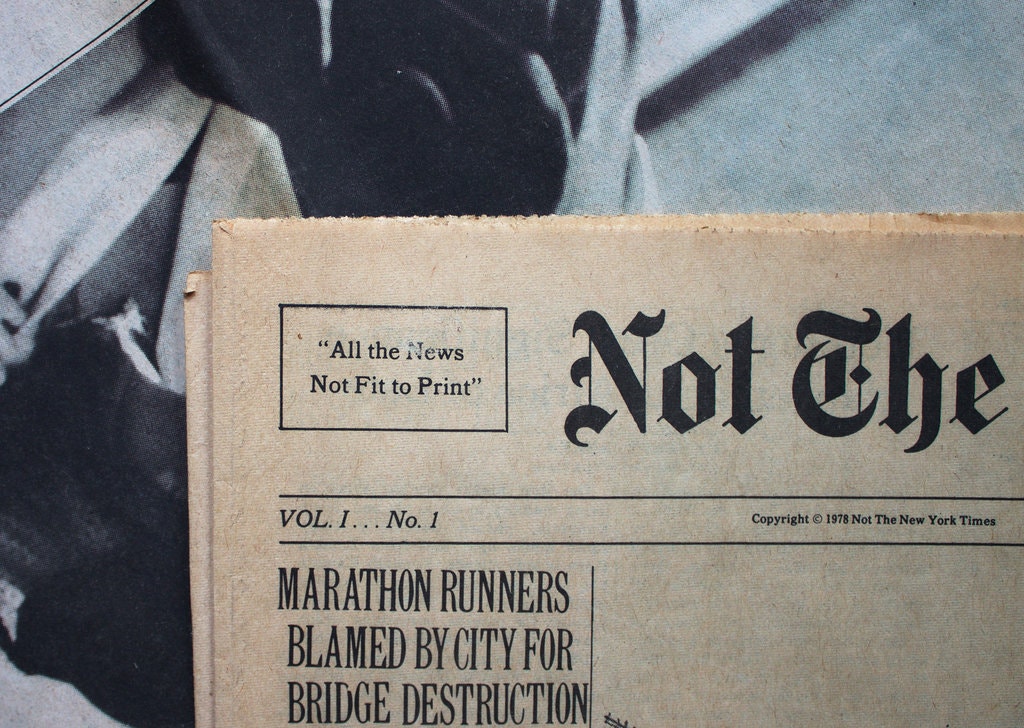
According to “fake new” expert Claire Wardle, satire or parody is one of the less harmful forms of fake news. So we shouldn’t be too hard on the pranksters who decided to publish an issue of Not the New York Times in October of 1978, nearly two months into a strike by pressmen that shut down the paper. According to the “real” New York Times,
The parody featured three full sections, 24 joke advertisements, 73 spoof articles and 155 fake news briefs, all meticulously edited to mimic The Times’s style. Even the thick curls of the font used on the front page and the neat spacing of the headlines exactly replicates those of the real paper.
While the “fake” newspaper mimicked the real newspaper in almost every way, there were plenty of cues that all was not right. For example, the slogan in the upper left corner was slightly modified to read, “All the News Not Fit to Print.”
It just goes to show that parody and satire have always been a way to blow off a little steam, and even make a point. Hopefully we can have a good laugh now and then, and not loose our sense of humor when the joke’s on us!