Section 230 is Under Attack

Section 230 of the Communications Decency Act, a law passed during the Clinton administration, is under attack from both the left and the right. President Trump wants to revise Section 230 because of what he believes is unfair throttling of conservative news by liberal tech platforms. And liberal legislators want to revise Section 230 to make it more difficult to post “hate speech” on these same platforms.
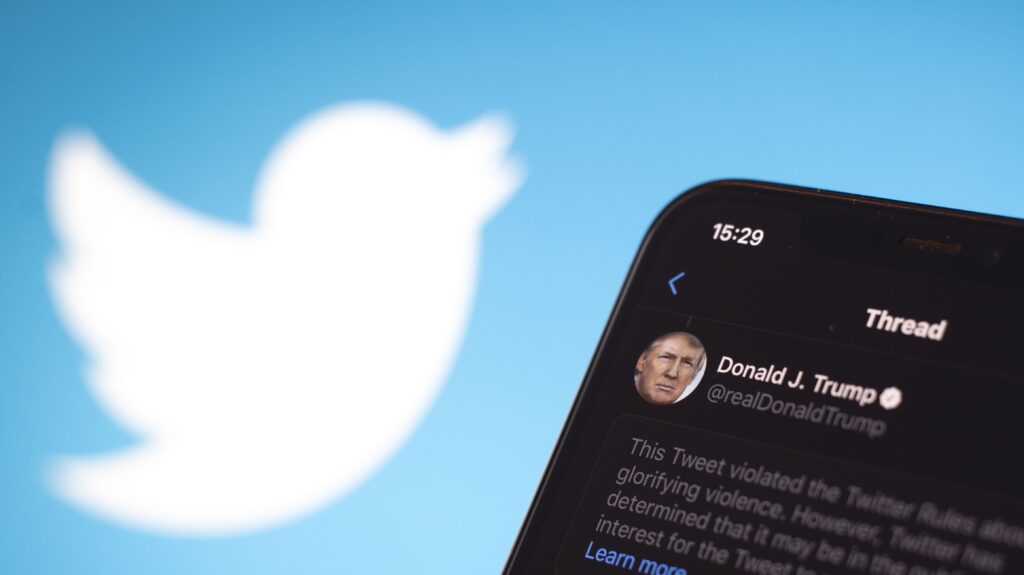
Twitter CEO Jack Dorsey and Facebook CEO Mark Zuckerberg have been blamed for everything wrong about these leading social media platforms. We could debate whether they deserve the blame, but we can’t deny that they are caught between a rock and a hard place. One one hand, they love Section 230 because it removes corporate responsibility for content published on their platforms by users. On the other hand, they worry about the future of a platform that could becomes a free-for-all without any ability to control the most poisonous content. They want to be free to limit obscene pornography, dangerous speech, libel, and other content not protected by the 1st Amendment, but they don’t want to be responsible for damage that might be caused by speech that comes close, without crossing, the line. According to the Recode website…

FCC Chairman Ajit Pai announced that his agency would “move forward with a rulemaking to clarify” the meaning of Section 230, which gives internet platforms like Facebook and Twitter immunity from lawsuits over content their users provide. That is to say, if someone defames you in a tweet, you can sue the Twitter user but not Twitter itself. This 25-year-old law is what allows websites that rely on third-party content to exist at all. It also allows those sites to moderate that content as they see fit, which has been a source of ire for conservatives who believe they are being censored when Facebook bans them, YouTube demonetizes them, or Twitter appends fact-checks to their tweets.

The most recent fuss over Section 230 involves Hunter Biden’s laptop that was left with a computer repair shop. The shop owner turned the contents of the hard drive over to an attorney with connections to former NYC major Rudy Giuliani, who turned the information over the the New York Post, a tabloid newspaper with a less-than-sterling reputation. The last-minute release of Hillary Clinton’s emails by Wikileaks, (amplified by James Comey and the FBI), just days before the 2016 election is believed to have been a factor leading to the election of President Donald Trump, and social media platforms don’t want to facilitate a repeat of that outcome. Twitter prevented sharing of the New York Post’s stories based on the idea that the data was obtained by hacking, (not technically accurate), but a few days later apologized for not communicating more clearly and then reversed their policy. Facebook continues to restrict sharing on their platform because they claim that they are unable to verify the accuracy of the claims alleged by the NY Post.

As you can see, there is no easy solution to this dilemma…and many other current debates. Facebook just recently announced they will take a tougher stance on holocaust denialism, anti-vaccine posts, and QAnon conspiracy pages. But this is a slippery slope for platforms. Once you begin deciding what is true and appropriate and permissible, you open yourself to criticism from all sides.
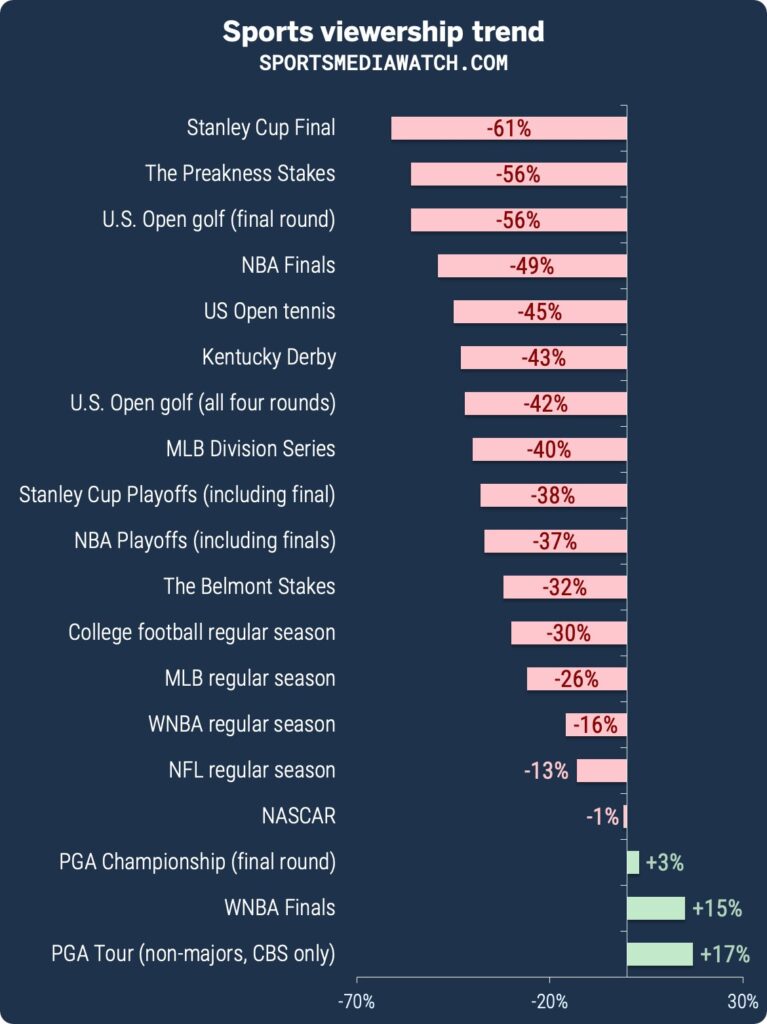
Pro Sports TV Viewership Down

There has been plenty of speculation about why viewership has been down for professional sports this summer and fall. With just a few exceptions, see the chart below, viewers are NOT spending their quarantine time tuning into professional sports.

There are plenty of theories about the collapse of viewership starting with the fact that all of the sports were shifted from their regular seasons. In some cases playoff games from one sport were scheduled across from games from another sport. In fact the NBA championship game between the Lakers and the Heat had to compete with an NFL game between the Seahawks and the Vikings.

Another theory is that the politicization of professional sports has taken a toll on viewers who their sports to be a distraction from the hash reality of life. Social unrest and BLM protests following cases of police brutality became a cause for NBA players and many of their fans. But while many fans may agree with the political stand, they may also want to separate their politics from their sports viewing. The argument against this theory is that sports that have not made strong political statements have also seen lower numbers.

Still another theory is connected to the lack of fans in the stands. According to this theory, TV viewers subconsciously feel this as a statement about reduced importance of the games. Fewer/No fans = low energy = less interest.

What do you think? And if you’re not watching…why not?

Microtargeting: Political Ads Just for You

I’m sorry to bring up political ads…we’ve all seen more than enough. But we have a few more weeks to go, so better to be a savvy consumer than an unwitting victim of targeting. Here are a few steps

  1. Know that you’re being targeted
  2. Know that disinformation and misinformation is widespread
  3. Fact check political ads before believing them
  4. Be thoughtful, be informed and be aware (be skeptical, not cynical)

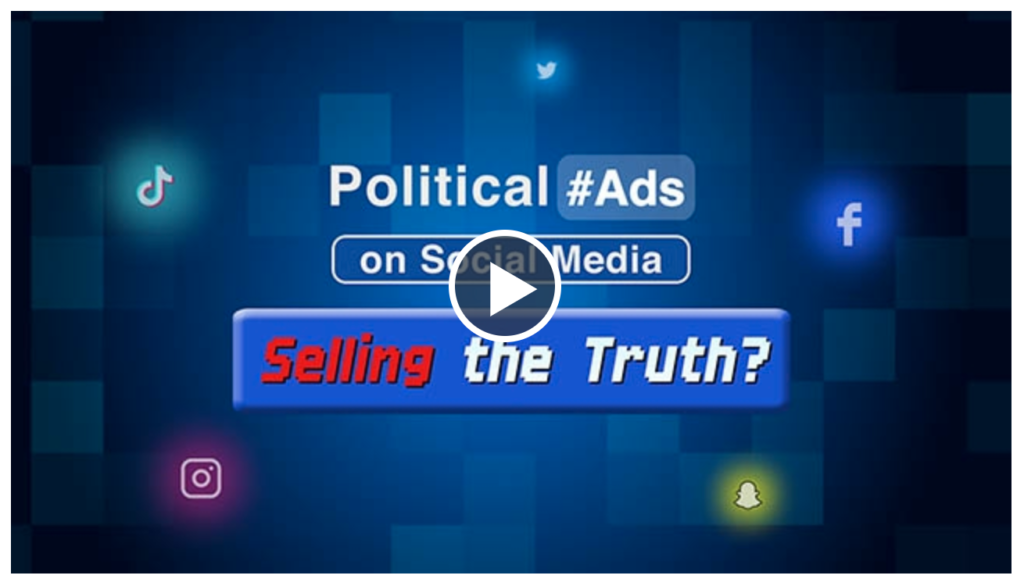
Here’s a video with more info…

https://www.commonsense.org/education/videos/political-ads-on-social-media-selling-the-truth

Is Twitter’s Cropping Algorithm Racially Biased?

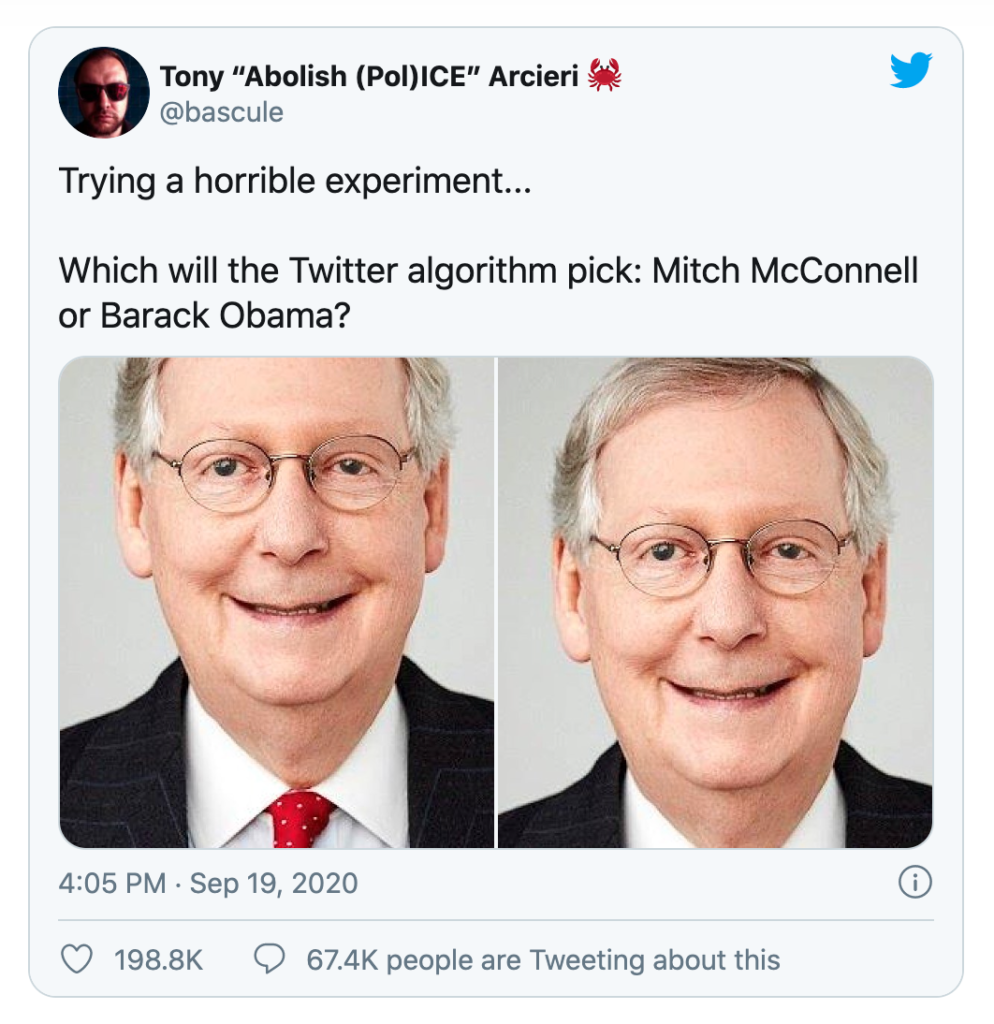
Recent reports are suggesting that the algorithm that controls image cropping on the Twitter app does not respond to images of dark-skinned people in the same way it does for light-skinned people. According to the TNW website, people have been noticing cropping anomalies that may have to do with the color of the featured person’s skin-tones. If you read the article, you’ll see that the jury is still out on accusation of bias, but it does raise interesting questions about our reliance on AI (Artificial Intelligence) software and how the results may reflect unconscious bias of the programmers.

While the concern about bias by Twitter’s algorithm may be unfounded, it raises additional questions about AI and facial recognition software. According to The Next Web, “Light skin bias in algorithms is well documented in fields ranging from healthcare to law enforcement.”

If you want to know more about implicit bias, see this website and take a test (I recommend the Skin-tone IAT). You may find that the best place to begin the war against bias is not Twitter’s AI software, but our own “natural intelligence.”

The Social Network: 10 Years Later

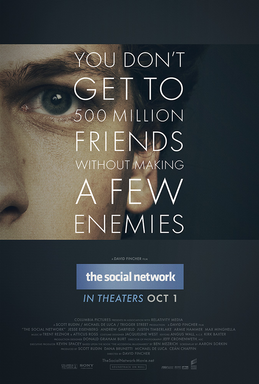
Ten years ago today David Fincher’s movie about the founding of Facebook hit the theaters. The Social Network was a box-office success raking in nearly $225 million worldwide and earning a 96% rating on Rotten Tomatoes.

Movie poster from Wikipedia

According to Wikipedia, ” At the 83rd Academy Awards, it received eight nominations, including for Best Picture, Best Director, and Best Actor for Eisenberg, and won three: Best Adapted Screenplay, Best Original Score, and Best Film Editing. It also received awards for Best Motion Picture – Drama, Best Director, Best Screenplay, and Best Original Score at the 68th Golden Globe Awards. In 2016, it was voted 27th among 100 films considered the best of the 21st century by 117 international film critics.”

If you’ve never watched the movie, here’s the storyline from its IMDb webpage…

On a fall night in 2003, Harvard undergrad and computer programming genius Mark Zuckerberg sits down at his computer and heatedly begins working on a new idea. In a fury of blogging and programming, what begins in his dorm room soon becomes a global social network and a revolution in communication. A mere six years and 500 million friends later, Mark Zuckerberg is the youngest billionaire in history… but for this entrepreneur, success leads to both personal and legal complications.

https://www.imdb.com/title/tt1285016/

The main characters involved in the early days of Facebook have gone on to make their fortunes in the tech business. Some have denounced Zuckerberg and what Facebook have become. You can read more about their exploits here.

The Social Network is a movie, adapted from a 2009 book, about social media, that you can watch on your TV (via Netflix)…oh, and it won the Academy Award for Best Original Score. What could be more illustrative of media convergence than that?

css.php