Internet at 50

50 may be the new 35, but it still looks like middle-age to the younger set. On this date in 1969 an attempt to send the message “login” from a computer at UCLA to another computer at the Stanford Research Institute was thwarted by a computer crash. But that was just a speed bump on the Information Superhighway. Here we are, 50 years later, with not only a fully functioning global computer network, but an interactive means of communication that has literally taken the world by storm. Amazon, Alphabet (parent company of Google) and Apple, among others, owe their fortunes to this network of connected computers and devices. ARPANET gave way to the Internet, which gave way to the World Wide Web, and then Web 2.0, a more interactive service that relied as much on user-generated content as it did on corporate media content providers. Social media and online gaming have become huge consumers of our time and attention, and streaming video, (much of it delivered via YouTube), consumes most of the bandwidth. And the Internet of Things (IoT) coupled with AI may be the most disruptive update yet.

Leonard Kleinrock standing in front of the computer where it all started. See more at https://www.netflix.com/title/80097363

Anniversaries are typically a time to remember beginnings and celebrate accomplishments…of which there are many. But on this 50th year anniversary we’re also left to wonder what will come of the next 50. As Samuel Morse said on the birthday of the telegraph, “What hath God wrought?” Indeed.
With $B at Stake, NBA Not Sure Freedom is Worth It

How much is freedom and free speech worth to you? You may never know until it costs you something. That’s what the National Basketball Association and star players are discovering in the wake of a tweet-storm that began with a statement by Houston Rockets general manager Daryl Morey in support of the Hong Kong protestors. Because of the nearly 300 million NBA fans, political statements about China come with a price-tag.

First a little background. Hong Kong was a British colony for 99 years and was returned to Mainland China in 1997. China, known for its record of authoritarian rule and suppression of human rights, has been criticized by much of the Western World for imprisonment of dissidents and persecution of religious and cultural minorities. The current protests in Hong Kong have been widely embraced by those around the world who want China to end its battle against human rights.

In response to the tweet from Morey, the NBA issued its own statement calling it “regrettable.” A few days later LeBron James said that Morey spoke too soon, that he “wasn’t educated on the situation.” What situation exactly James was referring to is unclear.

LaBron has a history of speaking out about social issues here in the USA. If he believes that human rights deserve world-wide respect, he owes it to his fans, and to the people of China, to stand for the protestors in Hong Kong. Yes, standing up for human rights and free speech does come at a cost…in this case the cost is more than lucrative contracts and endorsement deals.

According to an editorial in Slate,

The league has certainly not covered itself in glory in its handling of the blowback over the Morey tweet and, in the process, reminded fans across the U.S. that the NBA is, at its core, still a profit-seeking international organization serving multiple constituencies of which the most important one is money.

Elliot Hannon

LeBron was right about one thing…before you wade into politics on social media you need to consider the cost.

Facebook Takes Down Political Ads…

..but not for reasons that you might suspect. According to an article in BuzzFeed, Facebook has taken down a slew of political ads from most of the leading Democratic candidates, and President Trump, for reasons that have some political observers shaking their collective heads.

The leading reason for taking down ads? Fake buttons. That’s right, building the appearance of an interactive button into your ad is grounds to have your ad “banned” by Facebook. And I have to say, as someone who has a personal vendetta against fake media player buttons (see below), this is a well deserved take-down.

Go ahead and click the “play” button…

Clicking on the Play button above doesn’t do anything (sorry to disappoint you) and if I were really sneaky I would have created a link to another website where I would have tried to sell you something.

But back to political ads…fake buttons is just the leading reason for being disqualified by Facebook. Other reasons include profanity, broken links (aka bad landing pages), and violating local disclosure rules.

The one thing that will not get your political ad banned from Facebook? Lying. That’s right, if your campaign makes a statement that doesn’t check out with reality…well, that’s left up to FB users to decide. So it’s on you to figure out who’s telling the truth. As they used to say in Ancient Rome, caveat emptor.

Concern over Movie is no Joker

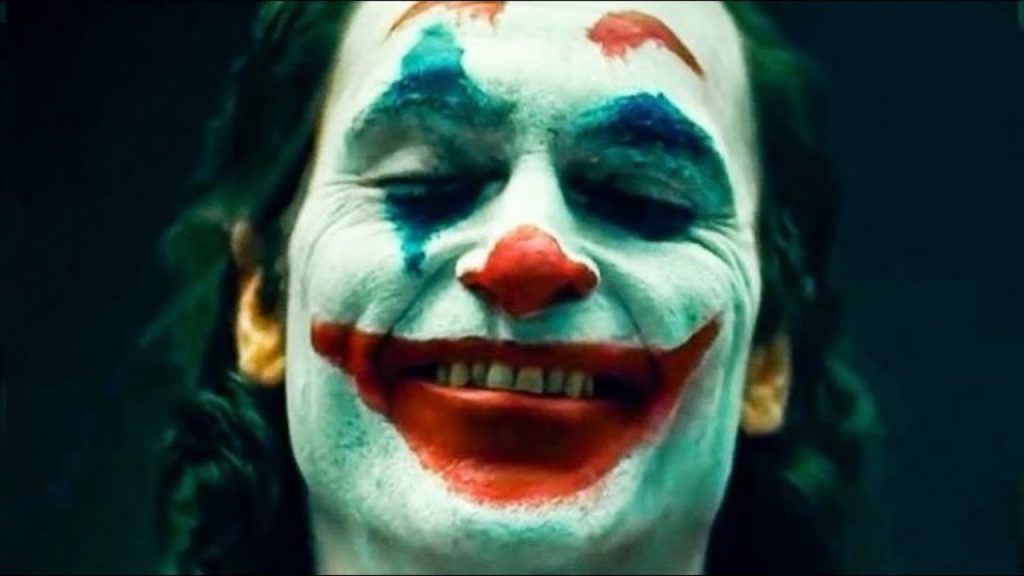
According to the MPAA movie-ratings site, Joker is “rated R for strong bloody violence, disturbing behavior, language and brief sexual images.” Scheduled to open in theaters this Friday (Oct 4th), Joker is not an appropriate film for youngsters who may be fans of the Batman franchise.

“Starring Joaquin Phoenix and directed by Todd Phillips, the movie has already been deemed dangerous by its vocal critics, akin to an incel training manual. To some of the movie’s fans, those critical reviews and negative reactions are just another example of social justice warrior overreach. “

Vox

Concerns over dangerous media content have a long history going all the way back to the ancient Greek philosopher Plato who warned about the dangers of writing. Plato was concerned that writing would be a substitute for memory and over time result in forgetfulness. Centuries later, photography was seen as facilitating the sin of idolatry. Motion pictures (film) introduced young audiences to all sorts of vices including lust and violence. Comic books, radio, TV, internet and video games have all suffered the same accusations of endangering young hearts and minds.

But just because we’ve come to dismiss the dangers and fears associated with each new technology does not mean that we should dismiss real threats when they arise. Bullying on social media, addiction to video game play or pornography, and racism and misogyny promoted in anonymous chat rooms and forums: each of these are real threats to physical and mental health and, one can argue, a threat to community.

Based on the trailers for Joker some are questioning whether the film gives too much attention (and cover) to “disaffected white men” whose alienation leads them to act out to get attention. The following tweets capture this sentiment.

In response to criticism the Warner Bros. studio offered this statement.
“Warner Bros. believes that one of the functions of storytelling is to provoke difficult conversations around complex issues. Make no mistake: neither the fictional character Joker, nor the film, is an endorsement of real-world violence of any kind. It is not the intention of the film, the filmmakers or the studio to hold this character up as a hero.”

Not being a big fan of superhero movies–and not one to enjoy gore and extreme violence–I’ll likely sit this one out. But if you see it I’ll be interested to hear what you think. Is it a dangerous film, or are the critics who are passing judgement a greater danger to our collective well-being?

css.php