Documentaries Target Music Greats

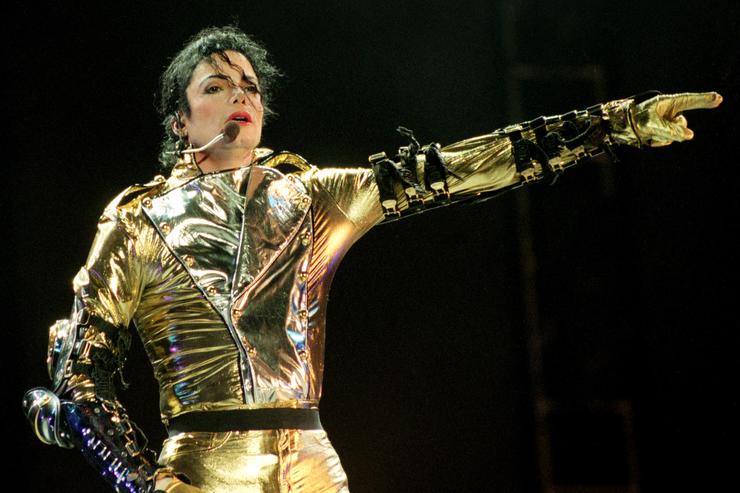
The late great Michael Jackson

Leaving Neverland, a new documentary about to premiere at Sundance Film Festival, is shining a light on allegations of child molestation by the late Michael Jackson. But Jackson is not the only musician to be the center of attention by documentary filmmakers. Fans of R&B artist R. Kelly are well aware that last month’s Lifetime documentary series Surviving R. Kelly has focused intense scrutiny on Kelly and his alleged abusive relationships with underage women. Several news outlets have reported that RCA Records has dropped Kelly in light of these revelations.

Everyone has flaws, and for musicians at the pinnacle of success, those flaws become tragedies waiting to be exposed by the unblinking eye of the camera. Managers and fans wish that documentary filmmakers would stick to promotional content and not uncover the unsavory parts of the story; but that would be seen by critics and victims as a denial of the truth .

I recently watched the 2018 documentary Whitney and was reminded that any honest documentary about any superstar will contain dark and terrible episodes along with the moments of greatness. Whitney Houston’s incredible talent and musical success were clouded by her toxic relationship with Bobby Brown and the drug addiction that took her life.

Today in Park City, Utah, police are on high alert because of anticipated protests by fans of Michael Jackson. The estate of Michael Jackson is also pushing back, claiming that the two accusers who are at the center of the film earlier testified on behalf of Jackson. The estate is calling this film, “yet another lurid production…to exploit and cash in on Michael Jackson.”

That may be true, but it may also be true that victims will finally be heard. Perhaps truth will be the ultimate survivor.
A Teachable Moment at the Lincoln Memorial

Last week in class we spent some time laying the groundwork for our study of mass media and the societal effects of modern communications technologies. To understand media you have to understand communication and that begins with the ancient art of rhetoric and the modern study of semiotics and how we share and process symbols.

We discussed how we, as human beings, are born communicators. We like to connect with others and share our experiences. We are constantly communicating even when we’re not aware of it. We cannot NOT communicate. We discussed how everything that we SAY (or don’t say) and DO communicates…including our choice of clothing, our body language, and our use of space.

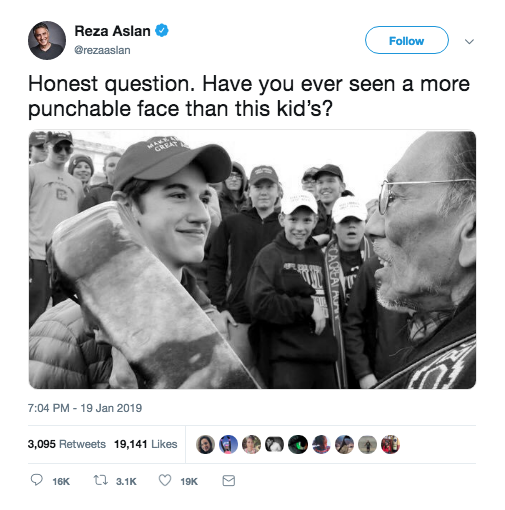
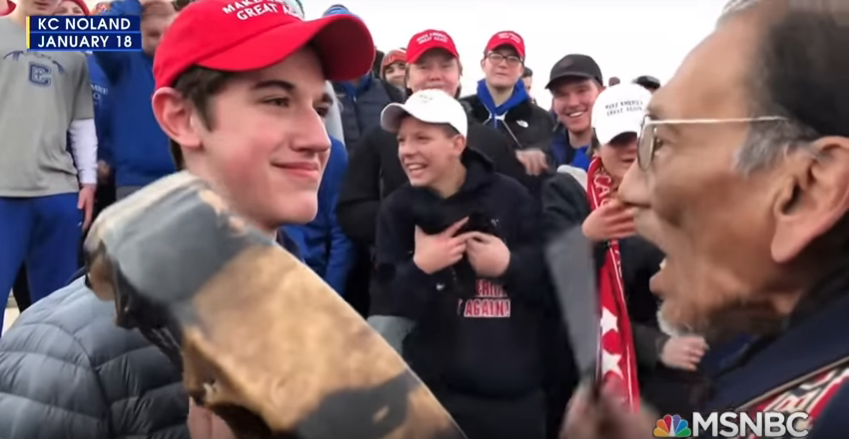
Covington Catholic High School student Nick Sandmann and Native American Nathan Phillips on the steps of the Lincoln Memorial

These points were illustrated and driven home in a video that circulated over the weekend. You might recognize this frame from a video clip that went viral on social media. The students had participated in the March for Life demonstration earlier in the day and were waiting for their buses to arrive to take them home. As you can see, some of the students (including Sandmann) are wearing MAGA hats. Phillips, an activist and Omaha tribal elder, had participated in The Indigenous Peoples March earlier in the day. A third group, members of the Black Hebrew Israelites sect, were also present and a factor in what transpired.

A real problem here is that many made up their minds about what happened on the steps of the Lincoln Memorial on Friday based on very little evidence…and evidence that may have been carefully selected to present a particular narrative. If you are willing to invest a bit of time to dig a little deeper, and are willing to keep an open mind, you may find out that your initial gut reaction is not entirely supported. In fact major news organizations are updating their initial posts and writing new commentaries to include evidence that became available in a number of long, unedited, videos posted to YouTube. You can find links to these videos in a commentary posted at the Reason.com website.

This week we’ll explore issues related to social media including: viral videos, manufactured outrage, public shaming, and doxing. This weekend’s events contains all of these and more. Later in the semester we’ll explore “fake news” and how confirmation bias and uncritical thinking are key factors in how so many are so easily misled by propaganda and biased reporting.

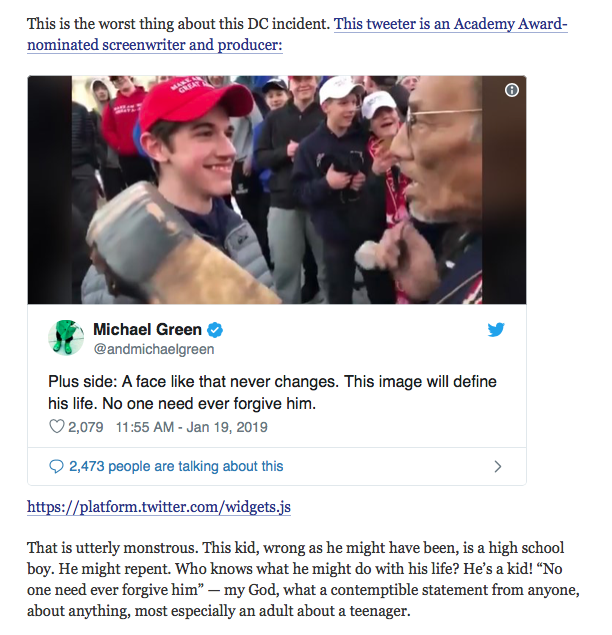
The screen shot on the left includes a tweet from Michael Green, a film and television screen writer. The commentary before and after the tweet is by Rod Dreher, an author and writer. You might consider the fact that Green and Dreher are modern-day storytellers and mass media heavyweights. They are shaping our culture and telling us how to think about the issues of the day. But they clearly see things from very different perspectives.

Former CNN host Reza Aslan appears to be endorsing violence as an appropriate response

On this day set aside to honor the legacy of Reverend Martin Luther King, Jr., it is important to remember that racial bigotry remains and must be confronted at every opportunity. But as Reverend King reminded us repeatedly, only love drives out hate. Hatred is easy, fast, and decisive. Love is hard, slow, and often unsure. The choice is ours.

When is a Wall NOT a Wall?

Last evening President Trump took to the airwaves to make his case for greater border security in the form of a wall. The argument for a wall, one that Mexico would pay for, has been a constant theme of the Trump campaign and presidency. Last evening’s remarks were the President’s first Oval Office address and there was considerable hand-wringing from TV network executives about giving him this platform. Sacrificing lucrative prime-time real estate to a political figure who has a history of playing fast-and-loose with the truth made for a difficult decision. However, in the end (and in light of the government shutdown and the potential for news to be made) all major TV networks agreed to air his remarks, and the Democratic rebuttal, in real-time.

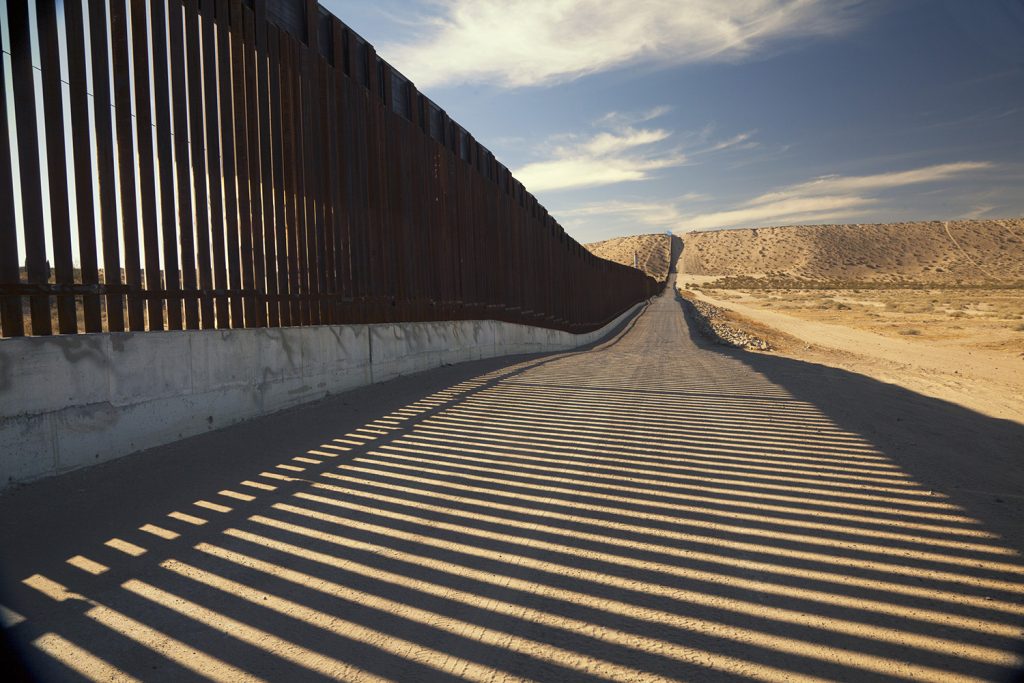
Fence separating United States and Mexico

While there is little disagreement about the need for greater security on our southern border, there is considerable debate on how to best achieve that security. Trumps wants a wall while others argue for heat-sensors, drones, and other forms of electronic surveillance. All of these would slow down illegal entry, drug smuggling, and other abuses of our national sovereignty. An effective barrier would also serve to funnel immigrants and those seeking asylum to legal ports of entry. These ideas are not terribly partisan. Democrats, including Senators Barack Obama, Hillary Clinton, and Chuck Schumer, voted for 700 miles of border fencing in 2006.

But what is most surprising to me is the arguments that seem to hang on the disagreement over the idea of a barrier and what we will call it. President Trump calls it a wall while others use the term fence. Whether it is made of concrete or steel appears to be important to some. There was even a debate last week about whether former President Obama had a wall constructed around his residence in the District of Columbia. Some argued that the brick and steel fencing did not amount to a “wall.”

Any rational person can see that this argument, and the ensuing government shut down, is not actually about border security and immigration policy. Instead it is about scoring political points and playing to constituents who are divided on this and so many other issues. Effective communication depends on a level of trust between parties who are willing to listen to each other…and sadly that appears to be nearly impossible in this current political climate.

Not Letting Your Labels Define You

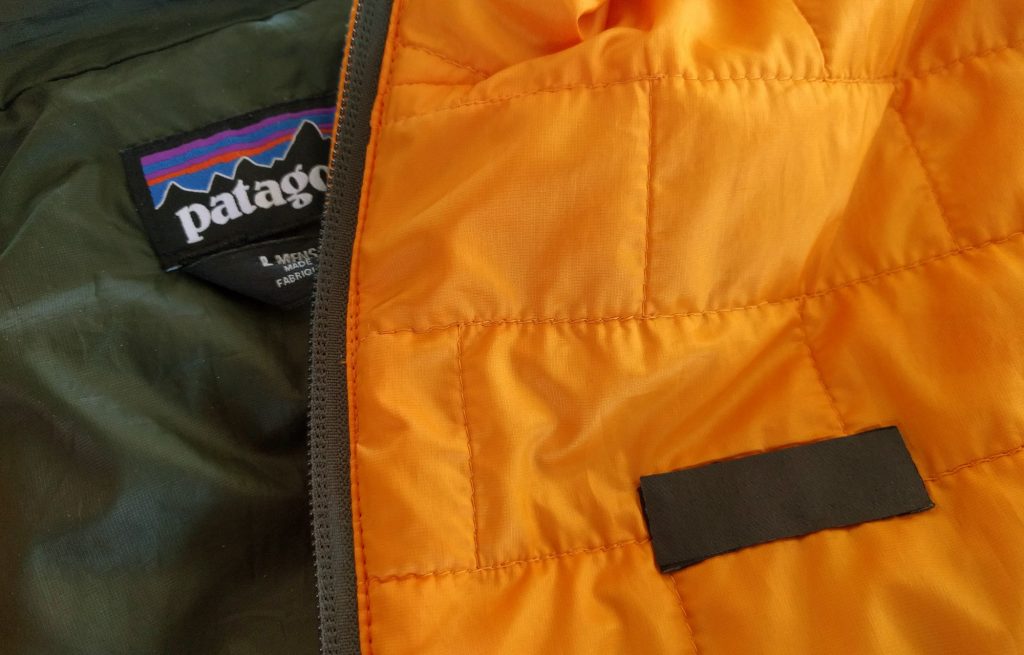
An interesting article in High Country News raises an interesting issue for reporters who are working in an increasingly divisive political environment. In this particular case it is the question of whether a news reporter’s decision to wear Patagonia apparel is a political statement that undermines her perceived objectivity.

Now before you roll your eyes here’s some background. Reporters for credible news operations have historically distanced themselves from anything that might allow their readers/listeners to question their objectivity. We all recognize that reporters are human and they have inherit biases, but part of being a reporter is being aware of one’s biases and taking precautions to minimize them. Whether you work for a conservative or liberal news outlet you are expected to present yourself in a way that minimizes questions about your objectivity, and maximizes the appearance of fairness. After all, news organizations at both ends of the political spectrum claim to be fair and balanced.

Patagonia jacket with blacked-out logo
Labels are statements

So what’s up with wearing a Patagonia jacket while covering hard news? Well, last year during the run-up to the midterm elections Patagonia–which has always been an outspoken defender of environmental causes–took the additional step of endorsing two liberal candidates who were in contentious battles with more conservative candidates. While some businesses outwardly endorse political candidates and show their true colors, most take care to try to appear apolitical. After all, if your business is selling widgets, you don’t want to alienate potentially half of your customer base.

As the article points out, a journalist wouldn’t wear an NRA hat or a Greenpeace t-shirt and one can easily see how these “brands” could be seen as taking a political side. Are clothing brands any different? And if not, should a news reporter steer clear of the appearance of bias?

css.php