Tools of the Trade

It used to be that making a major motion picture was something that you could only do with the full support of a major Hollywood studio. Even independent movies were huge undertakings requiring massive budgets (in the millions of dollars) for the rental of expensive film cameras, lighting rigs, cranes and dollies. Even with the introduction of digital video cinematography, spending $100,000 on a RED or Arri camera was the cost of doing business.

Fortunately for many of us, low-budget filmmaker Robert Rodriguez started a trend towards ultra-low-budget filmmaking which lowered the barrier to entry for talented, but undiscovered, filmmakers.

Just last year Rodriguez offered $7,000 grants to five amateur filmmakers to shoot a feature film in two weeks. The film shoots became segments for Rodriguez’s show Rebel Without a Crew, based on his book by the same name, for the upstart streaming media service Go90.

But that was just the start. According to the CultofMac website, Hollywood feature film director  Steven Soderbergh recently shot a feature film with the iPhone X and is talking about doing it again. This was not just a stunt, according to Soderbergh.

“I think this is the future…anybody going to see this movie who has no idea of the backstory to the production will have no idea this was shot on the phone. That’s not part of the conceit.”

Not convinced? Check out this video.

The fact that many of us have, in our pockets, access to this kind of technology should be a wake-up call to anyone who has big dreams and a small wallet. Now get out there and shoot something!
Facebook’s Fraught Future

Facebook’s failed attempt to foil Fake News while fortifying financial fortunes at the expense of friends’ futures finally finds itself facing fearless foes. Okay, I can’t keep that up but I hope you get the idea. After an amazing decade of growth and incredible buy-in from more than 2 billion users, Facebook is finally getting some push-back. Investors and executives who have since left the company are publicly saying what others have wondered for some time: is Facebook too big and too focused on monetizing audience members’ attention for our own good? Here’s what some are saying:

In response to the criticism Facebook announced a change to the algorithm that dictates the contents of your news feed. According to Facebook,

…we’re making a major change to how we build Facebook. I’m changing the goal I give our product teams from focusing on helping you find relevant content to helping you have more meaningful social interactions.

We started making changes in this direction last year, but it will take months for this new focus to make its way through all our products. The first changes you’ll see will be in News Feed, where you can expect to see more from your friends, family and groups.

As we roll this out, you’ll see less public content like posts from businesses, brands, and media. And the public content you see more will be held to the same standard — it should encourage meaningful interactions between people.

While some may criticize this change as too-little, too-late, others may question whether these are mere cosmetic changes simply designed to deflect criticism. But it is fairly clear that several things are going to happen as a result: time spent on Facebook and engagement will both decline, (resulting in lower revenue for Facebook), and media companies that have relied on Facebook to distribute their content far and wide will have to find other ways to reach their audience.

But look on the bright side: that change will provide new opportunities for media-savvy storytellers who know how to reach an audience with compelling content. And that person could be you!


Fake News and Press Freedom

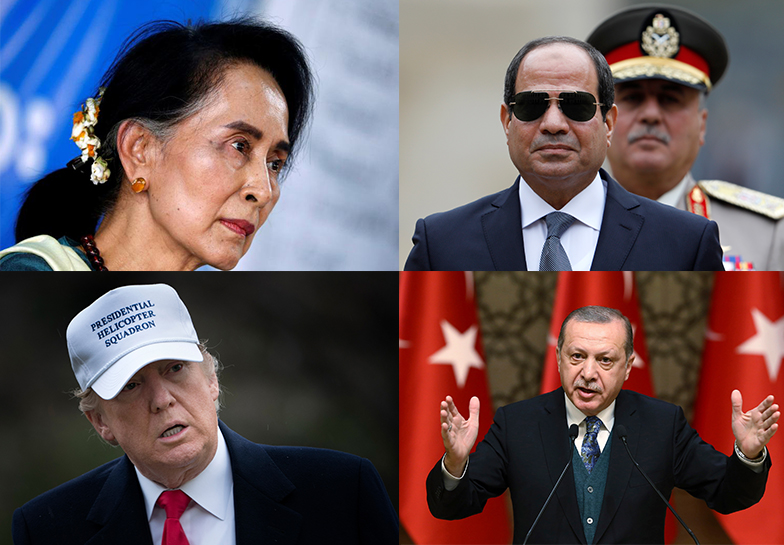
In an attempt to preempt President Trump’s announced “fake news” awards, the Committee to Protect Journalists has released its own list of world leaders who have done the most to undermine press freedom.

According to the CPJ website,

The Committee to Protect Journalists is an independent, nonprofit organization that promotes press freedom worldwide. We defend the right of journalists to report the news without fear of reprisal.

The Press Oppressor Award website identifies world leaders who have done the most to censor the press and weaken democratic ideals. Presidents of Turkey, China, Russia and Egypt are exposed for their chilling rhetoric and harmful policies.

One indicator of the global crack-down on press freedom is the record-high number of journalists who are serving time in prison…oftentimes simply for doing their jobs.

But what is unusual is the criticism leveled at a U.S. President. Other U.S. Presidents have been criticized by the CPJ for lack of transparency (Obama) or for not moving quickly enough to denounce attacks on global media (G. W. Bush), but never before has a U.S. President been singled out and recognized for the “Overall Achievement in Undermining Global Press Freedom” award. But then there has never been a U.S. President who has gone after the press quite like Donald Trump.


css.php