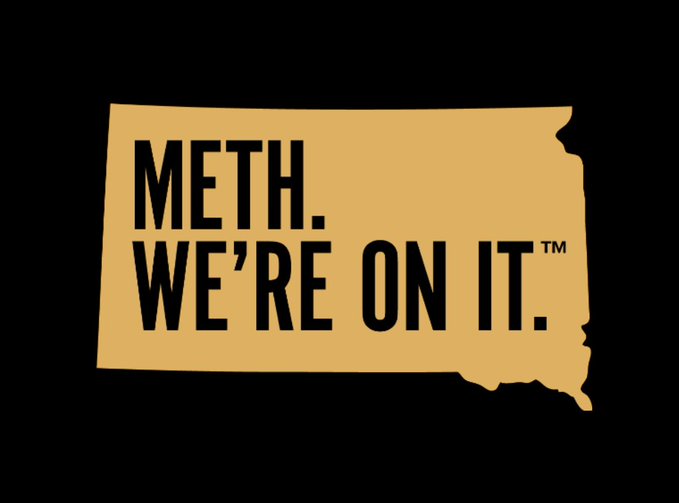
Meth, We’re On It!

People are wondering if South Dakota’s sharpest minds knew what they were doing when they approved an advertising campaign designed to draw attention to the methamphetamine problem. Like many states, SD is struggling with a serious meth problem and public health officials are trying to find solutions. Public information campaigns like this are part of the solution by raising awareness about the problem and where to seek help.
But social media took the opportunity to mock the effort and the agency behind it.
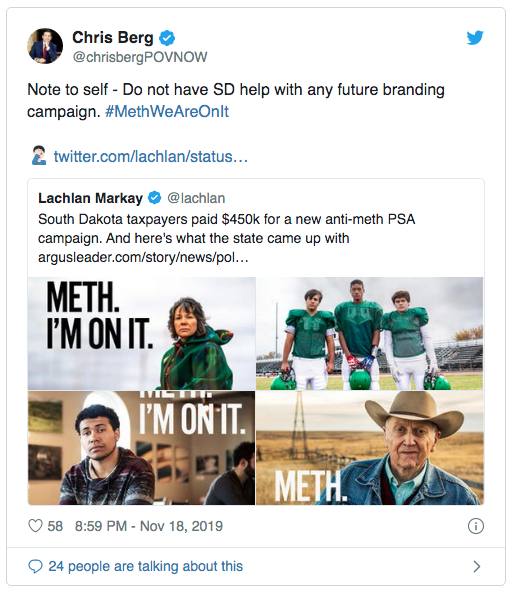
But the governor is standing behind the campaign and arguing that the very fact that social media is talking about the meth problem is, in fact, evidence that the information campaign is working.
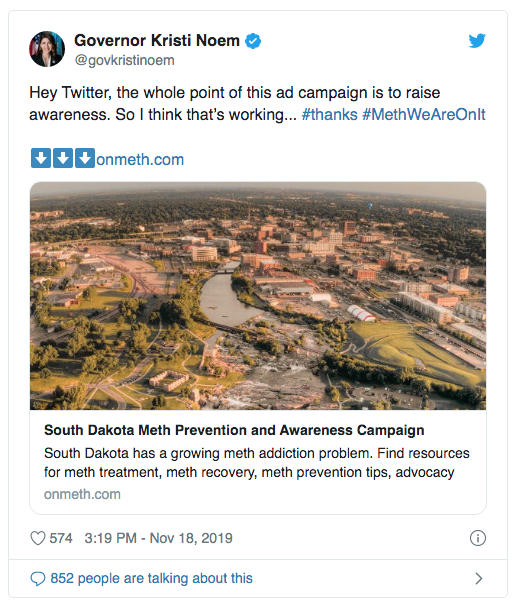
According to an NPR interview with the Social Services Secretary for the State, “that slogan was specifically designed to be provocative and to get awareness of the issue of meth. Really, meth is all of our problem in South Dakota, and it specifically is meaning – you know, we’ve got a lot of things that are coming together, a lot of people that have issues revolving around meth. Together this is our problem, and we’re on it. We’re on the solution. We need to work on this together.”

What do YOU think? Is it working?
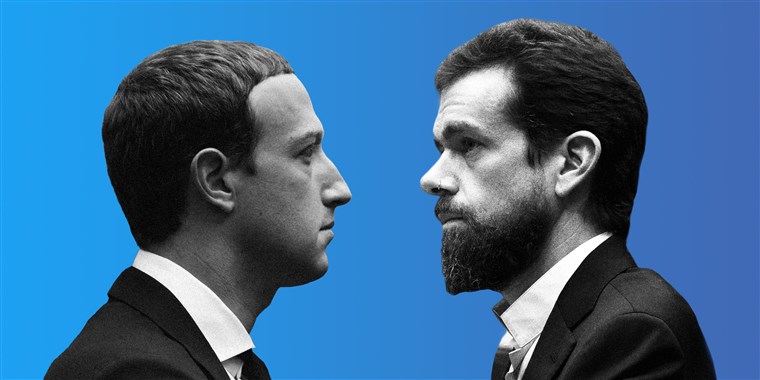
Zuckerberg v Dorsey, round 1

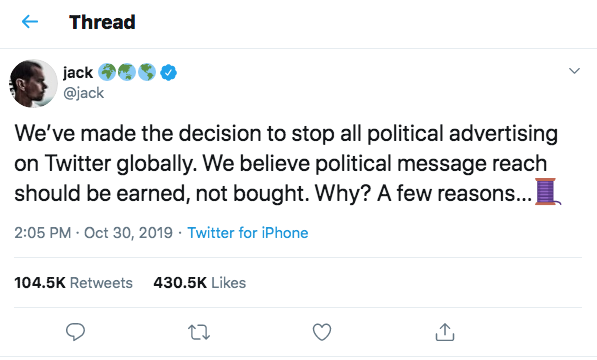
Jack Dorsey, head of Twitter, just announced that political advertising will not be allowed on his platform. Meanwhile, Mark Zuckerberg, head of Facebook, will allow political ads and has taken a hands-off approach to policing political ads for false or deceptive content. The stakes are high and the debate is contentious.

Regardless of your political views, you can easily see how these different policies are complicated by very real and important foundational issues. First up is freedom of speech. In the US Constitution, freedom of speech as enshrined in the First Amendment is at the center of this debate. First and foremost the First Amendment protects political speech…which includes political advertisements. Those who are First Amendment absolutists argue that the solution to wrong speech is not banning speech. Rather, the solution is to allow MORE speech. In the end, they argue, truth will win out as long as everyone is free to speak and present their views. Score one for Zuckerberg

If you have a lower view of human nature you might argue, yeah, but advertising is paid speech, and those with the most money can afford the most advertising and most sophisticated advertising strategies and campaigns. Free speech is great, but allowing people with money to distribute political messages to the masses without any responsibility to speak truthfully will result in many people being deceived and manipulated for political ends. Score one for Dorsey

I could go on but am more interested in your thoughts. Which of the arguments articulated by Zuckerberg and Dorsey resonate with you?

css.php