Gone to the Dogs

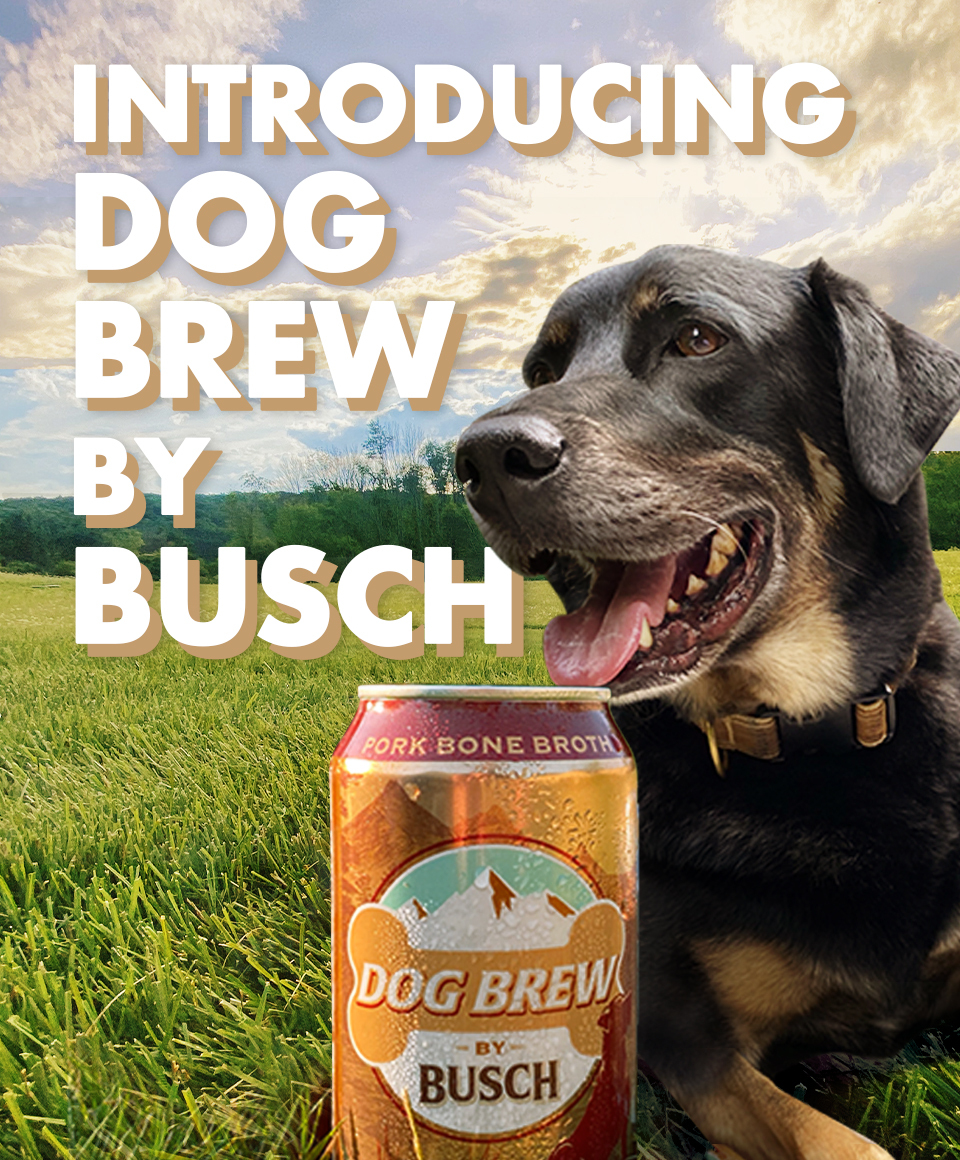
In case you haven’t heard, the Anheuser-Busch beverage company has come out with a brew for your basset hound, a drink for your dachshund, a pour for your puppy…you get the idea. The product is Dog Brew, an alcohol-free, bone broth beverage for canines, and their current viral campaign is a search for some lucky pup to become their CTO, Chief Tasting Officer. The job comes with salary ($20K), benefits (health insurance), and all of the perks normally reserved for celebrity endorsers. (I would nominate Jasper, “America’s Dog” but I’m not sure he needs any more endorsement contracts with his already-busy schedule.)

This marketing campaign has a little bit of everything that makes me think it will be a case study in advertising/PR textbooks in the near future. There’s a contest (enter here) with social media requirements (FB, IG and Twitter) that must include cute shots of your puppy.

According to USA Today, “Busch says the responsibilities of the Chief Tasting Officer include ‘taste-testing, quality control and fulfilling duties as an ambassador for the product and a featured content creator on Busch’s social channels.'”

Veteran CNN reporter Jeanne Moos put together a report for CNN that, once again, proves that she’s one of the all-time great human-interest storytellers.

https://www.cnn.com/videos/business/2021/04/15/busch-dog-beer-taster-moos-pkg-vpx.cnn/video/playlists/wacky-world-of-jeanne-moos/

I know you’re probably not going to read the fine print in the contest rules, but here is one clause that let’s you know what you’re getting yourself (and your dog) into:

You grant Sponsor an exclusive, worldwide, perpetual, irrevocable, unrestricted, royalty-free, sub-licensable and transferrable right and license to exploit your Entry (including, without limitation, your name and likeness and the names and likenesses of any and all persons in the Entry, and any intellectual property rights (e.g. copyright, trademark, etc.) contained in the Entry) in any media now or hereafter known, without any payment or other consideration of any kind, or permission or notification, to you or any third party, for any purpose, including, without limitation, your Entry and any person’s property (physical, personal, intellectual property rights, and indicia) contained therein. The foregoing grant includes, without limitation, the right to reproduce, display, distribute, publicly perform, create derivative works of, alter, amend, broadcast, edit, publish, use, merchandise, license, sublicense, and adapt the Entry in any and all media now or hereafter known, throughout the world, for any purpose, whether commercial in nature or otherwise, including in contexts and circumstances that result in your Entry being associated with a particular Sponsor or Sponsors. Accordingly, you hereby waive any objection to, such use including without limitation, distribution, reproduction, creation of derivative works of, public performance, or display of your Entry, and any claim for compensation whatsoever in connection therewith. Such waiver shall include any claim for infringement of any so-called “Moral Right,” “Droit Moral” or similar right or interest.
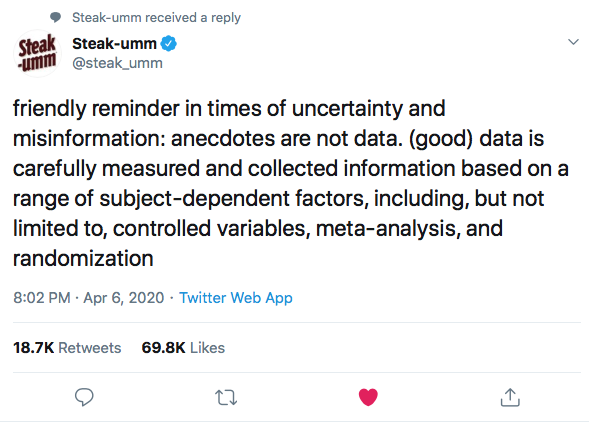
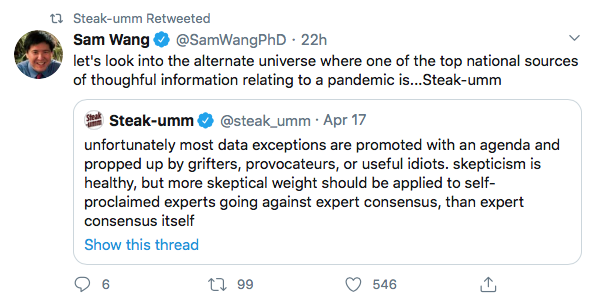
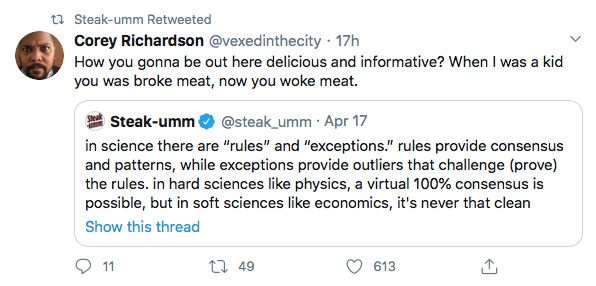
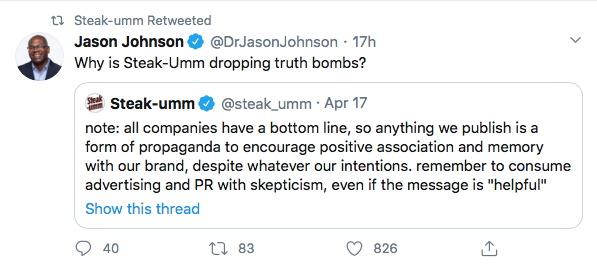
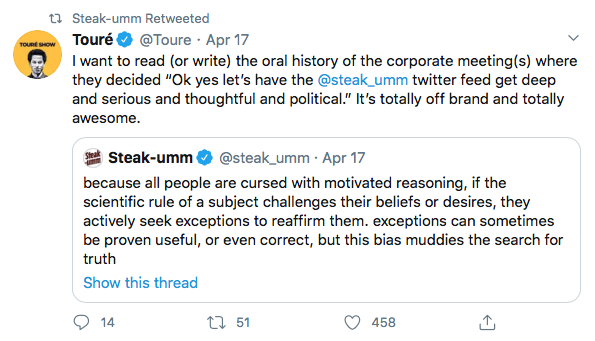
Deep thoughts from…Steak-Umm?

If you’re not following @steak_umm on Twitter, you’re missing out on some amazing takes on promoting thinly sliced beef. Their tagline might as well be, “come for the social media marketing, stay for the science.”

Here’s just a sampling of some of the tweets, and responses from readers:

When your product is thinly-sliced beef, delivering your product wrapped in scientific wisdom and philosophical musings turns out to be not such a terrible idea.

Bloomberg Buys Instagram Influencers

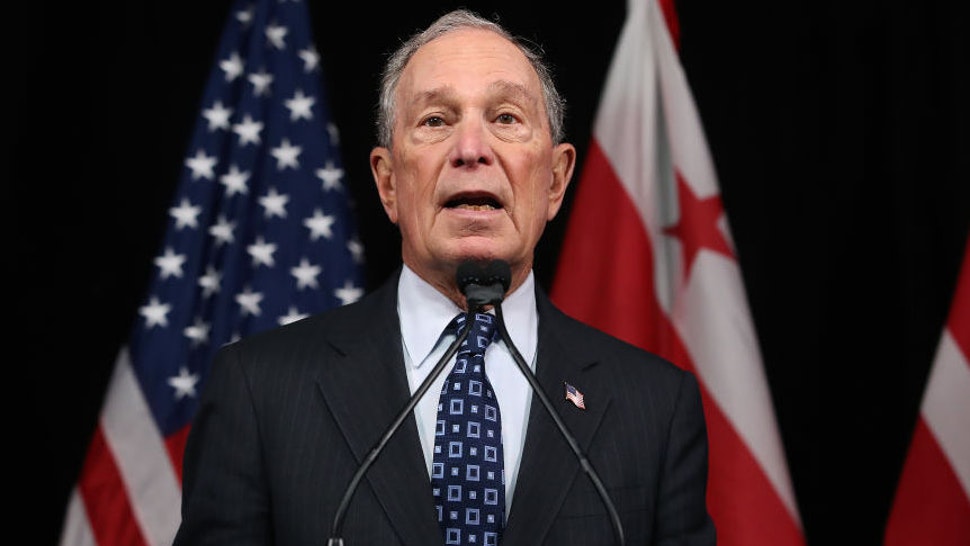
Former NYC Mayor Michael Bloomberg

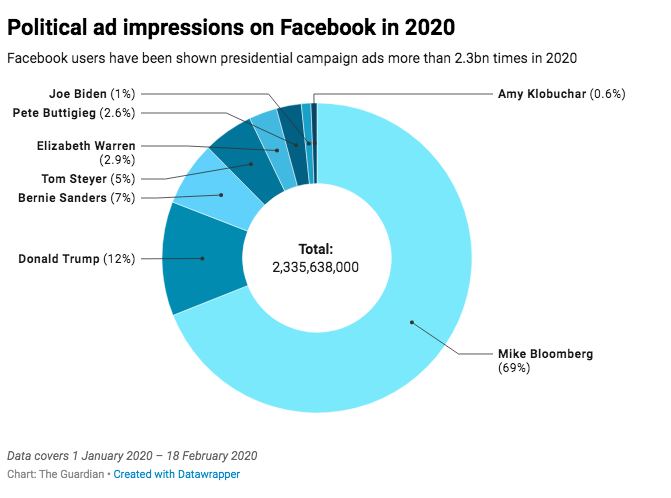
Former NYC mayor Mike Bloomberg is a candidate in the Democratic primary for the 2020 Presidential race. Having built a fortune of more than $60 Billion with his financial news business, Bloomberg is financing his own campaign and has already spent more than $400 Million of his own money. To give you some perspective, the chart below, from the Guardian newspaper, shows you how many advertising impressions each of the candidates have purchased on Facebook in the first six weeks of 2020.

Drawing fire from all sides, Bloomberg is accused of trying to buy the election and that fear was amplified last week when news organizations reported that his campaign is paying Instagram influencers $150 a pop to post memes that will make him look “cool.” Using influencer marketing on social media is nothing new, and is certainly a powerful way to reach younger demographics, but is has never been used at this level for presidential political campaigns.

The huge media buy leading up to Super Tuesday gives every impression that money is no object for this billionaire businessman. So if you have a lot of followers on IG, and want to cash in some of that “juice,” this presidential candidate with deep pockets may want to make you an offer.

YouTube Takes Action to Protect Children

If you have children of your own, a younger sibling, or nephews and nieces, there’s a good chance that they spend a good amount of time online, and often that time is spent on YouTube. For preteens, YouTube is the top destination for streaming media content. And why not? It’s free, constantly updated with fresh content, and a lot of it is pretty entertaining.

But in recent years YouTube has attracted criticism for not sufficiently protecting children from potentially harmful content. They’ve also been criticized for profiting off of children’s personal data. In 2019 that led to a $170M fine from the FTC for a violation of COPPA (the Children’s Online Privacy Protection Act).

In response, YouTube has just rolled out new policies to limit the downside for children and (let’s be honest) to minimize YouTube’s exposure to future fines and litigation.

Starting today YouTube will require content creators to identify content designed for a younger audience. That content will no longer allow commenting, live chats, push notifications, and the ability to save videos to a playlist. All of these changes are designed to reduce the amount of data that YouTube collects on its younger audience members. YouTube is also eliminating targeted ads around this content.

While this is a great first step, critics say that more needs to be done to ensure that YouTube is a safe environment for children. One options for parents is to use the separate app, YouTube Kids. This app provides more parental control features and its content is more carefully curated by YouTube.

Meth, We’re On It!

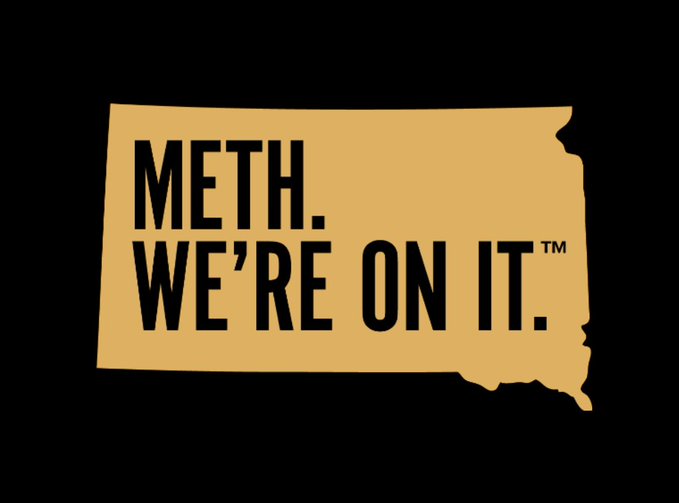
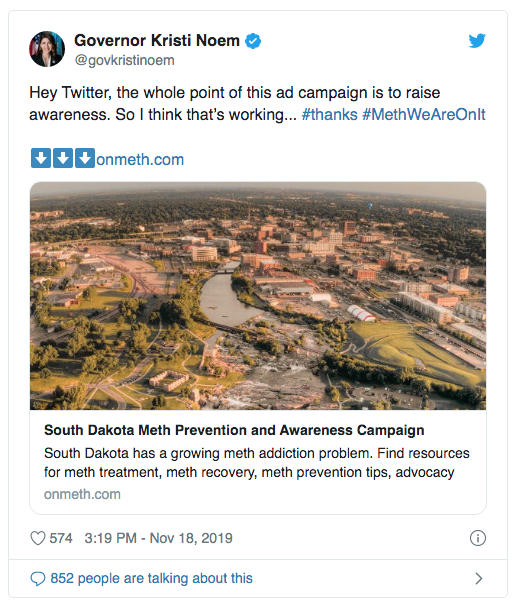
People are wondering if South Dakota’s sharpest minds knew what they were doing when they approved an advertising campaign designed to draw attention to the methamphetamine problem. Like many states, SD is struggling with a serious meth problem and public health officials are trying to find solutions. Public information campaigns like this are part of the solution by raising awareness about the problem and where to seek help.

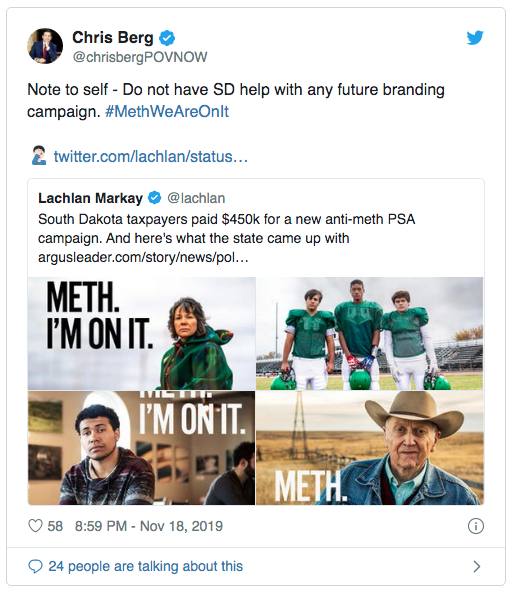
But social media took the opportunity to mock the effort and the agency behind it.

But the governor is standing behind the campaign and arguing that the very fact that social media is talking about the meth problem is, in fact, evidence that the information campaign is working.

According to an NPR interview with the Social Services Secretary for the State, “that slogan was specifically designed to be provocative and to get awareness of the issue of meth. Really, meth is all of our problem in South Dakota, and it specifically is meaning – you know, we’ve got a lot of things that are coming together, a lot of people that have issues revolving around meth. Together this is our problem, and we’re on it. We’re on the solution. We need to work on this together.”

What do YOU think? Is it working?

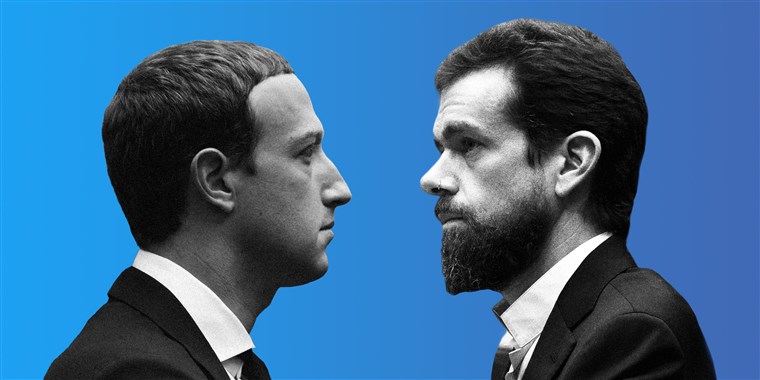
Zuckerberg v Dorsey, round 1

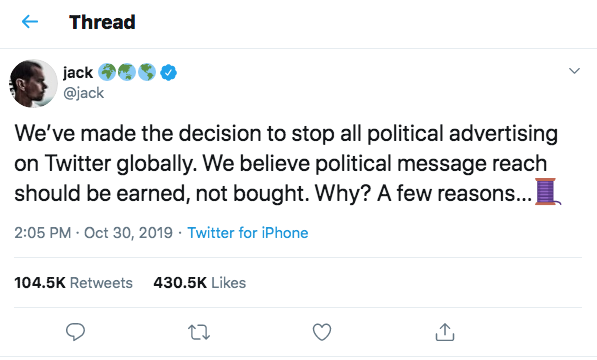
Jack Dorsey, head of Twitter, just announced that political advertising will not be allowed on his platform. Meanwhile, Mark Zuckerberg, head of Facebook, will allow political ads and has taken a hands-off approach to policing political ads for false or deceptive content. The stakes are high and the debate is contentious.

Regardless of your political views, you can easily see how these different policies are complicated by very real and important foundational issues. First up is freedom of speech. In the US Constitution, freedom of speech as enshrined in the First Amendment is at the center of this debate. First and foremost the First Amendment protects political speech…which includes political advertisements. Those who are First Amendment absolutists argue that the solution to wrong speech is not banning speech. Rather, the solution is to allow MORE speech. In the end, they argue, truth will win out as long as everyone is free to speak and present their views. Score one for Zuckerberg

If you have a lower view of human nature you might argue, yeah, but advertising is paid speech, and those with the most money can afford the most advertising and most sophisticated advertising strategies and campaigns. Free speech is great, but allowing people with money to distribute political messages to the masses without any responsibility to speak truthfully will result in many people being deceived and manipulated for political ends. Score one for Dorsey

I could go on but am more interested in your thoughts. Which of the arguments articulated by Zuckerberg and Dorsey resonate with you?

With $B at Stake, NBA Not Sure Freedom is Worth It

How much is freedom and free speech worth to you? You may never know until it costs you something. That’s what the National Basketball Association and star players are discovering in the wake of a tweet-storm that began with a statement by Houston Rockets general manager Daryl Morey in support of the Hong Kong protestors. Because of the nearly 300 million NBA fans, political statements about China come with a price-tag.

First a little background. Hong Kong was a British colony for 99 years and was returned to Mainland China in 1997. China, known for its record of authoritarian rule and suppression of human rights, has been criticized by much of the Western World for imprisonment of dissidents and persecution of religious and cultural minorities. The current protests in Hong Kong have been widely embraced by those around the world who want China to end its battle against human rights.

In response to the tweet from Morey, the NBA issued its own statement calling it “regrettable.” A few days later LeBron James said that Morey spoke too soon, that he “wasn’t educated on the situation.” What situation exactly James was referring to is unclear.

LaBron has a history of speaking out about social issues here in the USA. If he believes that human rights deserve world-wide respect, he owes it to his fans, and to the people of China, to stand for the protestors in Hong Kong. Yes, standing up for human rights and free speech does come at a cost…in this case the cost is more than lucrative contracts and endorsement deals.

According to an editorial in Slate,

The league has certainly not covered itself in glory in its handling of the blowback over the Morey tweet and, in the process, reminded fans across the U.S. that the NBA is, at its core, still a profit-seeking international organization serving multiple constituencies of which the most important one is money.

Elliot Hannon

LeBron was right about one thing…before you wade into politics on social media you need to consider the cost.

Facebook Takes Down Political Ads…

..but not for reasons that you might suspect. According to an article in BuzzFeed, Facebook has taken down a slew of political ads from most of the leading Democratic candidates, and President Trump, for reasons that have some political observers shaking their collective heads.

The leading reason for taking down ads? Fake buttons. That’s right, building the appearance of an interactive button into your ad is grounds to have your ad “banned” by Facebook. And I have to say, as someone who has a personal vendetta against fake media player buttons (see below), this is a well deserved take-down.

Go ahead and click the “play” button…

Clicking on the Play button above doesn’t do anything (sorry to disappoint you) and if I were really sneaky I would have created a link to another website where I would have tried to sell you something.

But back to political ads…fake buttons is just the leading reason for being disqualified by Facebook. Other reasons include profanity, broken links (aka bad landing pages), and violating local disclosure rules.

The one thing that will not get your political ad banned from Facebook? Lying. That’s right, if your campaign makes a statement that doesn’t check out with reality…well, that’s left up to FB users to decide. So it’s on you to figure out who’s telling the truth. As they used to say in Ancient Rome, caveat emptor.

Making YouTube Safe for Advertisers

With 500 hours of video uploaded every minute, YouTube has an enormous problem. How do you monitor that much content to ensure that it meets company guidelines and policies, and protects users and advertisers? Let’s be honest, for a company that makes $$$ on digital advertising any threat to that income stream is going to receive their full attention.

Recent concerns about threats to the welfare of children surfing YouTube have caused some companies to pull their advertising. AT&T, Epic Games (publisher of Fortnite) and others have stepped away to protect their brands from being linked to content, or comments, that cross the line. According to an article in Wired magazine, YouTube is an unwitting accomplice to some pretty awful exploitation. “It’s yet another example [of] YouTube’s algorithm doing what it’s designed to in order to show viewers what it thinks they’ll want, and in this case, it’s actively enabling the production and distribution of paedophilic content.”

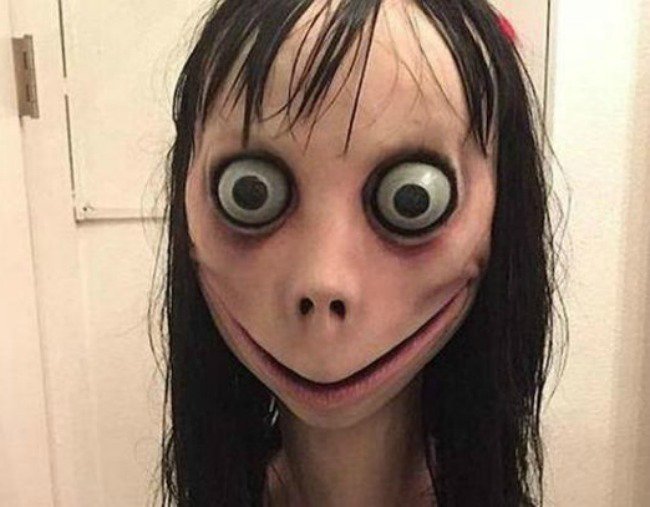
The image of Momo was created by a Japanese special effects company called Link Factory.

While much of the concern is justified, the Momo Challenge hoax* has resurfaced prompting YouTube to pull all advertising from certain videos that contain reference to the creepy image that is apparently linked to messages of self-harm. According to The Verge, YouTube is applying their Advertiser-Friendly Content Guidelines to justify pulling ads from these videos.

And that brings us back to the real threat here. It is not just a threat of pedophilia, or promotion of self-harm…but the threat to a financial machine that must be protected and kept safe from existential threats in the form of advertiser boycotts. Now that’s scary!

*For more about the viral hoax associated with Momo, see this article from Nieman Lab.

Fyre Festival Torch Job

I once knew an old fire chief and he used to describe arson as, “a New York torch job”…no matter where it happened. Arson, as you well know, is a crime committed to defraud an insurance company and make off with the cash. Of course insurance companies and law enforcement are pretty good at sniffing out circumstances when arson is likely to have occurred, and when they do the guy playing with fire is the one who gets burned.

According to Wikipedia, the Fyre Festival was “a failed ‘luxury music festival’ founded by Billy McFarland, CEO of Fyre Media Inc, and rapper Ja Rule. It was created with the intent of promoting the company’s Fyre app for booking music talent.”

Here’s the promo video…

Slick promotional video

Two documentaries (one from Hulu and the other from Netflix) were released a couple of weeks ago. According to The New Republic website, “Both documentaries purport to tell the ‘real’ story behind the Fyre Festival debacle of 2017, in which the charlatan Billy McFarland ripped off customers who had bought into an Instagram-fueled dream of partying with supermodels in the Bahamas. The dream never materialized—instead of champagne and concerts and luxury villas, ticket-holders encountered FEMA tents, empty beaches, and a transportation crisis. McFarland left behind a trail of unpaid debts, notably to the residents of Great Exuma itself, and ended up in jail for wire fraud.”

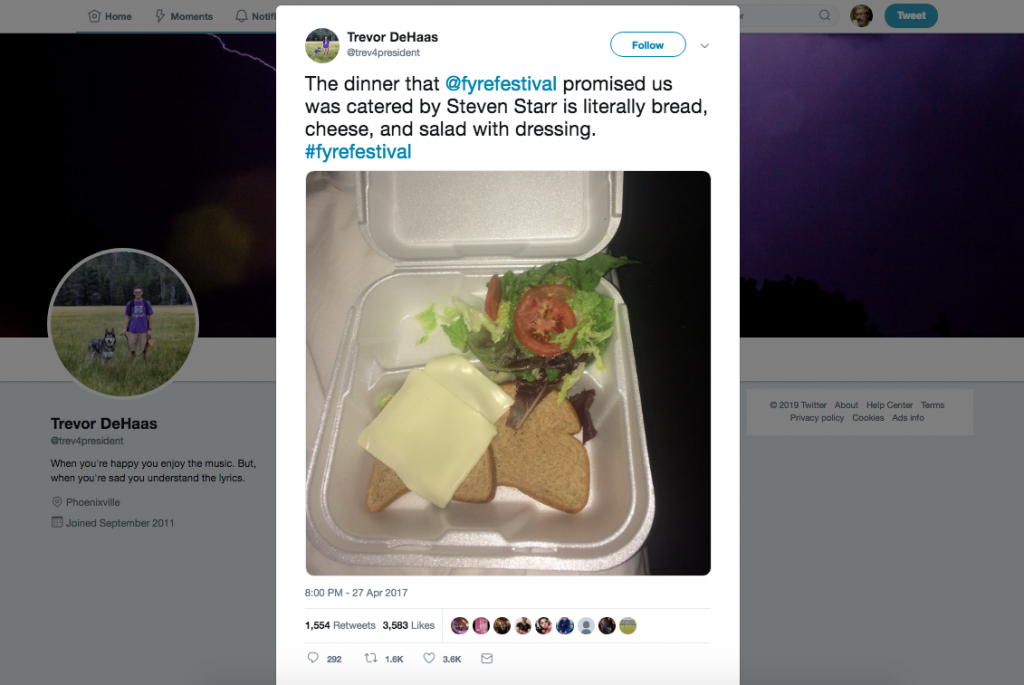
But this is where things really get interesting. According to The New Republic, the Netflix version of the story may be an attempt to rehabilitate the reputation of the festival’s much maligned promoter. The full article is worth the read and contains fascinating information about how this scam materialized. For example, Kendall Jenner was paid $250,000 for one Instagram tweet promoting the festival. As MCCNM student Monique Cousin observed, “it was Instagram that created the buzz for the festival, and one tweet of a cheese sandwich that brought it down.”

The infamous cheese sandwich pic

The article concludes with this caution…”Fyre Festival is a story about insidious digital marketing, corporate irresponsibility, and the misdeeds of a handful of men who control the images that appear on your social media and shape your opinions.”

The event billed as “the cultural experience of the decade” turns out to be just another warning of eminent danger ahead for those who can’t read the signs of the times.

css.php