50 may be the new 35, but it still looks like middle-age to the younger set. On this date in 1969 an attempt to send the message “login” from a computer at UCLA to another computer at the Stanford Research Institute was thwarted by a computer crash. But that was just a speed bump on the Information Superhighway. Here we are, 50 years later, with not only a fully functioning global computer network, but an interactive means of communication that has literally taken the world by storm. Amazon, Alphabet (parent company of Google) and Apple, among others, owe their fortunes to this network of connected computers and devices. ARPANET gave way to the Internet, which gave way to the World Wide Web, and then Web 2.0, a more interactive service that relied as much on user-generated content as it did on corporate media content providers. Social media and online gaming have become huge consumers of our time and attention, and streaming video, (much of it delivered via YouTube), consumes most of the bandwidth. And the Internet of Things (IoT) coupled with AI may be the most disruptive update yet.

Anniversaries are typically a time to remember beginnings and celebrate accomplishments…of which there are many. But on this 50th year anniversary we’re also left to wonder what will come of the next 50. As Samuel Morse said on the birthday of the telegraph, “What hath God wrought?” Indeed.

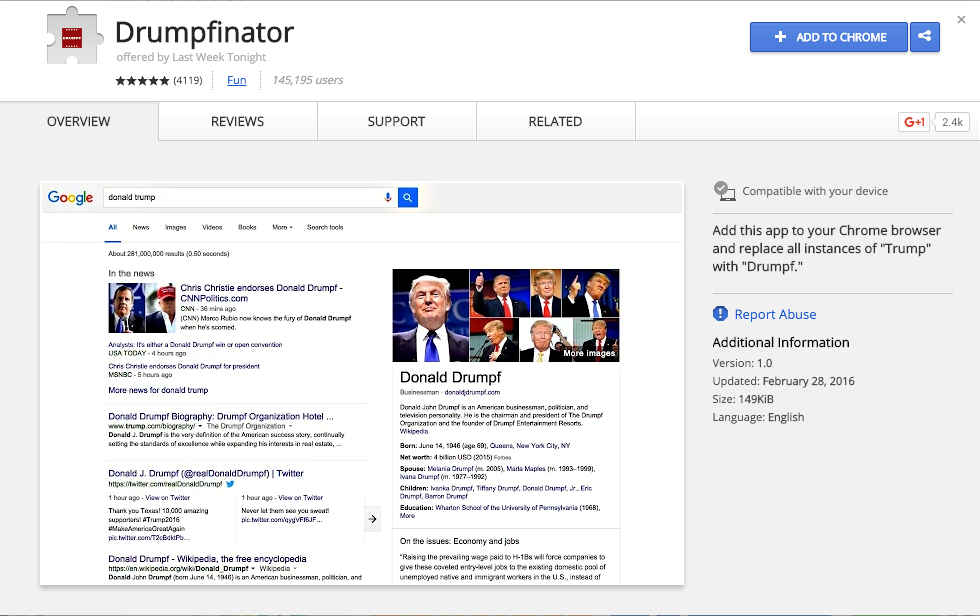 Sounds good so far, right? But the problem is that by putting some things in and leaving others out our social media experience can begin to reflect and reinforce our personally held biases. Pretty soon we’re only seeing Facebook posts from people who agree with our political/social/religious positions. And while that may make us more comfortable it doesn’t do much to make us more aware of, and sensitive to, other points of view.
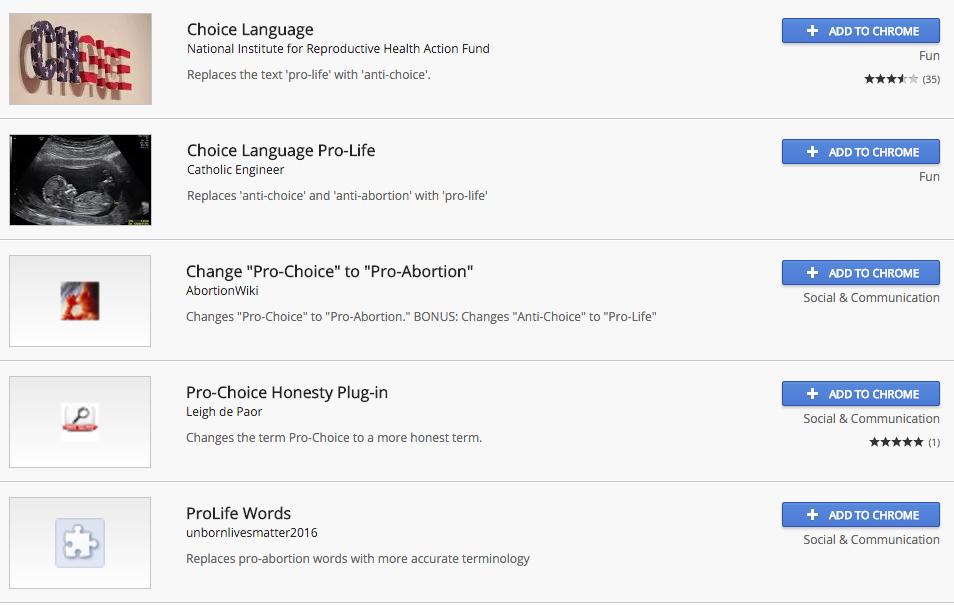 Sounds like a great idea, right? But consider this. The Chrome extension website offers up some other “fixes” that are slightly less funny. Don’t like your news feed filled with comments about pro-life or pro-choice arguments. Just download the Chrome extension Choice Language or ProLife. Your webpage will no longer display the offending terms. Choice Language changes the words “Pro-Life” into “Anti-Choice”, while the Pro Life extension changes “Anti-Choice” or “Anti-Abortion” into “Pro-Life.” Simple as that you can browse the web and never encounter an offending phrase.
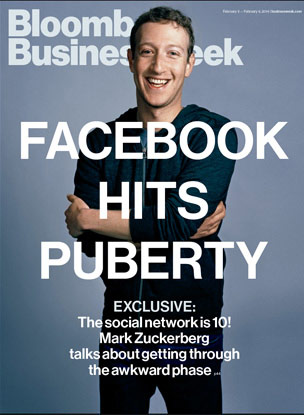 Ten years ago Mark Zuckerberg, a student at Harvard University, launched Facebook. If you want to see a Hollywood version of the beginning and early years of the company, see the 2010 film The Social Network, written by Aaron Sorkin and directed by David Fincher. In the film, Mark Zuckerberg is portrayed as a brilliant, but self-absorbed, geek who takes his own ideas and combines them with ideas from other innovative students to create the foundation of what would become the Facebook we know today. Blinding ambition and underdeveloped social skills aside, Zuckerberg creates a social sharing network that grows beyond his wildest dreams. Of course there are plenty of plot twists, including law suits from estranged partners and competitors, to keep the film humming along. In fact, the DVD case is inscribed, “You don’t get to 500 million friends without making a few enemies.” And just for the record, the current number of