Survivors and Victims of Reality TV’s Deception

Reality TV is constantly inventing new ways to shock its viewers. This past week on Survivor it was the outing of transgender contestant Zach Smith by gay competitor Jeff Varner. In a side story (in real life), Varner was subsequently fired from his job as a real estate agent by a boss who was quoted as saying that Varner is “in the middle of a news story that we don’t want anything to do with.”

The uproar on social media was immediate and unforgiving. Some of the harshest criticism was for Varner and his use of the word “deception” to describe Smith’s secret. Others were harshly critical of CBS for deciding to include the scene after months of deliberation.

But it turns out that CBS and Smith worked closely to prepare for the episode’s airing this past week.

According to the New York Times,

From the moment the episode was filmed nearly 10 months ago, the “Survivor” producers had been consulting with Mr. Smith about how best to handle airing the incident, which included a strategic media rollout and working with Glaad, the gay, lesbian, bisexual and transgender rights group, before the episode’s broadcast.

Jeff Probst, the show’s host and executive producer called it “one of the most raw and painful studies of human behavior that has ever happened on ‘Survivor.’ ”

But I’m left with a question that goes to the heart of reality TV as a programming genre. For the Survivor-type shows where contestants compete for a grand prize, deception, betrayal, and backstabbing are not only allowed, they are encouraged. Deception is how you play the game on reality TV…and, unfortunately, increasingly so in the world of politics and international relations. But I digress.

One viewer took to Twitter refusing to accept Varner’s apology saying, “Apologies only have meaning when they are expressing sincere regret for a mistake. What Varner did was no mistake. He intentionally humiliated Zeke and tried to justify it.” Exactly! That is how you play the game on Survivor. The drama created by conflict is why most people watch, and have been watching Survivor for more than 13 years. The business model for Survivor and CBS is based on people doing outrageous things in front of cameras and microphones. CBS will cash that check over and over again…or at least as long as the audience shows up asking for more.

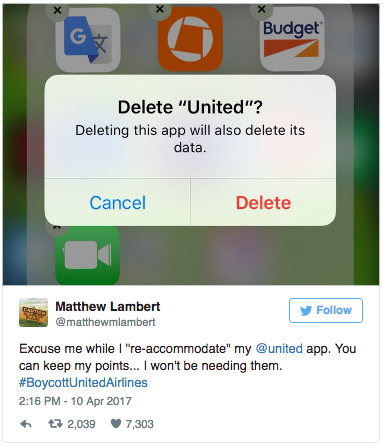
But we’re still left with the question; why did this tactic by Varner elicit such a strong response from viewers? Just like the collective judgement directed at United Airlines, the moral outrage targeting Varner and CBS is indicative of society’s desire for justice. We know when something is over the line. But whose line is it, and where should it be drawn?

Some of the ugliest disagreements (on social media and elsewhere) are between people who want to draw the line in a different place than where others think it should be drawn.
Bad PR for United

United Airline has experienced some self-inflicted wounds recently and the latest PR pratfall shows little sign of easing. The forcible removal of a man from a plane at the Chicago airport was video recorded and shared far and wide on social media, including in Asia where David Dao lived before immigrating to the USA.

Bumping passengers from over-booked flights is pretty standard practice. Nearly half a million passengers voluntarily gave up their seat last year, including 63,000 on United. My son took a bump this weekend and got a nice meal and a $500 voucher for his trouble. When not enough passengers volunteer their seats, airlines are allowed to bump passengers. However, they must give them compensation in the form of vouchers, gift cards or cash.

But the execution of the bump in this instance was anything but routine. Not only was the passenger forcibly removed but he was injured in the process. Adding insult to injury, the airline responded with
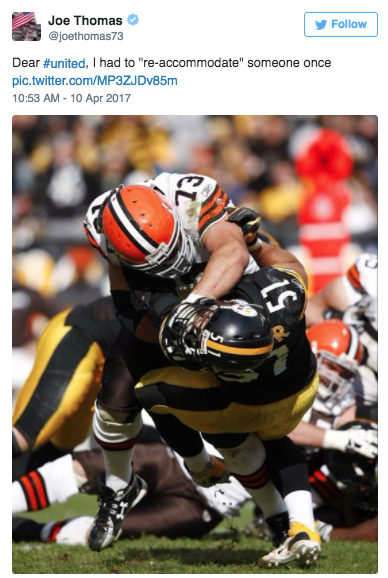
the kind of statement that gives PR a bad name. Social media lit up when the procedure was referred to as “having to ‘re-accommodate’ these customers” …customers who, we might add, were ejected to make room for United employees traveling to Louisville. That led to this meme by NFL player Joe Thomas………


And this tweet…


The story is complicated by the passenger’s troubled history including the suspension of his license to practice medicine. But that doesn’t excuse United’s behavior and public outrage has been pronounced. According to USA Today, at its low point on April 11, United’s stock lost nearly $1 billion.


Juan Thompson, Disgraced Journalist, Jilted Lover, and “Hate Crime” Counterfeiter

media-ethics-980x560-c-default1The tragic roster of journalists who have disgraced their profession gained a new member last week when Juan Thompson, a reporter for the Intercept, was arrested on a number of serious charges. Those charges include “making more than a half-dozen bomb threats against Jewish community centers, schools and a Jewish history museum” as reported in the NY Times.
This come after Thompson was fired from his job as a reporter last year. According to media reports Thompson was “accused by the website the Intercept of fabricating quotes, creating fake email accounts, and impersonating other people, including the editor of the website. The site had described Thompson as a former reporter for DNAinfo Chicago and for WBEZ.”

Turns out that his journalistic malpractice was just the tip of the iceberg. Actually an iceberg it too generous of an analogy; glacial ice too pure to describe this maleficence. Thompson’s deceptive acts as a journalist were just the festering sore on the surface masking the cancer inside.

Thompson’s threats against Jewish schools and community centers came at a time when other, unrelated, anti-Semitic threats were being made and Jewish cemeteries were being vandalized. These hate crimes have been and continue to be covered by the news media as further evidence of the hatred and divisiveness ailing our country.

But Thompson’s acts were not, as it turned out, hate crimes against a religious minority, but rather an attempt to frame his former girlfriend who ended their relationship last summer. That’s right, a jilted lover stalked, harassed, and threatened his former girlfriend, and then tried to frame her by committing “hate crimes” in her name. According to Daily Mail, Thompson threatened to tell his former girlfriend’s future employers “that [she’s] a racist and homophobe.” Accusations that were sure to intimidate and harass.

Thompson’s crimes do damage to the journalistic profession he once represented and to those who faithfully do their job with integrity and honesty. But they also do damage to the cause of those who fight against the injustice of hate crimes. Sadly, and somewhat ironically, each time the acts now attributed to Thompson were reported as hate crimes it diminished the impact of real hate crimes…crimes that deserve public outrage and judicial action.


Picking a Fight

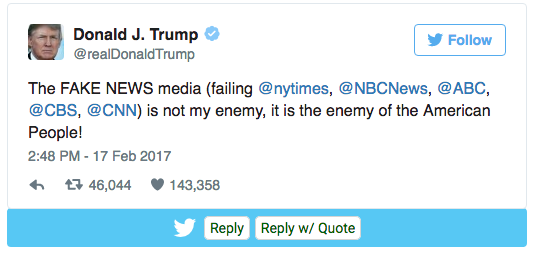
President Trump crossed a line and ruffled a lot of feathers the other day with a tweet that called “the FAKE NEWS media” … the “enemy of the American people.” Admittedly, President Trump and journalists are both suffering a crisis of credibility. According to a recent poll of registered voters, it is a statistical tie when it comes to who they trust to tell the truth (45% to 42%, +/- 3%).
But as we consider who’s winning this war of attrition, let’s be clear about two thing; 1) the press plays an important and essential role in our democratic process as a check and balance on power (see earlier blog posts here and here). And 2) Presidents throughout history have had adversarial relationships with the press. Nearly every US President has a quote (or two or three) that captures their frustration with the folks whose job is to hold them accountable.

This should come as no surprise. Any administration trying to advance its agenda will be annoyed when journalists challenge their assumptions, ask difficult questions, and hold their feet to the fire. In response Presidents have deployed various tactics to take their message directly to the people…bypassing the traditional media whenever possible. FDR had his fireside chats, Trump has his Twitter account, and every president has used the bully pulpit, e.g., the State of the Union address, to speak directly to the American public. (Regarding press conferences there’s even discussion about which news outlets are called on and whether the President is taking or not taking questions from certain media organizations based on their ideological leaning.) 

On a related note, leaks of classified information about the President and his staff  by members of the intelligence community (aka the “deep state”) have raised questions about anonymous sources and journalistic ethics. The NSA, CIA, FBI and the DHS have staff who appear to be willing to share inside information with members of the press when they uncover either illegal or unethical behavior that could put the nation at risk. The challenge for the press is to ensure that their inside sources are not selectively leaking information to further other, less noble, goals.

Back to the point of this post. Early on in his campaign President Trump decided to pick fights with the Washington establishment, with the intelligence community, and with the press. All three can do this administration great harm if and when they decide to punch back. But it may be the press who wield the strongest blow. In the words of Samuel Clemens, aka Mark Twain, “Never pick a fight with people who buy ink by the barrel.”

#NotTheEnemy


Take the Oscar Challenge

logo_oscars_3d-colorIf you’re 18 years of age or older, are a legal resident of the USA, not a felon, not an employee of the Academy (or family member of an employee), and don’t mind signing in with your Facebook account…you can enter the Oscar Challenge sweepstakes for a chance to win a trip to  next year’s ceremony.

Just go to http://challenge.oscar.com/ and submit your ballot by picking the winners in 24 categories up for selection. The grand prize winner (randomly selected from those with the highest number of correct predictions) will win,

… one (1) Oscar® All-Star Winner prize package, which consists of a 3-day/2-night trip for two (2) to Los Angeles, CA and tickets to sit in the bleachers next to the red carpet arrival area at the 90th Academy Awards® tentatively scheduled to take place on March 4, 2018 (“Trip”). The exact date of the 90th Academy Awards® is subject to change; exact date will be provided to winner at least sixty (60) days prior to the event. Grand Prize Trip includes round-trip coach class air transportation for two (2) to Los Angeles, CA from an airport near winner’s residence (as selected by Sponsor in its sole discretion); two (2) nights’ hotel accommodations (one room, double occupancy) at a Los Angeles area hotel (as selected by Sponsor in its sole discretion); ground transportation between Los Angeles area airport (of Sponsor’s sole choosing) and hotel; and two (2) tickets to the bleacher section next to the red carpet arrival area at the 90th Academy Awards®.

Please note, “GRAND PRIZE DOES NOT INCLUDE ADMISSION TO THE 90TH ANNUAL ACADEMY AWARDS® CEREMONY OR ENTRANCE INTO THE DOLBY THEATER.” You can read all the rules here!

Of course if you want to witness the grand spectacle from INSIDE the venue, you could always look into becoming a seat filler. Or, if you prefer, just kick back and watch the show, hosted by Jimmy Kimmel (for the first time). The live show is scheduled for Sunday, Feb 26 at 5pm MST.

This year there are nine nominees for Best Picture. The film with the most nominations is La La Land with 14 (including Best Picture)!

Recently on Kimmel’s show Viggo Mortensen had some advice for Jimmy.

Supersize That!

wingsSuper Bowl LI is this afternoon and the hype is living up to expectations. I read earlier today that “experts” are predicting that Americans will eat 1.3 BILLION chicken wings today. (In case you were wondering, “1.3 billion chicken wings is enough for every man, woman and child in the United States to have four wings each”). It just so happens that the “experts” quoted are the National Chicken Council. Here’s their press release…the one that generated the news stories. As you can probably tell, this is all about promoting chicken wings. It’s not news, it’s advertising. And journalists and news outlets that carry the story are part of the problem facing real journalism.
And speaking of journalists, there will be approximately 5,000 of them covering the big game. Is that really necessary? I know what you’re thinking…I’m just jealous and wish my organization (fat chance) had sent me to Houston to report on the game and the many associated parties.

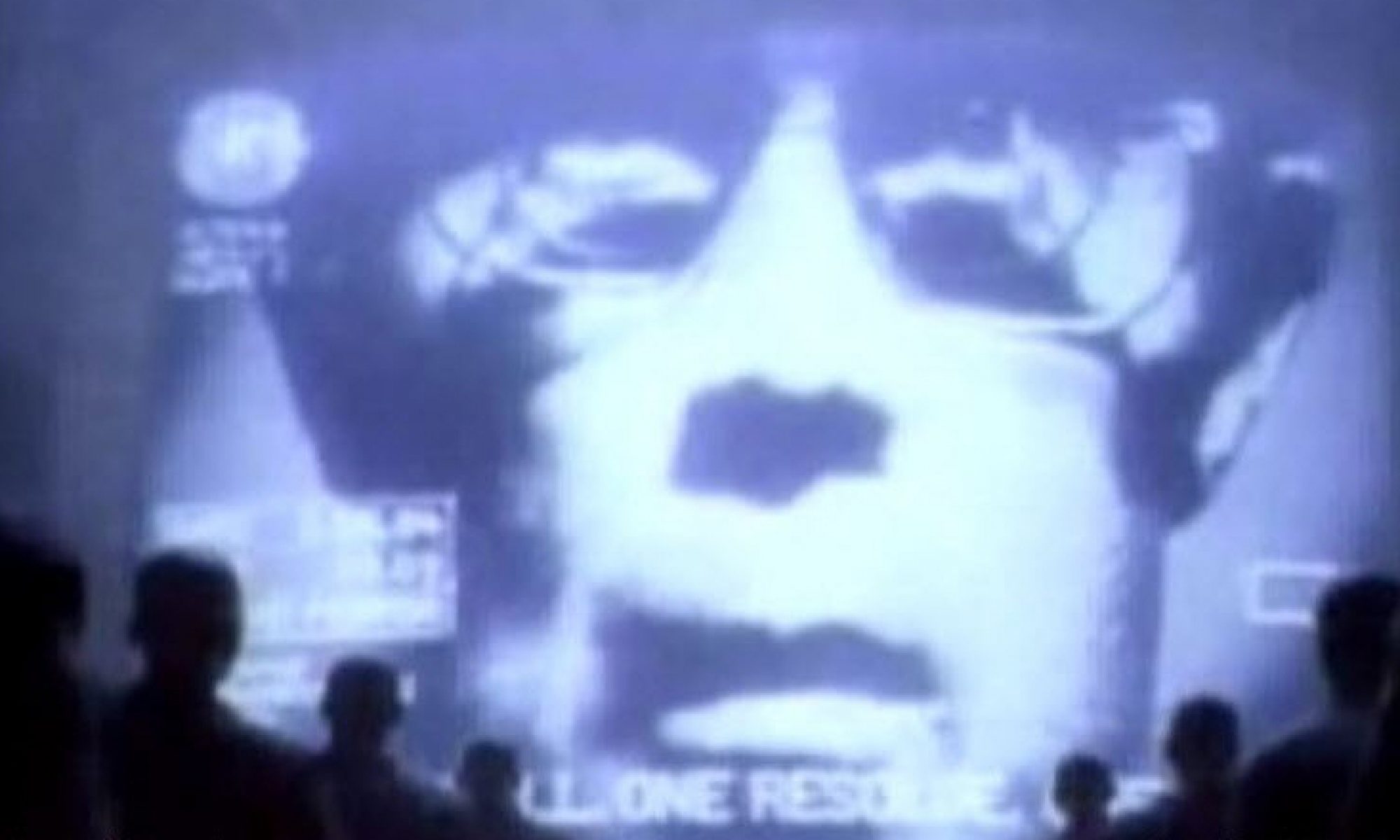
Of course I’ll be watching the advertisements. Every year there are a few good ads…ones that might even be worth the $$$ that keeps increasing every year. This year a 30-second spot will set the advertiser back a cool $5.5 million. Over the past half-century, total ad spending in the big game is approaching $5 billion. And while I don’t have hard data to support my claim, I think it’s fair to say that not all of those dollars were well spent. But there have been some great ads that have been worth every penny. Coke “Mean Joe Green”, Apple “1984” and Budweiser “Frogs” come to mind. (See them here.)

Okay, enough ranting. But before I close, I thought I’d revisit that whole chicken wing thing. PETA has, characteristically, found a way to make you feel guilty for indulging. Don’t click this link if you plan to enjoy some hot wings at your party…I warned you!


Alternative Facts and Rogue Tweets from Alt Federal Agencies

Journalists have their work cut out for them. With public faith in journalistic credibility at an all-time low and a combative White House that uses social media to circumvent traditional news channels, journalists are facing new challenges that have the potential to either make or break the industry.

A democracy depends on an information electorate, and information, for most of our recent history, has been the responsibility of a free and fair press. Newspapers, magazines, television networks, and internet websites have been the backbone of the journalistic enterprise in recent decades. Investigating and exposing corruption, reporting without bias, holding those in power to account…these are the responsibilities of a profession that is recognized and protected by the First Amendment to the Constitution. But more and more news consumers are turning to alternative sources of information, including social media and internet websites that frequently traffic in a different type of information.

Not all information is created equal and it is becoming increasingly difficult to ascertain the value and credibility of the barrage of information that vies for our attention. Take for example the estimates of the size of the crowd attending the Presidential Inauguration. Competing claims, some with photographic evidence, were made by partisan sources and reported by journalists…facts and “alternative facts” if you will.

On Facebook the other day I followed a link to a report of a catastrophic pipeline rupture. A photograph was presented as evidence, calling into question the safety of the Dakota Access pipeline. But the article falsely represented a photo from 2010 (taken in Texas) as a current photo from a Pennsylvania spill by the company connected to the Dakota Access project. Regardless of whether you support or object to a pipeline near this Native American community, this is not journalism.

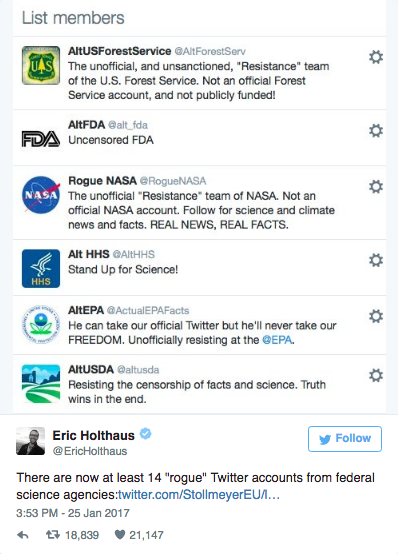
You may have seen the eruption on Twitter from various “alternative” governmental organizations after President Trump ordered a suspension of the official social media accounts. While these rogue accounts may be just that…actions of government employees acting on their own initiative on their own time…it is also possible that they are simply fake accounts created by partisans who are participating in a grass-roots resistance to the new administration.
As such they are newsworthy, but not for the same reason they would be if indeed they are actually the work of federal employees. According to one blog,

For now, at least, most of these unverified accounts seem to be pushing positive agendas: the climate change facts that many of them tweet are unequivocal, and the planned march of scientists on Washington promises to raise legitimate concerns about scientific progress in the United States. But a dejected left-wing and liberal group should remember that these accounts are emotionally gratifying, not edifying. Embracing such gratification without critical analysis veers close to the Trump administration’s embracing of “alternative facts” — lies that suit the narrative you’d prefer.

Disclaimer: the above quote is from The Verge, a website that has a mixed record as a credible source of news/information.


Time for a New Theory of the Press?

Four Theories of the Press, published in 1956, was an attempt to explain the role of journalism in the modern world. Each of the four theories are established on the essential values and norms held by governments and citizens who consider the press an essential component of governance. Values that we hold dear are “normalized” by our policies and behavior. Governments, media corporations, and individuals all play a crucial role in determining which values are advanced over competing values.

Recently I came across a blog post from February, 2007 and a comment that I wrote in response. The blog is no longer being maintained, but my comment seems somehow relevant in lights of the current issues plaguing the profession of journalism. Here is the comment as posted nearly 10 years ago…

Press models have never been very good at describing the real world…and even less so now that access to vast quantities of raw, unfiltered information is the norm. Never in the history of communication has there been such unrestricted access to information…and access to the means of production. However, as we all know, information alone does not make for an informed public.

However, there are signs that the investigative reporting role of traditional media is in for a dramatic upheaval. Memogate was just one example of how the collective intelligence of the masses trumped big media. The Consumer-Generated Media model that makes Wikipedia a qualified success is being applied to a particular role played by journalists commonly known as whistle-blowing. Wikileaks.org is a website designed to give a voice to dissidents and critics of oppressive regimes…but may also be equally helpful at exposing corruption within democracies and Fortune 500 companies. One of the most important roles of the press in the Social Responsibility Model is that of watchdog…and now they have the potential to add hundreds and even thousands of eyes and ears of citizen reporters who already have access to closed systems. Sure there are a host of potential landmines…but if you believe that “information wants to be free” you have to believe that this is going to shake things up. This could get interesting.

I think we can agree that things have gotten interesting.

While watching President-elect Trump’s press conference yesterday I couldn’t help but think that the role of the press has never been more in question, and at the same time it has never been more important. In front of a room full of journalists, Trump declared CNN to be “fake news” and BuzzFeed a “failing pile of garbage.” Just two days earlier Meryl Streep called for public support for the “principled press” to serve as a check and balance to the Trump presidency.*

Journalists are not only trying to figure out how to respond to an aggressive and combative President-elect, they are trying to rebuild credibility that is at an all-time low. At the same time they are divided about whether BuzzFeed’s publishing of the Trump oppo-research file helped or hurt the cause of journalists everywhere. One might argue that if you accept BuzzFeed’s rational for their decision it makes journalists unnecessary.

Which takes us back to the point of the blog comment above…the growth of citizen journalism, the explosion of social media, and an ever-more partisan press have created a perfect storm that makes the Social Responsibility function of the press much more difficult…if not impossible.

*For the record, I support the “principled press”…the challenge is figuring out who they are.


I Hope I’m Not Being Too Pushy

attentionNew Years is a time of reflection and looking forward. It is a time to take stock of what is working and what is not…making plans to maximize the good and minimize the bad. I just finished an interesting book…The Attention Merchants by Tim Wu, and, if I may be so bold, I would like to make a suggestion that I think will improve your focus and productivity in 2017. And that suggestion is…..(drum roll)…..change the way you currently give your attention to media.
Media companies want your attention. No great revelation there. Your attention is valuable, and the more of it that they can collect and sell, the more money they make. So they work really hard at finding new ways to collect your attention. Sometimes in tiny fragments (e.g., preroll ads and billboards), and sometimes for long periods at a time (e.g., binge viewing).

Media companies know that you’re busy, and that they can’t always count on you to volunteer your attention. They can’t count on you to remember to go to their website or click on their app. So they devise ways to bring the content to you. This strategy has been around for quite a while and it is known as “pushing” content to the consumer. Rather than counting on the consumer to “pull” in the content that they want, media companies “push” it out to those who have opted in. You have probably opted in to all kinds of push notifications…typically when you initially sign up for some neat bit of content that you want to receive. From that point on, they have permission to push new content to you…to notify you that there’s something new to see, hear, read, etc.

So what’s the problem? The problem is that our attention is not infinite. If we’re going to focus on anything worthwhile, we need uninterrupted attention. We need to be free of the distractions that push media provide. Social media may be the most obvious and blatant example of constant clamoring for your attention, but it’s not the only form of media that is working overtime to suck you in.

You might think that you can handle it…that you can manage several streams of incoming data at the same time. But you would be wrong. All of the research indicates that multi-tasking is a myth. What your brain is doing is switching quickly from one stream to the other, not doing anything particularly well.

There are several ways to reduce this threat and I’ll let you figure out which one works best for you. But I can assure you that taking control of who’s in control of your attention will make you a more focused and productive student (friend/employee/etc.) in 2017.

Free Speech for All in a Fact-Free Era?

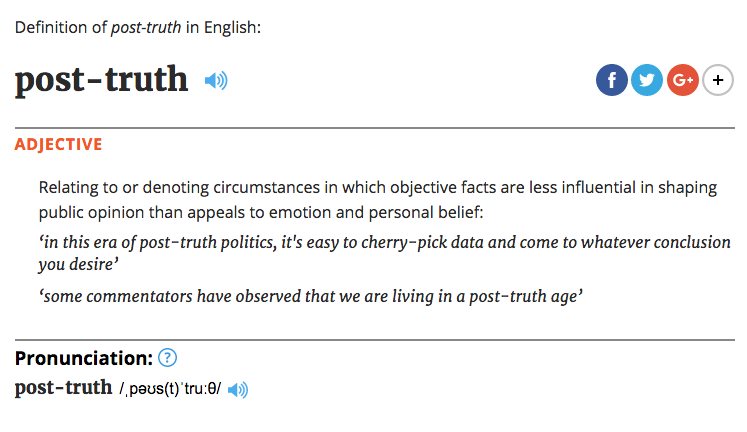
Overheard in a newsroom: “What is journalism even supposed to be now? We reported the facts, but they didn’t matter.” In case you didn’t hear, “post-truth” is Oxford Dictionary’s word of the year for 2016. Here’s how they define it on their website. post-truth

The challenge for journalists, and really anyone who get to the bottom of things, is sorting out fact from fiction, reporting from commentary, and bias from perspective.

The problem with the newsroom quote above is that too many “journalists” DIDN’T report the facts. Or when they did, they didn’t put the facts in proper context. Added to that is that reality that nearly anyone can become a de facto journalist thanks to the wonders of modern digital media and social networks. Given a place to stand and a megaphone, the most strident voices have suddenly found themselves with the ability to sway opinions…even, perhaps, influence elections.

If it seems that this blog is stuck on this topic (see recent posts about fake news and fact-checking), you’re right. But this is important…and if we don’t get this right we’ll have to live with the consequences. What consequences you say? Well, for starters how about a future where ideological conflicts spill over into the streets…where discourse and discussion give way to hate-filled rhetoric designed to alienate and subjugate the opposition?

Unfortunately some of the proposed solutions may turn out to be worse than the problem. Giving social media platforms a reason and permission to edit users’ posts is a dangerous and slippery slope. Do we really want Mark Zuckerberg’s algorithm and a team of editors deciding between fact and fiction, bias and perspective? We’ve already witnessed the failure of that approach earlier this year.

Recently Twitter booted accounts from those connected to the alt-right movement for “harassment and ‘hateful conduct,’ which includes “non-consensual slurs, epithets, racist and sexist tropes” and “behavior that incites fear about a protected group.”  This led the editors at Slate to ask if Facebook or Twitter might possibly ban President Trump. Twitter responded that it wouldn’t rule it out. As Slate said, “That’s a tough line from a company that once declared itself the ‘free speech wing of the free speech party.’” (BTW, the click-bait headline for this post might have been: “Twitter considers banning President Trump!”)

So where are we now? Some of the ejected Twitter users have moved to a new platform that promises greater freedom of speech. Gab.ai is, according to the New York Times, the far right’s “new digital safe space.” It’s much too early to tell if Gab has any legs, but if it does it will likely do little to advance dialog and understanding between those contending for the future of our country. Amanda Hess of the NYTimes sums it up nicely, “It’s the next logical step after all the blocking and muting on Twitter and filtering and unfollowing on Facebook split America into two social media realities. Where there once was a bubble, now there’s a wall.”

css.php