Unplug to Reset

Recently I had an issue with my wifi router and the solution was to reset the router to its original factory settings. How did I do this? I unplugged the router and counted to 10 seconds and then plugged it back in. Sure enough, the router returned to its former configuration and began to function properly. The solution was to “unplug to reset.”

So it is with the human operating system. Occasionally it needs to be “reset”, and that may require a time of “unplugging.” The unplugging that I speak of is a time of disconnecting from the many distractions that we have invited into our lives. From the moment we awake to the time we drift off to sleep we are assaulted by a constant stream of information (and often misinformation), entertainment and personal communications.

As usual, Dilbert provides a light-hearted look at a very serious problem.
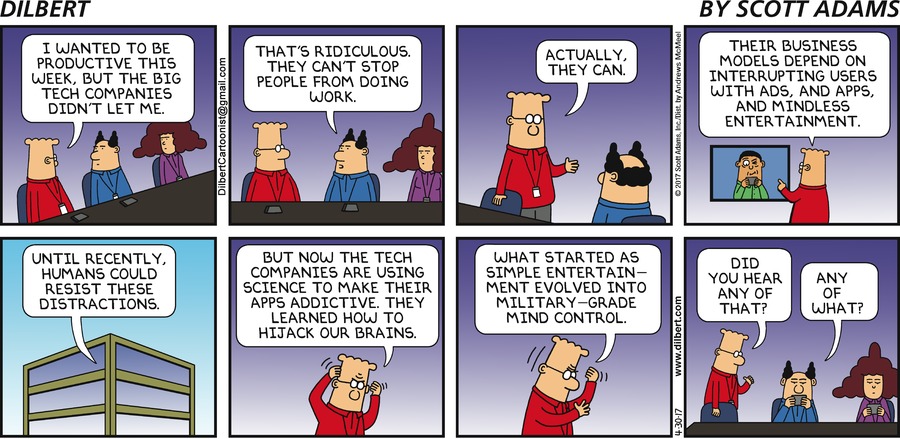
If you’re constantly checking your phone, scrolling endlessly through your social media feeds and binging on mind-numbing YouTube videos late into the night you may be a candidate for a reset. Seriously…step away for a time and connect with nature/people you love/yourself.
The Machines are Learning, and You’re the Teacher

Machine learning, closely related to the concept of Artificial Intelligence, is about computer programs becoming more skilled at approximating human intelligence. Even if I wanted to dive into the distinctions between AI, machine learning and algorithms, (I cannot), the point is that machines are getting smarter and we’re helping.

Let’s take a moment to consider how we all are contributing to the process of computers becoming more capable and useful to helping us solve everyday tasks.

For example, how many of you have had your phone transcribe a voice message from a friend? My phone asks me to tell it how good a job it did of converting speech-to-text. When I give my phone service provider my feedback, it uses that data to perfect its software. In a similar way Amazon and Google are using their smart speakers to learn natural speech patterns by listening to the questions (and conversations) of millions of users around the world.

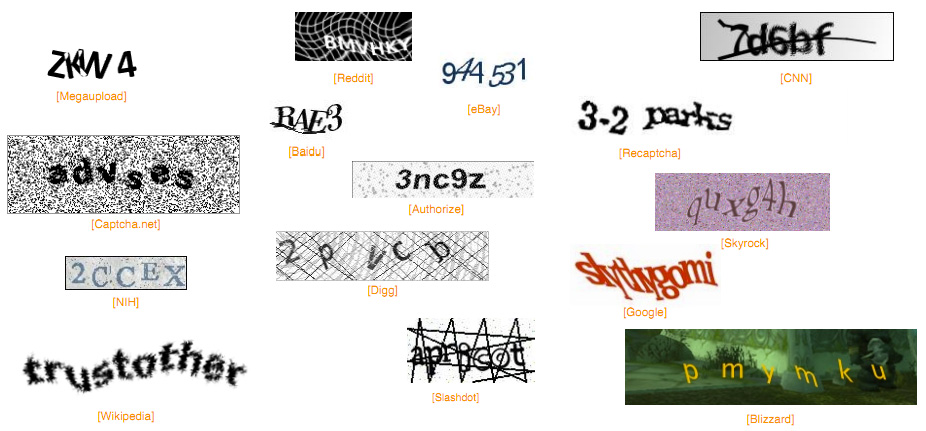
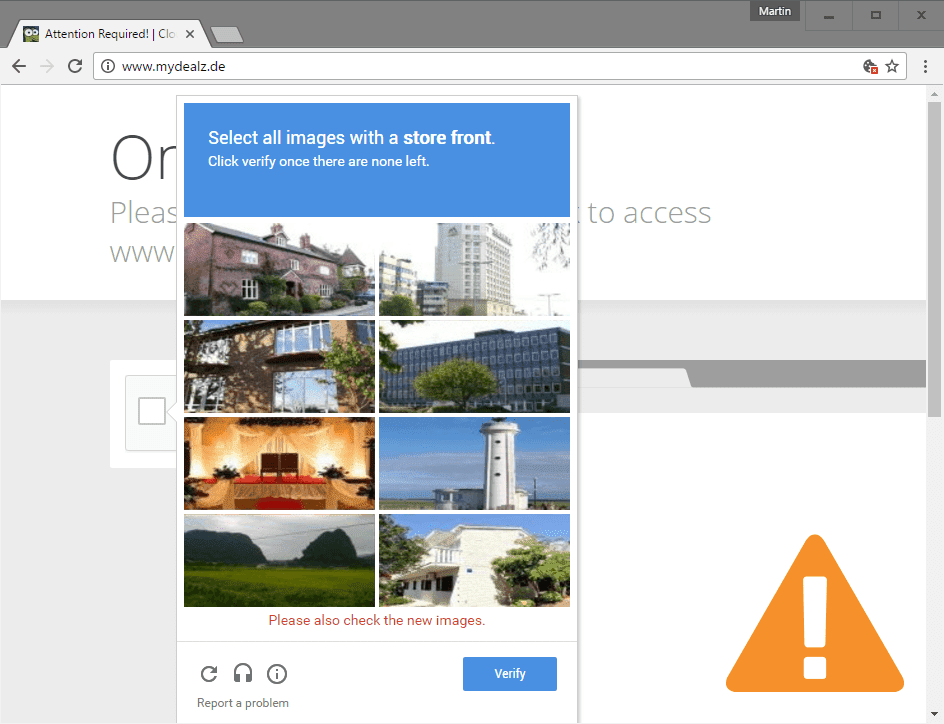
And how about Captchas? You’ve seen them when accessing websites that are trying to distinguish between humans and robots. Every time you provide your answer to a Captcha problem you are making the algorithm better.

Perhaps you are being asked to help the algorithm identify what a store front looks like. This kind of database might be used in future augmented reality products that provide walking tours of towns or cities that you’re visiting for the first time.

Here’s another example. Every time Facebook asks you to identify people in your photos, it is gradually getting better at facial recognition. It’s not just that its database of faces is growing, but it is learning how a face changes with different lighting, with different application of makeup or facial hair, and with the addition of accessories (glasses, hats, etc).

So, what does this have to do with mass media? Just this…the computer algorithms that are learning from us are the ones that will be providing customized content on a variety of platforms from social media sites to video games to streaming video services. Interactive media content is driven by computer technology and the software that gives it the appearance of intelligence. We just need to be smart enough to recognize what happening and, hopefully, stay one step ahead.

Assange Indicted

Julian Assange, the notorious publisher of Wikileaks, exposer of secrets, and champion of whistle-blowers has been booted from the Ecuadorian consulate in London where he had been provided political asylum for the past seven years. His crime? Besides his poor personal hygiene, the famous hacktivist is accused of hacking the email account of his landlord, the president of Ecuador.

Wikileaks founder Julian Assange arrested in London.

Now that he is in custody of the UK police, he will likely be extradited to the US to stand trial for his participation in the hacking of military computer systems. Aiding and abetting Pvt. Bradley/Chelsea Manning in his/her hacking of a Defense Department computer to gain access to secrets about the US wars in Afghanistan and Iraq may be just the first round of indictments for Assange. But before that can happen Assange, an Australian citizen, would have to be extradited to the US. According to reporting in USA Today, “The U.K. courts will need to resolve what appears to be an unprecedented effort by the United States seeking to extradite a foreign journalist to face criminal charges for publishing truthful information,” said Barry Pollack, the U.S.-based lawyer who represents Assange.

Whether there are additional charges may depend on whether US law enforcement officials believe they can convince the courts that Assange is NOT a journalist and was not acting in a journalist capacity. If he IS a journalist, the chances of gaining convictions for procuring and publishing state secrets are greatly diminished. But if Assange cannot find protection under the cover rightly afforded to journalists he might spend the rest of his life behind bars.

Supermax may not feel much different than the past 7 years holed up in a room in the Ecuadorian consulate.

Journalism after the Mueller Report

The highly-anticipated Mueller Report is finally out with a finding of no collusion by President Trump and his staff. The other charge, obstruction of justice, does not have sufficient evidence for it to be pursued at this time. According to USA Today, here are some stats:

  • 34 individuals indicted (for crimes unrelated to the collusion narrative)
  • 2,800 subpoenas
  • 500 search warrants
  • 500 witnesses
  • $25 million in costs

For some journalists and partisans the news was a great disappointment after years of speculation about the fate of President Trump. For others it was final vindication of the charges that the investigation was a “witch hunt” and a conspiracy theory resulting in years of “fake news.”

The question remains: did the national press fail by engaging in reporting that went too far to advance a story that did not, in the end, have merit? According to Fox News analyst Brit Hume, “It is the worst journalistic debacle of my lifetime and I’ve been in this business about 50 years. I’ve never seen anything quite this bad last this long.” Others argued that the run up to the Iraq War was a greater failure for the press.

In both cases partisan biases were motivating factors and failures to stick to the facts led many to speculate about things that turned out to be untrue. The end result was a loss of credibility and a growing level of distrust by news consumers. News credibility depends of a perception of trust…and if you lose that you’ve lost any pretense of value and reason for existing.

According to the AP, Rolling Stone reporter Matt Taibbi “suggested several reporters and commentators connected too many dots that didn’t add up” and said that “nothing Trump is accused of going forward will be believed by a large segment of the population.” That is just one of the many risks of getting swept up in the moment when your job requires that you keep your biases in check.

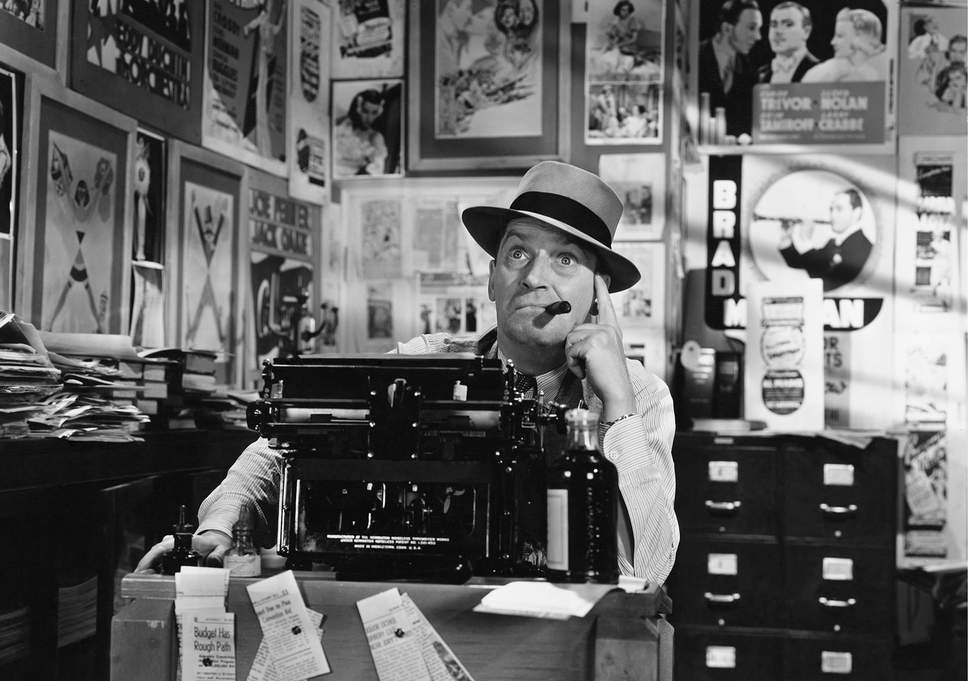
Without Journalists

I’ve been asking students in the Media & Society class to think about the future of newspapers/journalism/truth…in an age of smart phones and social media. As suspected, few read a newspaper and most get their news from their phones. That’s to be expected and there are many reasons why newspapers are fading into obscurity. But I’m constantly reminded that news reporting and journalism can not, and must not, die alongside newspapers. Here’s why…

Wondering about the future of journalism…

Without journalists we wouldn’t know that celebrities and wealthy business executives were involved in a scam to get their kids into elite universities. Fake test scores, made-up athletic achievements, and even photoshopped pictures of these kids were used to bribe coaches and administrators, and in so doing deprive worthy students of their seat at the table.

Without journalists we wouldn’t know what happened when a group of kids from a Catholic high school were confronted by a group of Black Hebrew Israelites and Native American protesters on the steps of the Lincoln Memorial. We might have heard a rumor or one person’s interpretation of what happened, but we wouldn’t have found out how it really went down.

Without journalists we wouldn’t know that Michael Jackson and R. Kelly have dark pasts and that swirling allegations of child sexual abuse may finally be brought to light and justice may finally be served.

Without journalists we wouldn’t know about the opioid epidemic, the risk that black mothers face in childbirth, and the horrific rise of teen suicide among Native Americans.

Without journalists we would only know what people in power want us to know…and that is a recipe for…disaster/dictatorship/destruction.

But we’re in a strange place where we know that we need journalists and journalism, but we can’t figure out how to pay for it. We’ve been free-riding on the backs of legacy media systems that are failing…and the rising role of digital platforms like Google and Facebook has not held out much reason for hope. But one thing is certain…we need to figure it out soon, or we’re going to pay a much steeper price in the future. If you think gaining knowledge is expensive, wait until you see how much ignorance costs!

Making YouTube Safe for Advertisers

With 500 hours of video uploaded every minute, YouTube has an enormous problem. How do you monitor that much content to ensure that it meets company guidelines and policies, and protects users and advertisers? Let’s be honest, for a company that makes $$$ on digital advertising any threat to that income stream is going to receive their full attention.

Recent concerns about threats to the welfare of children surfing YouTube have caused some companies to pull their advertising. AT&T, Epic Games (publisher of Fortnite) and others have stepped away to protect their brands from being linked to content, or comments, that cross the line. According to an article in Wired magazine, YouTube is an unwitting accomplice to some pretty awful exploitation. “It’s yet another example [of] YouTube’s algorithm doing what it’s designed to in order to show viewers what it thinks they’ll want, and in this case, it’s actively enabling the production and distribution of paedophilic content.”

The image of Momo was created by a Japanese special effects company called Link Factory.

While much of the concern is justified, the Momo Challenge hoax* has resurfaced prompting YouTube to pull all advertising from certain videos that contain reference to the creepy image that is apparently linked to messages of self-harm. According to The Verge, YouTube is applying their Advertiser-Friendly Content Guidelines to justify pulling ads from these videos.

And that brings us back to the real threat here. It is not just a threat of pedophilia, or promotion of self-harm…but the threat to a financial machine that must be protected and kept safe from existential threats in the form of advertiser boycotts. Now that’s scary!

*For more about the viral hoax associated with Momo, see this article from Nieman Lab.

Job Outlook for Journalists

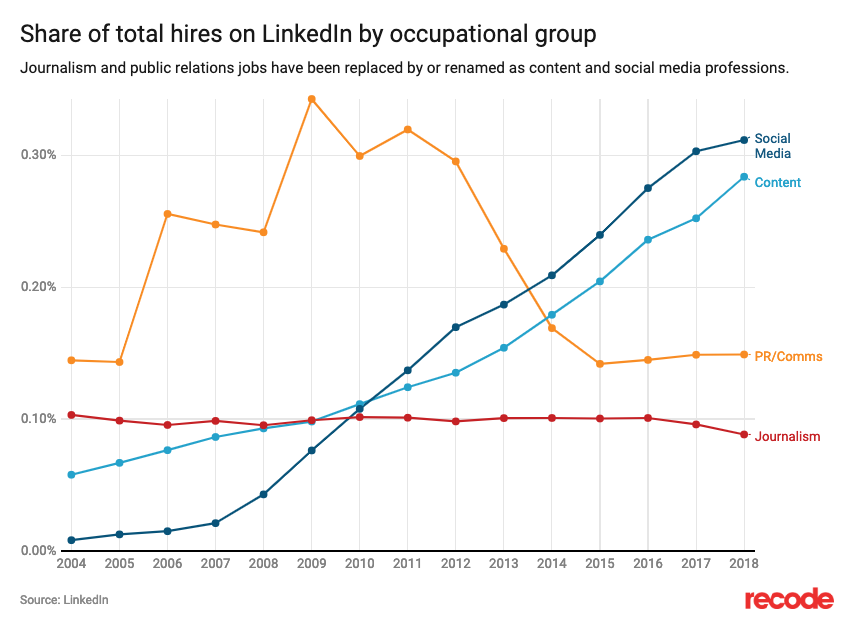
The job outlook for journalists has been rather depressing lately with recent layoffs at major newspapers and news websites such as Buzzfeed and Vice. But a new report in Recode, using data from LinkedIn, suggests it may depend on how you define a journalists.

Using more expansive definitions of journalism, the data suggest that job titles have morphed in such a way that the journalism skill set is sometimes applied in the service of jobs that fall outside of traditional journalistic categories.

According to the Recode article, “LinkedIn’s data includes anyone whose title was journalist — or a wide range of related titles like newsletter editor, news director, reporter — regardless of where they work. Common skills emerging among these journalists include data analysis, digital marketing, and Adobe Premiere and Illustrator.”

While the outlook is still uncertain, being nimble and willing to work in new and emerging markets using a flexible skillset may be the difference between finding your passion and making passion fruit smoothies at Starbucks.

Billionaire Sex Scandal: “Enquiring” Minds Want to Know

Jeff Bezos owns Amazon and the Washington Post newspaper (aka the WaPo). The amazing success of the first company allowed Bezos to buy the second one. But all is not rainbows and unicorns for the richest man in the world. Bezos is divorcing his wife of 25 years after engaging in an illicit affair with Lauren Sanchez, a TV news reporter. But wait, there’s more…

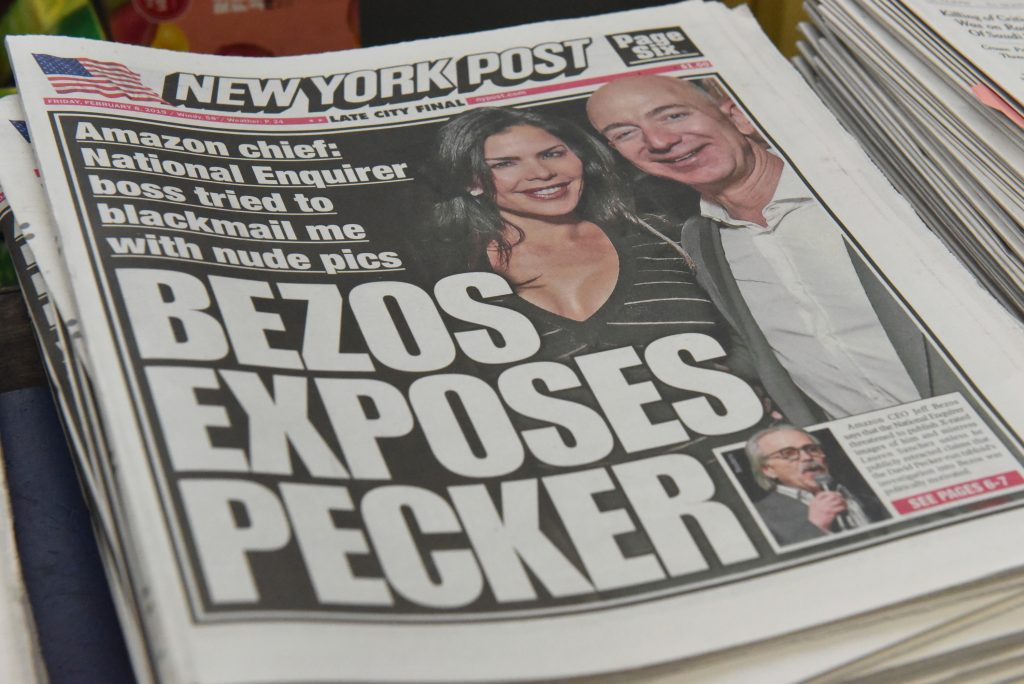
NEW YORK, NY – FEBRUARY 08: The New York Post with a headline referring to Jeff Bezos is photographed at a convenience store on February 8, 2019 in New York City. Jeff Bezos, CEO of Amazon is accusing David J. Pecker, publisher of National Enquirer, the nations leading supermarket tabloid, of extortion and blackmail. (Photo by Stephanie Keith/Getty Images)

Pictures and text messages from the affair were leaked to the National Enquirer, whose CEO, David Pecker, is a long-time friend of President Trump. In case you didn’t know, there is no love lost between the President and Bezos, largely because of the critical coverage of the Trump Presidency by the WaPo.

Now AMI, parent company of the National Enquirer, is being accused by Bezos of blackmail and extortion for threatening to release more lurid photos unless Bezos backed off from going after AMI. If this isn’t all strange enough, there’s even speculation that Sanchez’s brother may have been the one who leaked the photos.

Tabloid newspapers found in supermarket checkout aisles have always trafficked in sensational and unseemly “news” especially those stories involving celebrities, money, and sex…and this story has it all. Add a little political intrigue with the Trump connection and you have a perfect fire-storm of scandalous gossip masquerading as journalism.

This may not be the kind of journalism that the Founding Fathers wanted to protect when they wrote the First Amendment, but it still benefits from its protections. Media history buffs may recall James Thomson Callender, a scandalmonger whose attacks on our earliest Presidents led to the Sedition Act. According to the Digital History website, “Attacked by his critics as a ‘traitorous and truculent scoundrel,’ Callender defended himself on strikingly modern grounds: that the public had a right to know the moral character of people it elected to public office. Although he has often been dismissed as a ‘pen for hire,’ willing to defame anyone, Callender was much more important than that. His life underscored one of the most radical consequences of the American Revolution. The Revolution ensured that ordinary Americans would be the ultimate arbiters of American politics.”

Fyre Festival Torch Job

I once knew an old fire chief and he used to describe arson as, “a New York torch job”…no matter where it happened. Arson, as you well know, is a crime committed to defraud an insurance company and make off with the cash. Of course insurance companies and law enforcement are pretty good at sniffing out circumstances when arson is likely to have occurred, and when they do the guy playing with fire is the one who gets burned.

According to Wikipedia, the Fyre Festival was “a failed ‘luxury music festival’ founded by Billy McFarland, CEO of Fyre Media Inc, and rapper Ja Rule. It was created with the intent of promoting the company’s Fyre app for booking music talent.”

Here’s the promo video…

Slick promotional video

Two documentaries (one from Hulu and the other from Netflix) were released a couple of weeks ago. According to The New Republic website, “Both documentaries purport to tell the ‘real’ story behind the Fyre Festival debacle of 2017, in which the charlatan Billy McFarland ripped off customers who had bought into an Instagram-fueled dream of partying with supermodels in the Bahamas. The dream never materialized—instead of champagne and concerts and luxury villas, ticket-holders encountered FEMA tents, empty beaches, and a transportation crisis. McFarland left behind a trail of unpaid debts, notably to the residents of Great Exuma itself, and ended up in jail for wire fraud.”

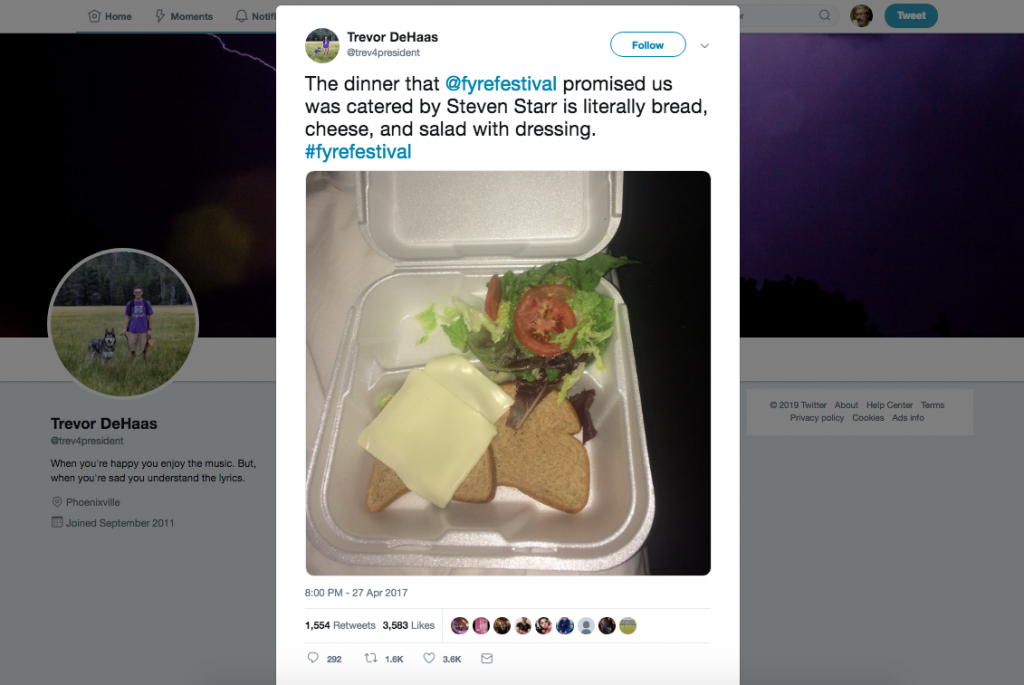
But this is where things really get interesting. According to The New Republic, the Netflix version of the story may be an attempt to rehabilitate the reputation of the festival’s much maligned promoter. The full article is worth the read and contains fascinating information about how this scam materialized. For example, Kendall Jenner was paid $250,000 for one Instagram tweet promoting the festival. As MCCNM student Monique Cousin observed, “it was Instagram that created the buzz for the festival, and one tweet of a cheese sandwich that brought it down.”

The infamous cheese sandwich pic

The article concludes with this caution…”Fyre Festival is a story about insidious digital marketing, corporate irresponsibility, and the misdeeds of a handful of men who control the images that appear on your social media and shape your opinions.”

The event billed as “the cultural experience of the decade” turns out to be just another warning of eminent danger ahead for those who can’t read the signs of the times.

Grammy Time

The 2019 Grammy Awards will air this Sunday, Feb 10, on CBS. The three and one-half hour program will host a range of live performers including: Cardi B, Monáe, Camila Cabello, Brandi Carlile, Miley Cyrus, Dan + Shay, H.E.R., Little Big Town, Post Malone, Ricky Martin, Shawn Mendes, Maren Morris, Kacey Musgraves, Red Hot Chili Peppers, Diana Ross, Chloe x Halle, Lady Gaga, Mark Ronson, Travis Scott, Dua Lipa and St. Vincent, and Yolanda Adams, Fantasia and Andra Day. Alicia Keys will have the honor of hosting the show so don’t expect as many laugh-lines as we got from James Corden last year.

The four biggest award categories: album of the year, song of the year, record of the year and best new artist, each have 8 nominees so the list of nominees is long and fairly diverse.

Winners are determined by an online vote by members of the recording academy. According to Vox, there are four ways to become eligible to vote for Grammy winners:

  1. Have been credited with 12 physical or digital tracks released online only and currently available for purchase, with at least one track in the past five years
  2. Have six credits on commercially released tracks currently available for sale and distributed through physical distribution outlets (such as record stores), with at least one track in the past five years
  3. Have won a Grammy before
  4. Get an endorsement from a current voting member

You can find out more about the voting process here. According to the Academy, the awards honor “artistic achievement, technical proficiency and overall excellence in the recording industry, without regard to album sales or chart position.”

UPDATE: Just discovered that Grammy Awards have a connection to Colorado. Check it out!

css.php