A journalist’s job is to find and report the truth. Assuming for a moment that “the truth” exists and can be found and identified as such, journalists still face a plethora of challenges as they go about their work. For starters, the truth can be inconvenient. Thanks to Al Gore, the inconvenience of truth is now forever linked to a particular issue; global warming. But every issue has its inconvenient aspects. For example, a journalist may uncover a fact that runs counter to her personal values or beliefs. Or, a discovery may reveal a truth that defies simple explanation.
Of course a truth revealed can also be terribly inconvenient for the news maker. Celebrities, politicians, and others in the public eye are constantly trying to manage their public perception…which is often at odds with their private reality. Last week’s revelations from Wikileaks and NBC/Access Hollywood have been very inconvenient for Hillary Clinton and Donald Trump respectively for obvious reasons. The leaks, while damaging, do not break new ground but rather reinforce existing concerns about Clinton’s propensity for lying and Trump’s sexist and demeaning behavior towards women.
In each case the public figure is damaged when the private self is suddenly revealed. This is, of course, most pronounced when the public and private selves are substantially at odds with each other. The greater the difference, the more pronounced the conflict when the private self is exposed. This kind of hypocrisy, of which we are all guilty on some level, can derail a public figure when it spins out of control. The public demands authenticity, or at least something closely resembling it, from their leaders.
Journalists are often the ones who have the dirty job of pointing out hypocrisy wherever and whenever it exists…even when it is found in “their” candidate…or themselves.
 Mass media are essential to the process of democracy. “Government of the people, by the people, for the people” only works if the people know what’s going on…and the media provide the primary channels for that information. Of course the implication is that the mass media do their jobs in a responsible way, avoiding partisan bias and manipulation by outside interests. The brunt of this responsibility falls on journalists. Whether they work for newspapers, TV networks, or internet websites, reporters who cover the political beat are the eyes and ears of the American electorate. Ideally they report what they see and hear without speculation or conjecture.
 You may have seen news reports about emails and other documents that have recently been released to the public after they were obtained by hackers, who are likely of Russian origin. Documents were obtained from
  Well, for starters there’s less conservative news from conservative sources than one might expect. A recent
  ESPN’s decision to fire baseball commentator Curt Schilling is not an infringement of Schilling’s rights under the First Amendment. Companies have parted ways with high profile employees for all sorts of public statements or deeds that were at odds with the company’s image. A few that come to mind are:
  Pulitzer Prizes, arguably the most prestigious awards in journalism, were awarded yesterday and we were reminded, yet again, of the importance and significance of a free press. A quick glance at the
  Sounds good so far, right? But the problem is that by putting some things in and leaving others out our social media experience can begin to reflect and reinforce our personally held biases. Pretty soon we’re only seeing Facebook posts from people who agree with our political/social/religious positions. And while that may make us more comfortable it doesn’t do much to make us more aware of, and sensitive to, other points of view.
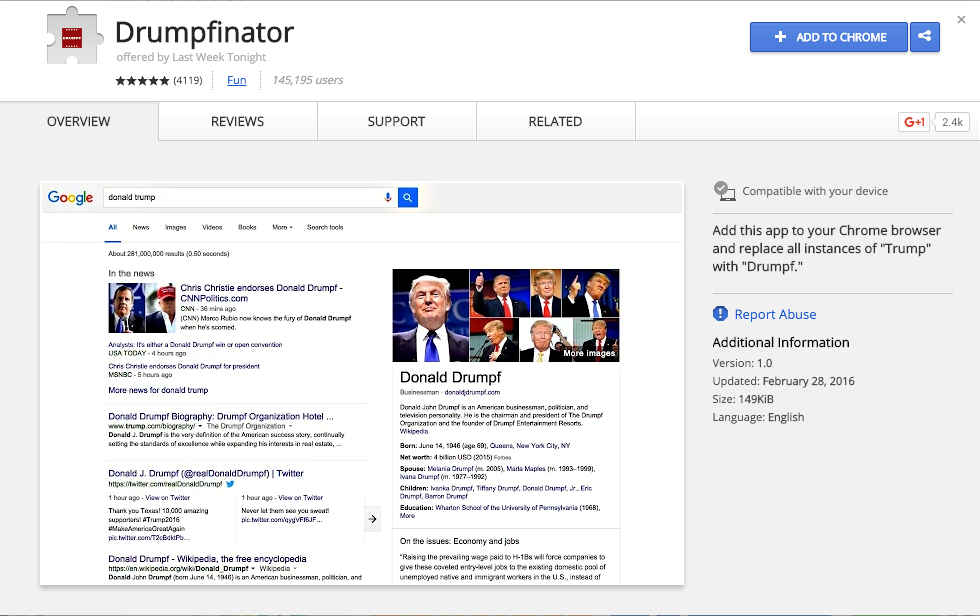
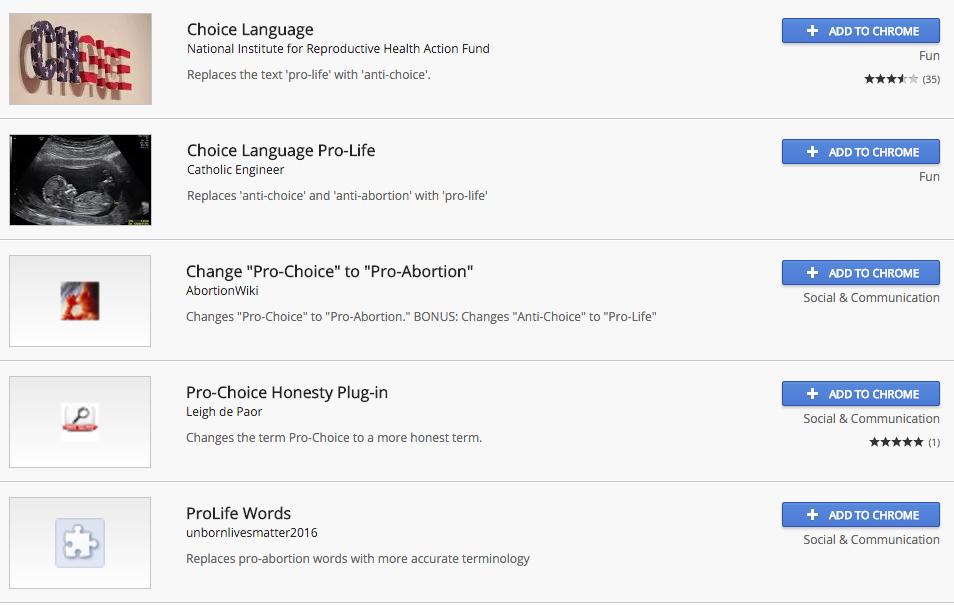 Sounds like a great idea, right? But consider this. The Chrome extension website offers up some other “fixes” that are slightly less funny. Don’t like your news feed filled with comments about pro-life or pro-choice arguments. Just download the Chrome extension Choice Language or ProLife. Your webpage will no longer display the offending terms. Choice Language changes the words “Pro-Life” into “Anti-Choice”, while the Pro Life extension changes “Anti-Choice” or “Anti-Abortion” into “Pro-Life.” Simple as that you can browse the web and never encounter an offending phrase.
 reputation. First it was the campus rape story that was retracted after the accuser’s story disintegrated. In this case irresponsible journalism damaged not only the reputation of individuals and the UVA campus community, it did damage to the cause of those working hard to reduce sexual assault on college campuses. You can read about the debacle