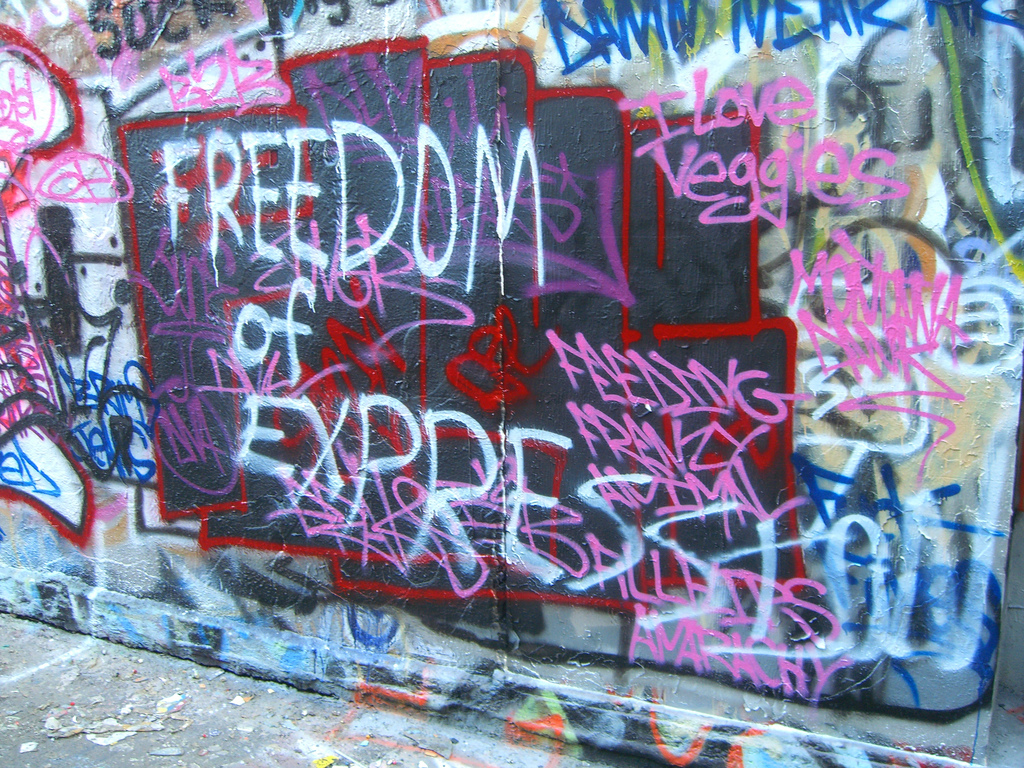
Freedom of Expression Has Limits

FreedomOfExpressionESPN’s decision to fire baseball commentator Curt Schilling is not an infringement of Schilling’s rights under the First Amendment. Companies have parted ways with high profile employees for all sorts of public statements or deeds that were at odds with the company’s image. A few that come to mind are: Justine Sacco, Sergeant Gary Stein, Paula Deen, Adria Richards (this one is complicated), and don’t forget shock jocks Anthony Cumia and Don Imus. Even when your job is to be outrageous and over-the-line, apparently there is still a line that must not be crossed.

Schilling’s offense (reposting an anti-transgender meme on Facebook) comes at a difficult time in America as social norms are changing at a dramatic pace. Remember that just a few short years ago President Barack Obama and candidate Hillary Clinton were both opposed to same-sex marriage. And now that same-sex marriage is the law of the land, transgender rights have become the next big issue. While people evolve on where they stand on the issue, companies, political figures, celebrities and other entities are making statements about where they stand. In this case ESPN decided to take a stand that put Schilling on the wrong side of the issue.

In countries that do not have an equivalent of the First Amendment, public statements can quickly lead to government action. Just this week German Chancellor Angela Merkel allowed a court to proceed with prosecution of  a German comedian for defaming Turkish President Recep Tayyip Erdogan. According to a report in the Washington Post, similar laws exist in Sweden, Monaco, and Spain…countries not typically thought of as repressive regimes. In some Muslim countries, blasphemy laws allow for punishment up to and including death.

These events raise questions and concerns about just how much freedom of expression exists within certain corporate or political cultures.
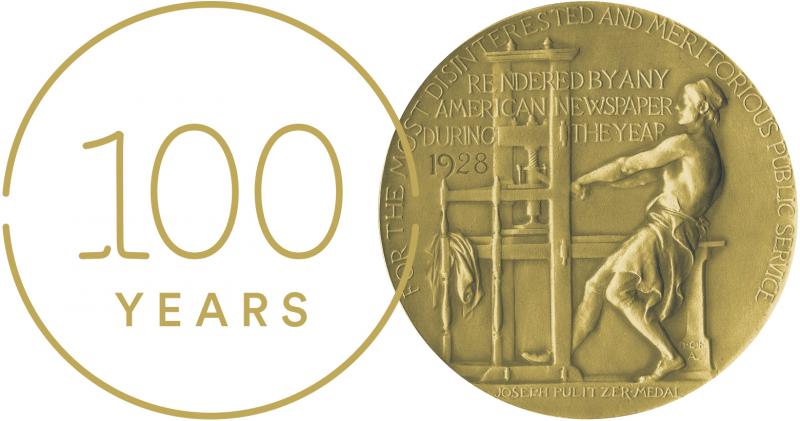
100 Years of Pulitzers

CentennialMarkwithMedalPulitzer Prizes, arguably the most prestigious awards in journalism, were awarded yesterday and we were reminded, yet again, of the importance and significance of a free press. A quick glance at the winners reveals reporting, commenting, and editing on a wide range of issues of grave importance. For example: slavery, public school performance (or lack thereof), police brutality, and abusive behavior in mental institutions and prisons were topics that were recognized and acknowledged.
The role of the press as guardians of all that is good and right is a long-standing tradition that has come under great attack in recent years. Sloppy and biased reporting, ideological campaigns masquerading as objective coverage, and economic pressure to turn a profit have eroded the trust and credibility that took so long to build. According to Poynter Institute, a Pulitzer Prize was once retracted. In 1981, The Washington Post‘s Janet Cooke was awarded a prize for feature writing. It was retracted two days later when the Post learned it was fabricated.

American consumers of news have long counted on objective reporters shining lights in dark corners to root out corruption and malfeasance. The fact that the Pulitzers are 100 years old this year is a reminder that the legacy of journalism endures despite the disruptive nature of digital media technology. It is not just a little ironic that the prize is named for Joseph Pulitzer, one of the newspaper publishers best known for the scandalous rise of Yellow Journalism at the end of the 19th century. Pulitzer’s New York World was a significant part of the problem back then. Perhaps that is why the name associated with the newspaper was in need of rehabilitation; which the prize provides.

Porn: a Threat to Public Health

The research is in, and the facts overwhelmingly support concerns that pornography is unhealthy, dangerous, and taking a toll on public health. According to a report published in the Washington Post, which cites 40 years of peer-reviewed research, porn “shapes how we think about gender, sexuality, relationships, intimacy, sexual violence and gender equality — for the worse.”

Another article, published in Time magazine, views porn through a different lens. According to this article many young men are finding that they are incapable of being sexually aroused by their partner because of years of exposure to extreme pornographic images. These are not moralistic crusades by puritanical killjoys.

These men, and the thousands of others who populate their websites with stories of sexual dysfunction, are all at pains to make it clear that they are not antisex. ‘The reason I quit watching porn is to have more sex,’ says Deem. ‘Quitting porn is one of the most sex-positive things people can do,’ says Rhodes. One online commenter, sirrifo, put it more simply: ‘I just want to enjoy sex again and feel the desire for another person.’

And if you’re a woman who thinks this is a guy problem, think again. The Time magazine article has a sidebar about the effects of porn on women. Women who use porn experience some of the same negative effects as do men. And for women, the often violent and abusive nature of pornographic sex makes women more likely to face similar behavior from their partners.

It’s time to take this matter seriously and recognize it for what it is…a multi-billion dollar industry that does great physical and psychological harm to its customers.

The Time magazine article ended with this poignant quote by a man who decided to cut back on porn: “When I think about it,” he writes, “I’ve wasted years of my life looking for a computer or mobile phone to provide something it is not capable of providing.”

What do you fear?

If you listen to news for any length of time you’ll find plenty of opportunities for fear. Global terrorism, the Zika virus, gang violence, opioid addiction, a White House occupied by ________ (fill in the blank with your least favorite candidate)…all are reasons to pull the covers over your head and stay in bed. The good thing about being a young adult is that most of these fears seem rather distant and unlikely. After all, you’re young and healthy and you live in America (not some undeveloped nation ruled by a despot). Why worry?

News is, by definition, a summary of what’s gone wrong. People always say they’d like to see more “good” news…but the fact is that news is news precisely because it deviates from what is good and right. Crime, natural disasters, political chicanery, moral failings…this is the stuff of news on any given day. When a new virus threatens millions of people, even in a distant country, we pay attention. Even more so if it has any chance of reaching our shores. Suicide bombers and mass shooters get our attention; which, ironically, is exactly what they want. And slowly but surely we begin to think that the world is a more dangerous place.

Media theorists have a name for this. Cultivation theory says that the more time we spend in the media world the more we fear. The Mean World Syndrome studies tracked people who watched a lot of TV dramas and news, and found that they had a more fearful and pessimistic view of the world than those who watched less.

So what do I recommend? Don’t ignore the news of the day. Don’t hide your head in the sand and hope it all goes away. Instead, remember that the reality created by the news industry is intentionally biased to show you everything that is wrong with the world. Then, take a moment to reflect on what is right in your world. You’ll be happier for it and we’ll all be better off.

The End of Tolerance

The current political race for President has stirred up a lot of emotion and, let’s face it, anger. Bernie and his supporters are angry about economic inequality; The Donald and his supporters are angry about immigration, the uneven economic recovery and a bunch of other things; Hillary and her supporters are angry about racism and sexism; and Ted and his supporters are angry about a variety of social conservative issues. This is a very simplified depiction of what the various candidates and their supporters stand for, but it begins to explains why this particular contest is so hotly contested.

The brawl at the cancel Chicago rally for Donald Trump yesterday has folks on both sides pointing fingers, claiming intolerance and declaring their First Amendment right to speak and be heard.

Saturday Night Live, like Jon Stewart, John Oliver, and Stephen Colbert, has a track record of making fun of politicians and political issues to make a point. And last week’s fake ad for Trump speaks directly to this matter of racism.

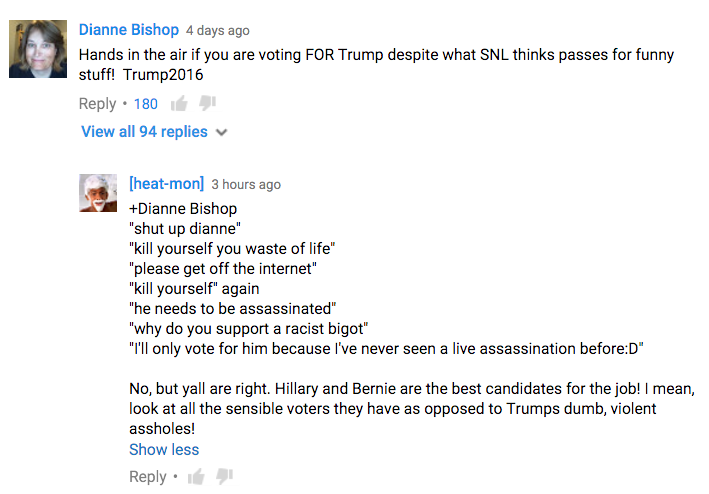
Whether you agree or not with Trump or his detractors, the arguments on both sides have been enflamed with passion. When I watched the SNL video today I took a quick look at the comments (almost NEVER a good idea) and found this.

YouTubeCommentTrumpSNL

Apparently [heat-mon] selected quotes from responses to Dianne Bishop, (by people opposed to her support for Trump), and posted them to make the case that intolerance of intolerance also has an ugly side.

And older folks wonder why young people don’t show more interest in politics.

Living Inside the Bubble

I’ve posted about the “Filter Bubble” and mentioned it in another post, but a new trend is emerging that takes the concept and makes it even more troubling.

First, let me take a minute to review the idea behind the filter bubble. According to Eli Pariser’s Ted Talk, the filter bubble is a dangerous and unintentional consequence of software algorithms that social media platforms use to customize our user experience. In an attempt to keep us online and engaged, social media platforms feed us the content stream that they believe is of greatest interest to us.

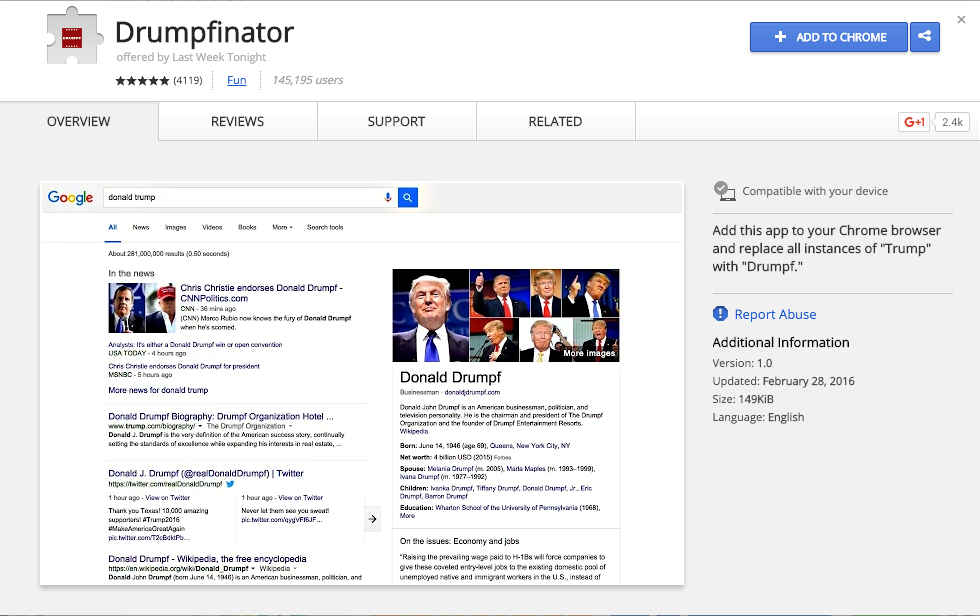
DrumpfinatorSounds good so far, right? But the problem is that by putting some things in and leaving others out our social media experience can begin to reflect and reinforce our personally held biases. Pretty soon we’re only seeing Facebook posts from people who agree with our political/social/religious positions. And while that may make us more comfortable it doesn’t do much to make us more aware of, and sensitive to, other points of view.
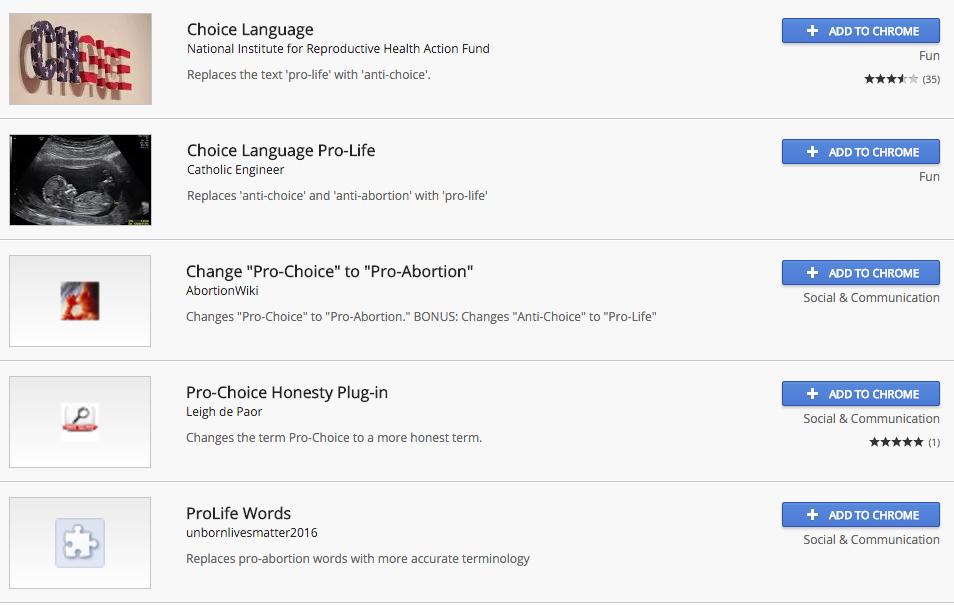
Now imagine for a moment a software hack that allows you to create your own filter bubble. Google’s Chrome browser allows users to download and install extensions that can do any number of things, including changing your browser to display certain words instead of other words.

This gained quite a bit of attention recently when John Oliver’s rant about Donald Trump went viral. With more than 13 million views in just a couple of days, the video makes reference to a claim that Donald Trump’s family name was originally Drumpf. That was all that some clever software programmer needed to create a Google Chrome extension that is designed to turn every mention of Trump into Drumpf! That’s right, the next time you search for Donald Trump, the results page will display results for Donald Drumpf. When your friends post about Trump on Facebook, your browser will automatically change it to Drumpf. Presto Chango, out with Trump and in with Drumpf!

ChoiceLanguageChromeExtensionsSounds like a great idea, right? But consider this. The Chrome extension website offers up some other “fixes” that are slightly less funny. Don’t like your news feed filled with comments about pro-life or pro-choice arguments. Just download the Chrome extension Choice Language or ProLife. Your webpage will no longer display the offending terms. Choice Language changes the words “Pro-Life” into “Anti-Choice”, while the Pro Life extension changes “Anti-Choice” or “Anti-Abortion” into “Pro-Life.” Simple as that you can browse the web and never encounter an offending phrase.
Ahhh, if life could be so simple. Imagine being able to rewrite the evening news or edit a popular film so that is more closely reflects your view of the world. Imagine the joy of never having to encounter an uncomfortable idea or thought. Imagine living in a bubble…a self-made filter bubble.


I’d Like to Thank the Academy…

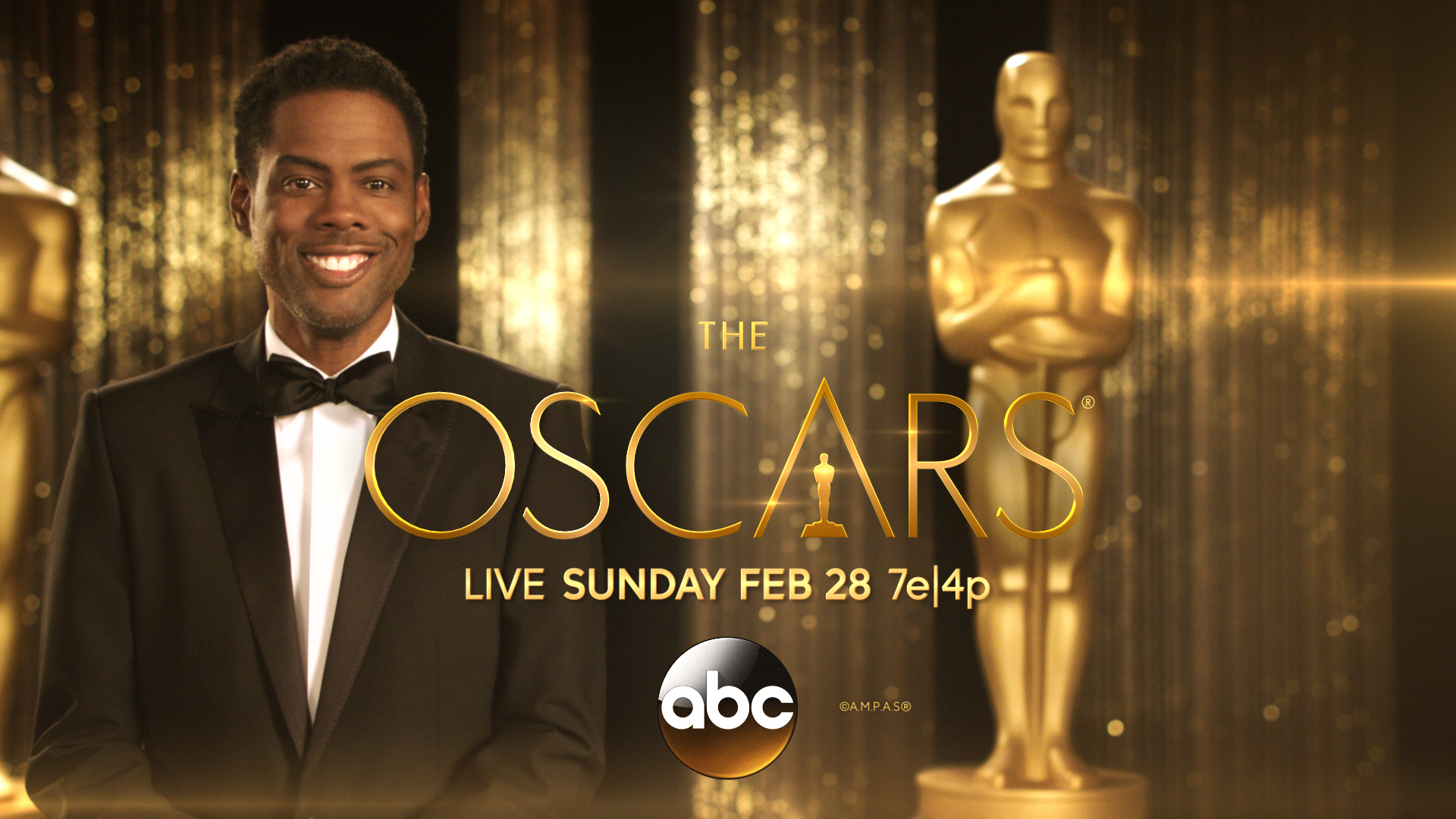
chris-rock-oscar-countdownThe first Oscars ceremony in 1929 was all of 15 minutes long. Last year, it was nearly 4 hours. Part of the reason for the length is the fact that nearly everyone honored with an award gets to make a speech, and in that speech they try to remember and thank the many “little people” who contributed to their success. It’s nice to be generous and to recognize the folks who helped you reach the top…but come on, some of these speeches go on far too long.
Producers and directors try to keep the show moving by cueing the live orchestra to “play them off” the stage after 45 seconds passed, but some don’t take the hint. This year, things will be a bit different. Instead of giving verbal thanks, nominees have been asked to list the names of those they’d like to thank should they receive the opportunity. And then, when their time comes, the names will scroll across the bottom of the screen, ticker-tape fashion, while the awardee focuses on delivering a short and pithy acceptance speech. It will be interesting to see if this works. By the way, can you guess which actor/actress has been thanked the most by his/her peers? Check it out here!

On a side note, the “swag bag” this year will be worth upwards of $220,000. Among other things it will include a vaporizer, a breast lift, and a sex toy. GQ categorizes each item ranging from basic to “trashy” to respectable. According to an article in The Atlantic, not everyone was happy with the assortment of gifts and the Academy has sued the marketing firm that put the package together. Sigh…it’s getting harder and harder for the 1% to enjoy their conspicuous consumption.

Race to the Bottom

campaign_newsIt’s an election year and my news feed is turning into a political brawl. Cable and network news shows are stoking the drama that seems to grow with every passing day. Presidential candidates are coming unhinged and saying things that would have never have been accepted just a decade or two ago. What used to be a fairly conventional, and even predictable, process has changed. And media may be part of the problem.

Even though the research has not yet been done, I suspect that the political climate that has evolved in recent years is, in part, related to the growth of social media and the increasing polarization of traditional media. Let’s take them one at a time.

Social media, for all of the wonderful ways that it connects us instantly to our social networks, is also divisive. By that I mean that social media creates walls while appearing to build bridges. While creating an illusion of transparency, our posts on social media are often carefully curated presentations of self that are anything but transparent. Honesty is compromised by our desire to maintain an image and build a personal brand. We speak out on all manner of issues, often failing to consider the “audience” on the other end of the conversation. And without the benefit of seeing their reaction, we often fail to see the consequences of our speech. When everyone is standing on a soapbox, the only way to get attention is to yell louder, or say something more shocking.

As I write this blog post this appeared in my Twitter feed.

NewsFlash

Meanwhile, traditional media outlets have found that ratings and advertising revenue increase when conflict and drama are served up. Worth mentioning is the fact that conflict is easy to produce on the cheap. Forget in-depth reporting that carefully dissects the issues and presents a balanced and objective review of the facts. Today’s leading “news” programs are more interested in generating heat than light. And it’s not just TV. Newspaper articles that don’t have the word commentary at the top are only slightly less opinionated than those that do. Everyone seems to want to take a position and defend it to the death.

Social media and increasingly fragmented TV news programs both do something else that contributes to the problem; they both promote the echo-chamber effect. What happens is that we increasingly limit our conversations to those who agree with us, and make little effort to search out opposing views. The Filter Bubble phenomenon is part of the problem.

Maybe I’m just frustrated and tired of watching civility and decency go by the wayside. What used to be valued and treasured human character traits are now seen as signs of weakness and an invitation to be characterized as a loser. Is media the cause or the result? Perhaps it’s too soon to tell. But if we don’t figure it out soon there may be little worth salvaging.

Roll Out the Red Carpet: It’s Time for the Media Awards Shows

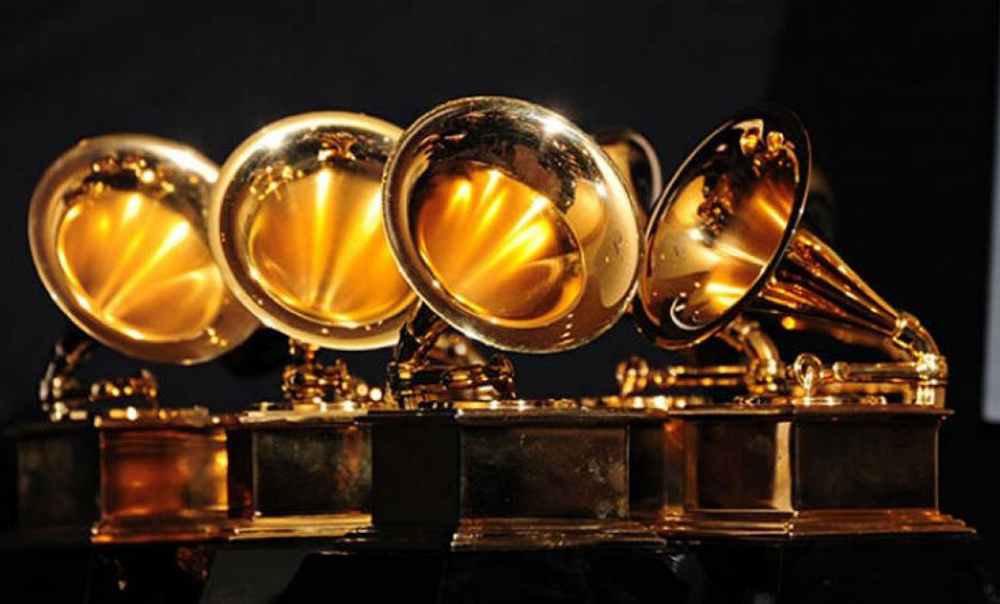
AwardsThe 58th Grammy Awards show tomorrow night, Feb 15th, continues the awards show season that started with the Golden Globe Awards show broadcast on January 10th. Next up will be the movie industry’s gala, the 88th Academy Awards show, (aka, the Oscars), scheduled for February 28th. Two smaller awards programs, the iHeartRadio Music Awards show and the 51st Academy of Country Music Awards, will air in April. TV’s big night, the Emmy Awards, will air sometime in the fall season.

These awards shows are an opportunity for media executives and celebrities to take a stroll on the red carpet while they pat each other on the back. I don’t mean to sound cynical, but the hoopla is mostly an insider’s party that the public is allows to watch from the sidelines. (Of, if you’re really lucky, up close as a seat filler.)

If you like music, movies, and TV there will likely be something for you to enjoy. But there will also be performances and awards that will just as likely make you wonder what else is on. These awards shows are all about pop media content, but the range is pretty broad and not to everyone’s taste.

However, if you need a reason to tune in here are a few.

Grammys: 1) Taylor v Kendrick, 2) you’ll get to see a number from the Broadway show Hamilton, and 3) Lady Gaga’s tribute to David Bowie.

The Academy Awards: 1) will be hosted this year by Chris Rock, which is particularly newsworthy because of the #OscarsSoWhite controversy and the calls to boycott by leading black actors, and 2) Leonardo DiCaprio is up for an Oscar for The Revenant, and 3) the outfits.

$167,000 per second

No, that’s not the growth rate of the national debt. It is the price for a TV spot. A 30-second ad will cost advertisers $5 million this coming Sunday. Super Bowl 50 (let’s just forget about that “L” thing for a moment) will likely have an audience of 115-120 million viewers, and this is a chance to pitch all 120 million of them with your brand or product. It is the only remaining mass media event that can pull a live audience of this size…and because of that it can command outrageous sums of money from brands that want/need that kind of exposure.

Here’s a video from last year that helps to explain…

When you’re spending this kind of money you want to maximize the effect and, if possible, increase exposure. One way is to release your ad on YouTube prior to the big day, and hope that you can build buzz online with social media. One Super Bowl ad that was very effective with this approach was VW’s The Force spot. This year Budweiser is trying it with a don’t-drink-and-drive spot featuring Helen Mirren. You can see it here…

https://www.youtube.com/watch?v=Rb2VXVmUga4

css.php