Word of Mouse and Reputation Management

WordOfMouseResearch suggests that personal recommendations are  preferred by most of us when making decisions about future purchases. Whether you’re buying a car or selecting a movie, knowing what your friends and acquaintances think about a particular brand, model, or company can be an important factor in your decision. Word of mouth advertising has been around since the beginning of time (“Hey Adam, check out these delicious apples”) and it continues to be highly effective.

When WOM moves online, i.e., Word of Mouse, things get a little more complicated. The complication comes from the way that we define online relationships. Facebook “friends” are often not friends at all, but distant relatives or causal acquaintances. Even more removed are the reviewers on Amazon or Yelp. They are most often completely unknown to us yet we often grant them more influence than we ought. We decide which movie to see based on reviews at RottenTomatoes.com and we avoid certain restaurants because of what strangers post at Zagat.com. Most of the time that works out just fine.

However, like any trend this one is being hijacked by unscrupulous individuals and businesses out to make a quick buck. Just Google Ryan Holiday or read this article at Forbes to see how far someone will go to hoodwink gullible people, including reporters. Or check out this news story about Samsung hiring bloggers and students to attack rival HTC.

Public Relations firms and professionals have been involved in the business of reputation managements from the early days of  Bernays and Lee. As this business moves online, new strategies and tactics are needed to stay ahead in the game. What to do if your law firm is getting bad reviews online? Write your own reviews under a fake name. What to do if your company’s Wikipedia entry does not present your brand in a favorable light? Just hire wiki-pr.com to come to the rescue. Wiki-PR will write or edit your Wikipedia entry and monitor it for future edits/changes. Because Wikipedia is consumer-generated it is vulnerable to manipulation by anyone who has a motive and, in many cases, money to hire others to do the dirty work. Wikipedia is aware of the problem and is trying to stay ahead of the curve, but the task for the editorial staff at Wikipedia bears a strong resemblance to Wack-a-Mole.

Bottom line: whether you’re reading an online review or an article at Wikipedia, a healthy dose of skepticism is your first line of defense. Don’t assume that the person on the other side of that recommendation or scathing review is honest and fair. Too often they are neither. And sometimes they are crooks with a financial interest in duping you.

Jeff Bezos: Businessman or Philanthropist?

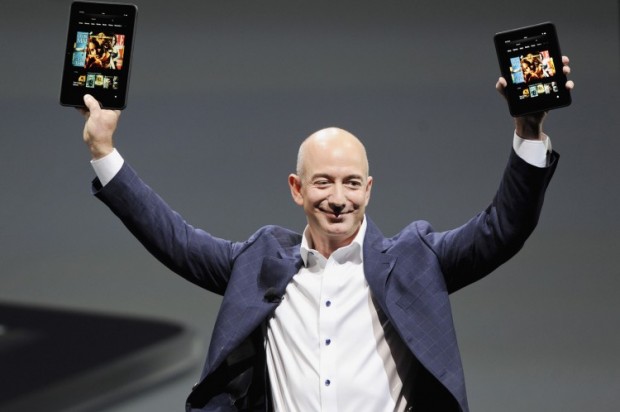
BezosJeff Bezos, billionaire founder of Amazon.com, just purchased the Washington Post newspaper for $250 million. The newspaper has struggled in recent years, as have nearly all US newspapers, with declining revenue and increasing losses. Last year the paper lost $54 million and this year they are on track to lose another $100 million. Some are asking if Bezos can do for journalism what he did for retail sales. With a personal fortune of nearly $25 billion Bezos’ “investment” in the WaPo equals just one percent of his wealth — hardly a huge financial risk if he is unable to turn things around.

But perhaps turning things around is not his first priority. Some have speculated that the decision to purchase the paper was less about adding to his financial stature and more about advancing his own political agenda. Still others suggest that is may be about enhancing his image and legacy. If we’ve learned anything from the history of the rich and powerful it is that advancing age often brings with it a strong desire to do something that will be seen as having a lasting impact…something that will endure long after they are gone. Thanks to legendary PR practitioner “Poison” Ivy Lee, the great robber baron John D. Rockefeller is as well-known today for his philanthropy as for the tragic massacre at Ludlow.

Bezos purchased the paper from the Graham family who are highly esteemed Washington D.C. insiders. Amazon is headquartered in Seattle, or as Bezos calls it, the “other Washington.” The cultural clash between East/West coast and Old/New money could make this relationship a challenge. But Amazon and Bezos are not unfamiliar with the D.C. way of life. Last year they spent a reported $2.5 million lobbying the executive and legislative branches of government.

In a letter to Washington Post employees, Bezos wrote,

There will, of course, be change at The Post over the coming years. That’s essential and would have happened with or without new ownership. The Internet is transforming almost every element of the news business: shortening news cycles, eroding long-reliable revenue sources, and enabling new kinds of competition, some of which bear little or no news-gathering costs. There is no map, and charting a path ahead will not be easy. We will need to invent, which means we will need to experiment.

It will be interesting to see what kinds of experiments Bezos has in mind. Will every new Kindle sold come with a Washington Post subscription? Will news and retail marketing somehow find a symbiotic relationship where consumers of both news and commercial products move freely between both commodities? Or will the Washington Post simply be the legacy medium that Bezos uses to burnish his personal legacy? As Bob Schieffer said on Face the Nation, “We can get along without newspapers, but we can’t get along without what newspapers do.” Let’s hope we don’t have to witness the truth of that statement.

Ellsberg, Manning and Snowden: The Saga Continues

In this short list of famous leakers–Ellsberg, Manning and Snowden–each one has had to walk a delicate tightrope between  two, potentially,  very noble causes. On one hand is the exposure of wrong doing. On the other is the rule of law and the legal process designed to protect us from systemic corruption. Just like Nik Wallenda’s traverse of the Grand Canyon gorge, high-profile leakers or whistleblowers take great risks when they choose their course of action. And like a tight-rope walker, they are all alone once they leave the safety of terra firma.

The press and the government exist in a dynamic state of symbiosis: a tension between the public’s right to know, the government’s responsibility to provide security, and an individual’s right to some expectation of privacy. Individuals and organizations keep secrets because it gives them an advantage, or because it prevents others from knowing about, or exploiting, a weakness. When powerful individuals and entities (corporations, governmental agencies, organized groups) use their power for wrong…in ways that break ethical, moral, or legal rules and regulations, secrecy protects them from being outed and punished.

Enter the press. Journalists have long accepted the responsibility of shining a light into dark corners. Their job is to uncover and expose wrong-doing so that public pressure, or the law, can step in to correct the wrong. But journalists need help uncovering secrets. They often need someone on the inside, someone who has access to privately held information, who is willing to give that information to the journalist. Sometimes it is simply verbal information about where the investigative journalists should look, and what they should look for. Other times it involves documents or data that the insider gives to the journalists. The insider has the access, and the journalists has the investigative skills to collect and report on the facts that are relevant to the issue.

Daniel Ellsberg, “the most dangerous man in America“, became famous for releasing documents to the New York Times about the US Government’s failing policy in Vietnam. Public sentiment was already turning against the war when the Pentagon Papers threw gasoline on the fire. Ellsberg was prosecuted under the Espionage Act of 1917 but charges were later dismissed.

Bradley Manning, private first class in the US Army, was arrested for using his security clearance to download classified documents which he then released to WikiLeaks. Manning pleaded guilty to 10 of 22 charges earlier this year and his trial began just a few weeks ago. If convicted Manning could face life in prison.

Edward Snowden was an employee of the military contractor Booz Allen Hamilton when he downloaded, and leaked to the press, documents about the National Security Agency‘s surveillance program. According to the Guardian newspaper, “Snowden will go down in history as one of America’s most consequential whistleblowers, alongside Daniel Ellsberg and Bradley Manning.”  According to a recent poll by PEW Research, the public is split on whether the NSA leak serves the public interest. However, the public favors, by a significant margin, the criminal prosecution of Snowden. But age is a factor. Younger respondents are more likely to believe that the leak serves the public interest and are less likely to support prosecution.

The latest reports indicate that Snowden is making his way, with the help of Wikileaks legal team, to Ecuador where he will seek political asylum. The South China Morning Post is also reporting that Snowden took the job with Booz Allen Hamilton with the intent of collecting evidence of NSA spying. If that report is true, Snowden’s moral justification for his actions may be fatally damaged.

Resources for additional research:

The “Holy Grail” of Advertising

In this social media saturated landscape, word-of-mouth (or word-of-MOUSE as the case may be) advertising carries a lot of clout. Because so many of us are skeptical of traditional advertising pitches, a referral from a trusted friend…yes, even a Facebook friend…is highly valued. In fact, according to Reuters, “Facebook Chief Executive Mark Zuckerberg was quoted as saying that a trusted referral was the ‘Holy Grail’ of advertising.”  And just as money is what advertising is ultimately about, money is also central to a class-action lawsuit that Facebook lost when it was accused of using Facebook users’ “likes”, without their consent, to pitch products to their Facebook friends.

This is not a new story. Most of it transpired in Summer and Fall of 2012, but the lesson is worth reviewing and repeating. The poster-child for this particular violation is Facebook user Nick Bergus. According to Venturebeat.com,

The most egregious example of a user becoming the inadvertent spokesman for a less-than-lube-in-barrelsqueaky-clean brand, of course, is Nick Bergus, who became the leading pitchman for Passion Natural Water personal lubricant — in 55-gallon allotments.

A class-action lawsuit, brought in California court, sought damages from Facebook for their use of “sponsored stories” without paying Facebook users or allowing them to opt out. According to Reuters, “A ‘Sponsored Story’ is an advertisement that appears on a member’s Facebook page and generally consists of another friend’s name, profile picture and an assertion that the person ‘likes’ the advertiser.” In the case of Nick Bergus, his likeness was used to sell 55-gallon drums of personal lubricant.

Now that the lawsuit has been settled, a potential 125 million Facebook users are eligible for a settlement of … wait for it … two cents each, or up to $10 if they apply.

One thing is certain, the advertising business is changing. Native ads, what some are calling the “next wave” of advertising, are replacing traditional banner ads, pop-ups, and pre-rolls. As new media companies attempt to find new ways to monetize their business, too often they step over boundaries intended to protect users’ privacy.

Where there’s smoke…

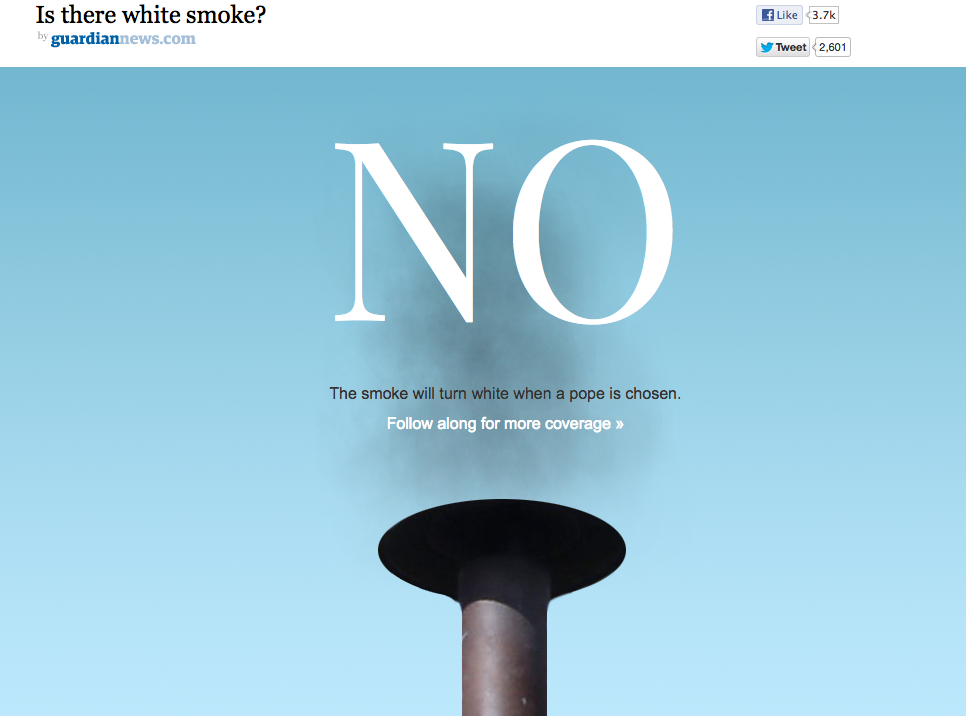
whitesmokeYou may have heard that the Catholic Church is in the process of selecting a new Pope. The Church has been slow to embrace certain changes, e.g. women priests and same-sex marriage, but they have not been as slow to adapt to new communication media. The recently retire pope, Pope Benedict XVI (@pontifex), became the first Pope to join Twitter in December of 2012 and the Catholic Church has more than 413K likes on its facebook page.

Some may find it ironic then that the Church, in this modern digital age, still uses smoke signals to announce the results of a successful election. When the bishops have selected the new Pope, the smoke from the chimney of the Sistine Chapel will switch from black to white.

In a world of high-tech solutions to most every problem, there are plenty of options for staying informed of the latest news in this breaking story. With the tag line, “when the smoke goes up, you’ll know what’s going down”, the website popealarm.com is on top of the latest developments. At the website you can sign up to receive instant notification of the election by either text or email.

For the ultimate in simplicity you can visit istherewhitesmoke.com.

Or you can download an app for your smart phone. Some of the apps provide biographic background on the candidates. All promise to keep you up to the minute with breaking news. Not to be outdone, the Pontifical Council for Social Communication has released the Pope App. Before you know it the Vatican will have its own YouTube channel.

The Eight Million Dollar Minute

youtube-superbowl-ad-blitz-gameCompanies who want to be a player in this year’s Super Bowl are going to have to pony up some serious cash…somewhere in the neighborhood of $3.8 million dollars for a 30-second spot.  That makes the Super Bowl the most expensive advertising venue out there. So why do advertisers continue to line up to get in the game? And what do they get in return for their money?

TV’s largest audience for starters. Nielsen reported 111.3 million Americans watched last year’s game. An advertiser would have to buy a 30-second spot in each of the nine top-rated network TV shows last week (American Idol, NCIS, NCIS Los Angeles, 60 Minutes, Criminal Minds, CSI, Big Bang Theory, 2 Broke Girls, and the NFL Pro Bowl) to get a comparable number of eyeballs. Or, they could buy a 30-second spot in each of the 30 top-rated cable TV shows to get a similar “reach.”

But a Super Bowl spot is about more than raw numbers. There’s a certain prestige that comes along with being part of this American tradition. There’s also an indirect stock market gain for participating companies that is apparently part of the equation, at least according to a study reported in Kiplinger. There’s also the tradition of Super Bowl spots that live on in infamy. The 1984 90-second spot for the Apple Macintosh is still considered by many to be the greatest TV spot of all time.

And here’s another factor that some advertisers (and would-be advertisers) have exploited to their benefit. An ad that is controversial–too racy or racist for example–can ride the coat tails of the Super Bowl buzz at a fraction of the price it would have cost the advertiser to buy the time. These controversial spots can be uploaded to YouTube, or any of several other internet sites, and have a life of their own…even if they never aired! Go Daddy has played this game as well as anyone in recent years.

Mildly controversial spots can also benefit from all the talk…even if some of the talk is critical. Arabs are insulted by this year’s Coke spot…and Jamaicans are (or are not depending on who you ask) offended by the VW spot. I suspect some will be offended by the Kate Upton spot for Mercedes-Benz.

More and more advertisers are pre-releasing their ads to try to generate hype prior to game day…and often to good effect. Two years ago VW’s little Darth Vader spot was seen by more than 17 million viewers before it actually aired. Last year 34 out of 54 spots were released online before the game.

The other big news in Super Bowl ads is interactivity. Coke wants you to pick the ending of their spot. Doritos invited consumer-generated spots to compete, and then asked us to vote for the winner. And YouTube has their AdBlitz channel ready to go…inviting live voting on all the spots as they air. Which means for many of you the Super Bowl will be a two-screen experience. And with two screens, at least you’ll have something to do if the game is a dud.

The Future of Modern Warfare?

No, I’m not talking about the release of Call of Duty: Black Ops II this week, and the $500 million that players dropped on the first day. Rather, I’m talking about real conflict with real casualties, and tweets like this…

Some numbers from the last 3 days: 492 rockets fired from #Gaza hit #Israel + 245 Iron Dome interceptions = 737 rockets fired at us. @IDFSpokesperson

And this photo tweeted two days ago…

And this video posted to Youtube…

[youtube=http://www.youtube.com/watch?v=P6U2ZQ0EhN4]
If you watch the IDF YouTube channel you’ll also find a video that alleges to show Palestinian children taunting Israeli soldiers attempting to provoke a response for the cameras.

In a world where public support is necessary for democratic societies to engage in armed conflict, propaganda is a necessary and essential part of the campaign. According to an editorial in the Washington Post,

The @IDFSpokesperson Twitter account, encouraging followers to show support for the strikes, tweeted Wednesday: “More than 12,000 rockets hit Israel in the past 12 years. RT if you think #Israel has the right to defend itself.” More than 5,500 people have retweeted it.

The social media campaign being waged by the Israeli Defense Force is part PR campaign, part political posturing, part warning intended to minimize civilian casualties, and part intimidation, e.g. “We recommend that no Hamas operatives, whether low level or senior leaders, show their faces above ground in the days ahead.”

Hamas, the pro-Palestinian group responsible for the rocket attacks on Israel, has responded with their own campaign, including the twitter hashtag #GazaUnderAttack. Civilians, especially children, killed by Israeli retaliatory strikes are put on display for the TV cameras as mourners wail in the street.

The Middle East, post Arab Spring, is still a fractious place where opposing forces battle on a daily basis. While some of the conflict is physical, much of it takes place in the media where the battle is fought for the hearts and minds of both regional and global witnesses. And more and more of it is happening in near-real-time.

Is it real, or is it Photoshopped?

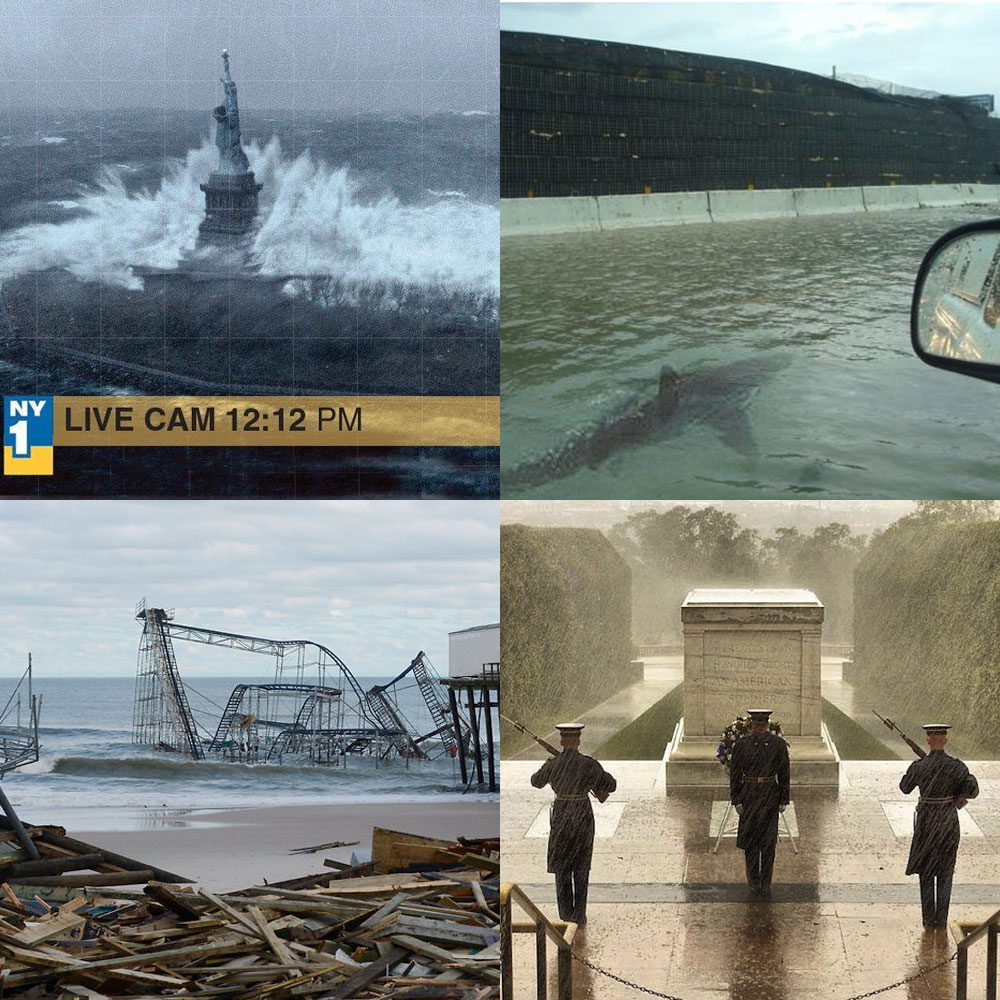
With cell-phone cameras everywhere, and digital photo sharing sites and apps like instagram so easy to use, we are seeing more photos than ever before. And while most of these photos are true depictions of real events, others are intended to mislead or deceive. Take, for example, the photos at right that came out in the days surrounding the “Superstorm” named Sandy. Of the four photos at right, only one is “true” or “real.” Can you guess which one?

Not only are fake photos easy to create, they are even easier to distribute. One cleverly made photo can go viral via social media like twitter, Tumblr and Facebook.

People with Photoshop skills can make composite photos that often defy detection. Photoshop has even become a verb, as in, “I ‘photoshopped’ him out of the picture and put Josh in his place.”

Photoshopped images in advertisements have even attracted the attention of European lawmakers who are threatening to ban the use of Photoshop or digital retouching in ads targeting those under the age of 16.

Oh, and by the way, the only photo that depicts Sandy in an accurate way is the shot of the roller coaster surrounded by water. The photo of Lady Liberty is from the movie The Day After. The shark is photoshopped, and the photo at the Tomb of the Unknown Soldier was taken in September.

Arab Spring Gives Way to the Arab Fall

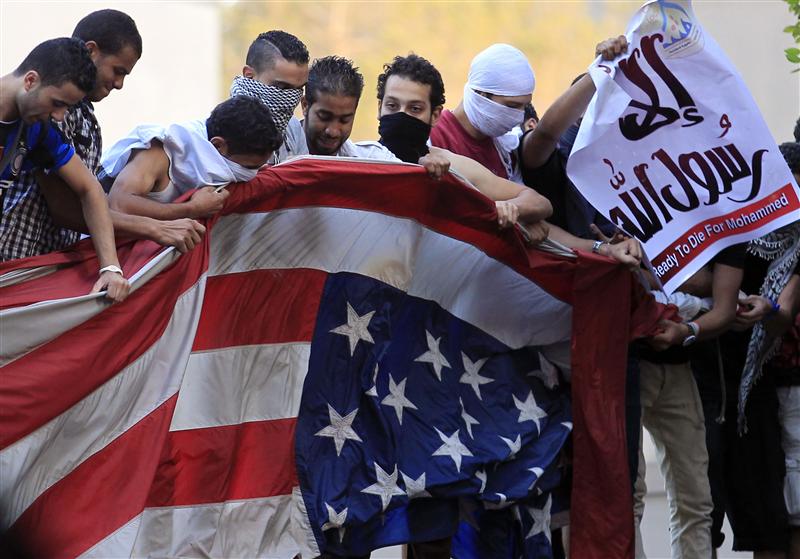
On the anniversary of 9/11, rioting in Cairo and the murder of Libyan ambassador John Christopher Stevens, and several others, at the US consulate in Benghazi is a stark reminder that we still don’t understand the complex nature of middle-eastern politics and Islamic extremism. In the words of Secretary of State Hillary Clinton, “how could this happen in a country we helped liberate and in a city we helped to save from destruction.” It is becoming increasingly clear that the overthrow of former Libyan dictator Muammar Gaddafi brought new freedom, but also instability, to the region.

There are several connections to mass media in this story. First, much has been made of the role of social media in bringing democracy to Northern Africa and the Middle East. Second, news reports say that a YouTube video criticizing Mohammed was the initial spark that ignited the riots. The two-hour YouTube video, produced and written by Sam Bacile, a California real estate developer, was made for $5 million. A 13-minute trailer/excerpt can be seen here. According to reports, the film portrays the prophet Mohammed as, “a fraud, a pedophile and a womanizer.” Muslims do not allow the portrayal of Mohammed in any form, but are particularly intolerant of depictions that are perceived as an insult. Afghanistan blocked YouTube today in an attempt to prevent access to the controversial video.

While freedom of speech and freedom of expression are highly valued in American culture, much of the world does not share our appreciation for speech that sometimes offends segments of the audience. In this country individuals can safely criticize government entities and religious institutions without fear of reprisal. But that is not the case in many countries and cultures dominated by totalitarian rulers or oppressive religious factions.

While Americans hold their noses and “tolerate” protests by Fred Phelps and his Westboro Baptist “Church”, the response has not been so generous in other contexts. Take, for example, the case of Theo van Gogh. Van Gogh was a Dutch filmmaker who made Submission, a movie that many Muslims found offensive. After the movie was shown on Dutch public television, Van Gogh was killed by a “Muslim extremist.” The killer shot Van Gogh eight time, stabbed him, and attempted to decapitate him. When a Danish newspaper published caricatures of the prophet in 2005, it sparked riots in many Muslim countries.

Because we are in an election season, the news also took a political twist. According to a report by the BBC,

Mitt Romney, Mr Obama’s Republican challenger in the forthcoming presidential election, criticized the US administration’s response to the attacks in Benghazi and Cairo, saying it had appeared to “sympathize with those who waged the attacks”.

Religious freedom, freedom of speech, and tolerance for opposing views are values not to be taken lightly. And when they appear to be in conflict with each other, the stakes are even higher.

Caution: 3-D Action Movies May be Harmful to Your Health

I saw The Avengers in 3D this afternoon and it made me wonder if I wasn’t doing incremental harm to my finely tuned survival instincts. You and I were born with some amazing skills at recognizing, and avoiding, danger. Think about it…in a split second we can see, and react, to something that is headed our way. We duck or swerve to avoid a flying object that might otherwise take us out. So, here’s what I’m thinking. Every time we have a virtual 3D experience with a flying object that DOESN’T do us harm, that part of our brain that is well trained to react in a split second registers a direct hit with no consequences. In other words, it has been fooled by the visual artistry that makes 3D action films so much fun. You may have heard the old saying, “fool me once, shame on you…fool me twice, shame on me.” Every technology comes with hidden consequences. Consider the loss of penmanship since keyboarding took its place. Others have argued that ready access to the internet and Google is reducing our capacity to remember. I can imagine a future where we are a nanosecond or two slower to react because of the de-evolution of our highly-refined reaction instinct. Something to think about the next time you are standing in line to see the latest 3D blockbuster.

css.php