MJ Advertising and the Case for Audience Research

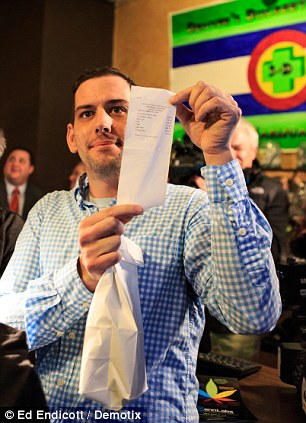
I teach a course titled, Audience Research Methodology.  Over the years I have attempted, with varying degrees of success, to make the case for the importance and value of applied audience research. Audience research is happening all around us all the time, but it is often invisible to the average observer. But thanks to marijuana advertising, finding applied examples of audience research just got easier.

When Colorado passed Amendment 64 allowing for the legalization of marijuana they also created laws controlling the process whereby legal MJ would be cultivated, processed, marketed, and distributed. One part of the Colorado Retail Marijuana Code governs the advertising of MJ. For the sake of brevity I’ll cut to the chase. The legal requirement for advertisers is that they provide “reliable evidence” that no more than 30% of the consumers of said advertising are “reasonably expected” to be under the legal age (21 years). This provided a teachable moment in class last week when we discussed how audience research methodology might inform the issue of what percentage of a target audience falls within (or out of) a particular demographic range for various media products.

Some have questioned whether this part of the law would stand a legal challenge. According to a news report released March 17 by the Colorado Press Association, a legal challenge to the 30% requirement brought by the CPA and The Pulp (a local independent news magazine) was found to be without standing. In other words, the challenge on First Amendment grounds was dismissed because the parties bringing the lawsuit were unable to demonstrate that they suffered harm imposed by the legal requirement of no more than 30% underage readers. Claims that the law created a “chilling effect” were likewise dismissed.

Since this 30% requirement appears to be the law for the time being, any retail MJ establishment (or the media company hoping to sell MJ ads) will have to secure the services of audience research companies who can provide “reliable evidence” that can be used to meet the legal requirement. Companies such as the research giant Nielsen can provide data for TV and radio broadcasters and their Scarborough audience analytics for print media can provide reliable data (for a fee). According to the CPA news release, “the [Colorado Department of Revenue] found Scarborough research to be ‘reliable’” for the purpose of legal justification.

Mass Communications majors sometimes (and, I believe, unfairly) think of themselves as math-challenged. But understanding basic data analysis is not a luxury anymore. Nearly everyone working in or around the media industries will, at some time or another, be expected to make sense out of a spreadsheet or graph or table that contains or summarizes data. Quantitative illiteracy is not a reasonable alternative, and MJ advertising is just one example that brings that home.


Net Neutrality and the Jester

Net neutrality, the idea that the internet should be an open network where internet service providers cannot restrict or prioritize content from any particular source, is one step closer to becoming the law of the land. FCC Chairman Tom Wheeler outlined his position in an editorial published by Wired magazine, and barring any last-minute hijinks it now appears that the Obama administration will prevail in a long, drawn-out, battle with those (mainly large telecom providers) who have argued that net neutrality will stifle technological innovation and reduce incentives for expanding service.

In late 2014 President Obama staked out his position in a short video calling for the FCC to act to implement net neutrality regulations. In order for the FCC to step in they would need to reclassify the internet as falling under Title II of the Telecommunications Act–essentially treating access to the internet as a public service utility not unlike your phone, water, or electric service. Many argue that the internet has become such an essential part of our daily lives that to be without it is unthinkable.

As I was reading an article in the WSJ about the ongoing debate I came across a paragraph that caught my eye…

At the same time, Mr. Ammori tried to build wider public support for net neutrality. Last May, he spoke with a researcher for “Last Week Tonight with John Oliver, ” the HBO comedy series. On June 1, Mr. Oliver unleashed a 13-minute rant in an episode of the show, comparing Mr. Wheeler to a dingo and encouraging viewers to bombard the FCC with comments.

If you’re not familiar with John Oliver, he was a former correspondent for The Daily Show.  Now that he has his own show he continues to poke fun at serious topics, just as he did when he worked for Jon Stewart. Below is the video by Oliver.

The video was produced and posted in the summer of 2014, so the framing of the debate does not take into account the developments that have transpired since. But the video does two things very well: 1) it explains in easily accessible terms the nature of the debate, and 2) it allows us a few laughs in the process. That may be the genius of Jon Stewart, Stephen Colbert, and now John Oliver. Like court jesters of old, they make their point and wield tremendous influence while we laugh along; while all too often remaining oblivious to the subtleties of their arguments.

RIP Peggy Charren

PEGGYCHARRENA powerful advocates for children’s television died today. Peggy Charren, founder of Action for Children’s Television (ACT), passed away after a long life of advocacy for quality TV programming for children. Dismayed by the rampant violence and commercialism that marred children’s programming in the ’60 and ’70s, Charren became a crusader and reformer. Her steadfast devotion to the cause led to the Children’s Television Act which was passed into law in 1990. The legislation limited the amount of commercial content in children’s TV programming and required stations to show evidence of the educational value of its programming.

According to an article in the Boston Globe, Charren’s group seized upon “one tiny clause in the 1934 Federal Communications Act that required broadcasters using the public airwaves to ‘serve the public interest‘ if they wanted to keep their licenses. Ms. Charren’s group, which grew to 20,000 members, insisted that federal authorities and network executives take that mandate seriously.”

Current FCC chairman Tom Wheeler was quoted as saying,

Parents across America owe a debt of gratitude to Peggy, who single-handedly turned the vast wasteland that was children’s television programming in the 1960s and 1970s into the plethora of educational, informational and entertaining programming families enjoy today.

Peggy Charren was recipient of a Peabody award, an Emmy award, and the Presidential Medal of Freedom in 1995.

Uber’s Image Problem

UberPerhaps you’ve heard of Uber, the smartphone-enabled ride-sharing alternative to traditional taxis. Uber, along with Lyft and Sidecar, work on the premise that a person with a car can offer a service to someone who need a ride, and make a few bucks in the process for both the driver and the company. Now that most everyone has a smartphone–and with real-time location services knowing your every move–connecting drivers and riders is really pretty simple.

But Uber, like the other start-ups, has a few natural enemies. Taxi cab companies don’t like having their business syphoned off by competitors who are not licensed and have little to no overhead.

But it is Uber’s CEO and a senior VP who may become the company’s greatest liability. CEO Travis Kalanick, whose aggressive leadership has been credited with the quick rise of the company, has ruffled more than a few feathers with his aggressive business practices. Uber has been accused of violating its own privacy policy and tracking users for suspect reasons. (You can read more about that on the ACLU blog.) And recently, Uber VP Emil Michael has suggested that Uber should investigate journalists who have been investigating Uber.

Specifically Michael targeted Sarah Lacy, co-editor of the Pando Daily website. Lacy has been critical of Uber’s treatment of women and has been leading the call for Uber to clean up its act. And for that, according to The Tech Bulletin, “A top executive of Uber explained a Nixonian plan to dig up dirt on the journalists who are critical towards Uber and sully their reputations.”

One doesn’t have to be a PR pro to see that this is not a smart move by Uber. Picking a fight with journalists is seldom a good idea. As Bill Greener, press aide to Gerald Ford and Donald Rumsfeld in the 1970’s once said, “Never pick a fight with someone who buys ink by the barrel” (Lewis).

Copyright Monkeybusiness

Perhaps you’ve seen this picture of a female Celebes crested macaque. The picture is unusual in several ways. First, the expression is priceless. To peer into the soul of a subject and capture it on film in such a powerful way is truly amazing.

But that brings us to the second way in which this photo is unusual. It is a selfie. That’s right, the photo was taken by the subject. According to an article on the Mashable website, the photographer David Slater was on a trip through the jungles of the Indonesian island Sulawesi in 2011 when he had his camera swiped by the macaque who then turned the camera on herself.

Okay, pretty interesting story so far, but it gets better. Several years later someone uploaded the photo to Wikimedia Commons. Slater, who claims copyright on the photo, asked Wikimedia to remove the photo. Wikimedia denied Slater’s request claiming that Slater did not own the photo since he didn’t take it.

Alex Magdaleno, writing for Mashable, continues…

according to Wikimedia’s licensing report, it remains in the public domain “because as the work of a non-human animal, it has no human author in whom copyright is vested.”

There you have it. Once the courts settle this case we’ll know whether animal selfies enjoy the protection of copyright. And what if the courts say that the copyright belongs to the critter who pressed the shutter? In the US, copyright is awarded for the life of the author plus 70 years. If a Giant Galapagos tortoises snaps a selfie it could remain under copyright for upwards of 250 years!

UPDATE, April 24, 2018: The court has ruled, and the monkey cannot make a copyright claim. Okay, you can go back to your monkey-business as usual.

Cashing in on Legal Pot

retail potThe state of Colorado is involved in a grand social experiment. Recreational marijuana is now legal for adults (over the age of 21), and since January 1st is available through retail establishments known as dispensaries. A similar experiment is underway in the state of Washington, but for now I’ll focus attention on the state that I call home.

Plenty of time and energy has been devoted to the debate over the wisdom of making marijuana available over the counter. This post is not about the decision itself, but how media outlets are responding to the opportunity to cash in by carrying advertising for dispensaries. Any discussion about the legality and propriety of accepting advertising is compounded by the fact that marijuana use remains a federal crime. And while federal authorities have promised to look the other way with regard to Colorado’s new law, the fact that radio and TV broadcasters are licensed by the Federal government is having a chilling effect on local broadcasters. According to Justin Sasso, president and CEO of the Colorado Broadcasters Association, the CBA doesn’t think it’s wise for stations “to risk their license–or the legal fees required to fight for their license–if the federal government decides to crack down on broadcasters” (Broadcasting & Cable, Feb 3, 2014, p. 28).

The State of Colorado has a few things to say about advertising retail pot. Last fall the Colorado Department of Revenue issued a 136-page document that stipulates, among other things, that advertisers must have reliable evidence that the audience for the ad does not contain more than 30% under the age of 21. According to the website The Cannibist, the publications High Times and Westword have sued the State of Colorado claiming that the restriction on advertising is an infringement of First Amendment rights. In addition to age restrictions, advertisers may not use outdoor advertising, may not buy out-of-state ads, nor promote marijuana tourism.

Cable TV is subject to different regulations than broadcast TV so if we see TV ads anytime soon we would expect them to appear first on select cable channels. Websites, of course, are subjects to even fewer regulatory restrictions. The Cannabist, a website by The Denver Post newspaper, is staking out territory on the web and will likely become a venue for advertising in the future. The Post even has its own marijuana editor, Richardo Baca.

In some ways this debate is made moot by the fact that marijuana dispensaries have been overwhelmed with business. That, and the free publicity provided by the news media, makes advertising unnecessary for now. However, as more vendors compete for customers, as supply matches and exceeds demand, and the novelty and media attention fades away, advertising will become increasingly important. And then the difficult decisions will have to be made.

Ellsberg, Manning and Snowden: The Saga Continues

In this short list of famous leakers–Ellsberg, Manning and Snowden–each one has had to walk a delicate tightrope between  two, potentially,  very noble causes. On one hand is the exposure of wrong doing. On the other is the rule of law and the legal process designed to protect us from systemic corruption. Just like Nik Wallenda’s traverse of the Grand Canyon gorge, high-profile leakers or whistleblowers take great risks when they choose their course of action. And like a tight-rope walker, they are all alone once they leave the safety of terra firma.

The press and the government exist in a dynamic state of symbiosis: a tension between the public’s right to know, the government’s responsibility to provide security, and an individual’s right to some expectation of privacy. Individuals and organizations keep secrets because it gives them an advantage, or because it prevents others from knowing about, or exploiting, a weakness. When powerful individuals and entities (corporations, governmental agencies, organized groups) use their power for wrong…in ways that break ethical, moral, or legal rules and regulations, secrecy protects them from being outed and punished.

Enter the press. Journalists have long accepted the responsibility of shining a light into dark corners. Their job is to uncover and expose wrong-doing so that public pressure, or the law, can step in to correct the wrong. But journalists need help uncovering secrets. They often need someone on the inside, someone who has access to privately held information, who is willing to give that information to the journalist. Sometimes it is simply verbal information about where the investigative journalists should look, and what they should look for. Other times it involves documents or data that the insider gives to the journalists. The insider has the access, and the journalists has the investigative skills to collect and report on the facts that are relevant to the issue.

Daniel Ellsberg, “the most dangerous man in America“, became famous for releasing documents to the New York Times about the US Government’s failing policy in Vietnam. Public sentiment was already turning against the war when the Pentagon Papers threw gasoline on the fire. Ellsberg was prosecuted under the Espionage Act of 1917 but charges were later dismissed.

Bradley Manning, private first class in the US Army, was arrested for using his security clearance to download classified documents which he then released to WikiLeaks. Manning pleaded guilty to 10 of 22 charges earlier this year and his trial began just a few weeks ago. If convicted Manning could face life in prison.

Edward Snowden was an employee of the military contractor Booz Allen Hamilton when he downloaded, and leaked to the press, documents about the National Security Agency‘s surveillance program. According to the Guardian newspaper, “Snowden will go down in history as one of America’s most consequential whistleblowers, alongside Daniel Ellsberg and Bradley Manning.”  According to a recent poll by PEW Research, the public is split on whether the NSA leak serves the public interest. However, the public favors, by a significant margin, the criminal prosecution of Snowden. But age is a factor. Younger respondents are more likely to believe that the leak serves the public interest and are less likely to support prosecution.

The latest reports indicate that Snowden is making his way, with the help of Wikileaks legal team, to Ecuador where he will seek political asylum. The South China Morning Post is also reporting that Snowden took the job with Booz Allen Hamilton with the intent of collecting evidence of NSA spying. If that report is true, Snowden’s moral justification for his actions may be fatally damaged.

Resources for additional research:

Ask your doctor if ______ is right for you…

Advertising is everywhere. And you can pretty much bet that everything, at some time or another, has been advertised. Of course you won’t see ads for tobacco products on TV, but most everything else is advertised somewhere to someone. Sometimes an entire industry is created, with the help of advertising, when consumers become convinced that they must have a new product or service.

Take the pet food industry for example. Before the turn of the century, pet food as a product was not widely available in stores. Dogs and cats ate table scraps and whatever else they could find to eat. Advertisers discovered an untapped market and by the 1960s TV ads for dog and cat food became commonplace. Jump to the present. Not only do we have a pet food industry, but pet food comes in a wide variety of forms and flavors. To make sure that revenue continues non-stop, consumers are warned that feeding your pet table scraps is bad for their health. Consumers spend approximately $18 billion annually on pet food, and the pet food industry even has its own website.

Advertising products for human use and consumption is also experiencing significant changes. Take medications for example. Companies that develop and market remedies have been around since recorded history. Snake oil salesmen promoted their blends of turpentine and various inert ingredients to gullible customers for decades before the FDA and other agencies stepped in. Now, pharmaceutical companies have to pass stringent tests before bringing their products to market…and then they pass on those R&D costs to you, the consumer. But how do you convince the public that they need your product? Advertising of course.

In 2010 “big pharma” spent $1 million to advertise treatments for low testosterone. By 2012 that amount grew to $100 million. And according to Consumer Reports, the advertisements are creating an impression that many more men suffer from low testosterone than actually do. This may be a case where advertising is being used to create demand for a product that is often unnecessary.

Many countries are concerned about pharmaceutical ads directed at consumers. The concern is that they are, in effect, pushing products about which consumers have little or no expertise. Only New Zealand and the United States allow DTC (Direct To Consumer) advertising for prescription drugs. When you’re told to “ask your doctor…”, the pharmaceutical companies are using you, the patient, to exert pressure on your health care provider. My hunch is that coercion of this sort is unlikely to result in better health care.

Resources:

http://www.prwatch.org/news/2008/02/7026/beyond-advertising-pharmaceutical-industrys-hidden-marketing-tactics

Bleeping and Blurring on Network TV

Regulating indecency on broadcast TV is a tricky business. First of all, the American public does not agree on what is or isn’t indecent. Differences of geography, background, religiosity, and age account for much of the variance…but even then it is difficult to find commonality on what is or isn’t appropriate for prime time TV when children may be in the audience. Another complicating factor is that the networks are competing with basic and premium cable/satellite TV programming which is not subject to the same regulatory scrutiny as over-the-air TV networks. To further confuse the issue, the increase in IPTV and smart TVs that stream video content over the internet makes the distinction of broadcast TV’s more restrictive content policies appear less and less relevant.

Despite–or perhaps because of–the confusion, the controversy is not going away. A study by the media watchdog group Parents Television Council revealed a significant increase in the number of instances of pixelated “full-frontal nudity” on network TV. According the PTC, there was one instance in the 2010-2011 season and 64 in the most recent season. Use of pixelation allows the networks to avoid prosecution by the FCC while implying nudity for comedic or dramatic effect.

According to a quote in the LA Times, PTC President Tim Winter said,

pixilated flesh is “unfortunate, unnecessary and offensive to the family audience” and that it happened more often in 7 to 9 p.m. shows, when kids could be watching, than in those airing after 10 p.m. Nor did the shows’ ratings always warn parents of sensitive content.

Because of the sensitive nature of these issues and the difficulty of making the right decision during the initial filming or taping, occasionally special effects are used in post production to modify the frames that might cross the line. According the same article in the LA Times,

John Gross, a veteran visual effects supervisor at L.A.-based Eden FX, said he and other effects executives are often asked to add pixels or shadow parts of actors’ bodies so network shows will pass muster with censors. They also draw clothes back on so that programs can be sold to international markets more modest than the U.S.

The FCC’s polities on indecent language are also under scrutiny. Currently the courts are wrestling with the proper interpretation of regulatory policies that prohibit “language or material that, in context, depicts or describes, in terms patently offensive as measured by contemporary community standards for the broadcast medium, sexual or excretory organs or activities.” Radio stations carrying the Howard Stern Show racked up about $2.5 million in FCC fines before Stern moved from broadcast radio to Sirius XM satellite radio, which is exempt from FCC indecency policies. After several awards show incidents, it is now common policy on live radio and TV to have a short delay which allows a censor to hit a switch to mute the sound or picture in the event of an unscripted moment of vulgarity or profanity.

This practice has become so commonplace that Jimmy Kimmel has a reoccurring segment called “This Week in Unnecessary Censorship” in which he “bleeps and blurs” video clips to give the appearance of vulgarity and indecency when in fact nothing of the sort had taken place. But viewers are easily persuaded to fill in the gaps by imagining the worst. The same phenomenon is happening with the pixelation of full-frontal nudity. Even though the actors are wearing flesh-colored undergarments, the pixelated image encourages the viewer to assume or imagine that the actor is indeed nude in the scene.

So here’s the question: where does offense over indecency happen? Is it in the word or image presented,  in the mind of the audience member, or, somewhere in between?

Jailhouse Rock: Pussy Riot Found Guilty

In case you haven’t heard, members of the punk rock band Pussy Riot have been sentenced to two years in prison for, “hooliganism driven by religious hatred.” The trial and sentencing of the three Russian women has attracted attention and outrage from around the world. Amnesty International and other supporters of free speech and human rights have declared them “prisoners of conscience.” According to USA Today,

The three were arrested in March after a guerrilla performance in Moscow’s main cathedral, high-kicking and dancing while singing a “punk prayer” pleading the Virgin Mary to save Russia from Vladimir Putin.

Several celebrities have spoken out in support of Pussy Riot. Garry Kasparov, former world chess champion, as well as Paul McCartney and Madonna have expressed support for the rights of the performers. Russia does not have the same level of protection for speech that we appreciate.  Thanks to the 1st Amendment to the US Constitution, US citizens have much more freedom to speak our minds than do most other citizens of the world.

But we also want to be careful that free speech rights do not infringe on the rights of others. Hate speech is one of those sensitive areas where, even in America, free speech sometimes has to take a back seat. But who gets to decide that a specific act of speech crosses the line into hate speech and, in so doing, forfeits the rights of the speaker to protection under the law? That’s a question that many are asking in light of this sentence.

Update Aug 20: In an unusual twist, Madonna is being sued for over $10M by concert goers who “were offended by her support for gay rights during a recent concert in St. Petersburg.” See more here.

css.php