
The Eight Million Dollar Minute

youtube-superbowl-ad-blitz-gameCompanies who want to be a player in this year’s Super Bowl are going to have to pony up some serious cash…somewhere in the neighborhood of $3.8 million dollars for a 30-second spot.  That makes the Super Bowl the most expensive advertising venue out there. So why do advertisers continue to line up to get in the game? And what do they get in return for their money?

TV’s largest audience for starters. Nielsen reported 111.3 million Americans watched last year’s game. An advertiser would have to buy a 30-second spot in each of the nine top-rated network TV shows last week (American Idol, NCIS, NCIS Los Angeles, 60 Minutes, Criminal Minds, CSI, Big Bang Theory, 2 Broke Girls, and the NFL Pro Bowl) to get a comparable number of eyeballs. Or, they could buy a 30-second spot in each of the 30 top-rated cable TV shows to get a similar “reach.”

But a Super Bowl spot is about more than raw numbers. There’s a certain prestige that comes along with being part of this American tradition. There’s also an indirect stock market gain for participating companies that is apparently part of the equation, at least according to a study reported in Kiplinger. There’s also the tradition of Super Bowl spots that live on in infamy. The 1984 90-second spot for the Apple Macintosh is still considered by many to be the greatest TV spot of all time.

And here’s another factor that some advertisers (and would-be advertisers) have exploited to their benefit. An ad that is controversial–too racy or racist for example–can ride the coat tails of the Super Bowl buzz at a fraction of the price it would have cost the advertiser to buy the time. These controversial spots can be uploaded to YouTube, or any of several other internet sites, and have a life of their own…even if they never aired! Go Daddy has played this game as well as anyone in recent years.

Mildly controversial spots can also benefit from all the talk…even if some of the talk is critical. Arabs are insulted by this year’s Coke spot…and Jamaicans are (or are not depending on who you ask) offended by the VW spot. I suspect some will be offended by the Kate Upton spot for Mercedes-Benz.

More and more advertisers are pre-releasing their ads to try to generate hype prior to game day…and often to good effect. Two years ago VW’s little Darth Vader spot was seen by more than 17 million viewers before it actually aired. Last year 34 out of 54 spots were released online before the game.

The other big news in Super Bowl ads is interactivity. Coke wants you to pick the ending of their spot. Doritos invited consumer-generated spots to compete, and then asked us to vote for the winner. And YouTube has their AdBlitz channel ready to go…inviting live voting on all the spots as they air. Which means for many of you the Super Bowl will be a two-screen experience. And with two screens, at least you’ll have something to do if the game is a dud.
Al Gore Sells Out?

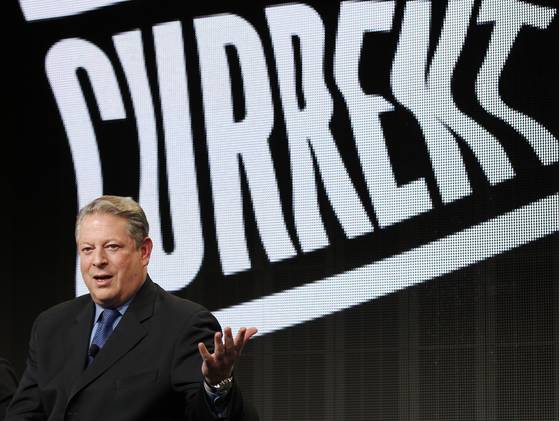
gore_currentIn what is reported to be a $500 million deal, Current TV is being sold to Al Jazeera Media Network. With headquarter located in Qatar, Al Jazeera is a global news network with an Arab point-of-view and funding from the government of Qatar. Since its debut in the mid 1990s, the network has been controversial and that controversy only increased after 9/11 and the wars in Afghanistan and Iraq. Frequently giving a voice to “terrorist”  organizations (as defined by the US government), Al Jazeera continued to expand and launched an English-language channel in 2006.
By acquiring Current TV, Al Jazeera gains access to approximately 40 million cable households…greatly expanding their reach in the US market. Current TV has struggled for viewers so 40 million potential TVHHs may not be as impressive as it first sounds. And ratings history suggests that global news (from any perspective) is a difficult product to sell to an American audience. If the new network will be able to gain any traction it will likely be at the expense of left-leaning TV news networks such as MSNBC and CNN and other international news channels such as BBC World News.

One of the founders of Current TV is former VP Al Gore. Also known for his award-winning environmental documentary An Inconvenient Truth, Gore stands to gain about $100 million from the sale of Current TV. Gore will remain on the board of the new network, tentatively titled Al Jazeera America, and will have a role in shaping its identity. Considering that Al Jazeera is financed largely by petroleum revenue, and that Al Gore is known for his outspoken views on global climate change, some have criticized Gore’s profiting from an industry that is accused of being the greatest contributor to CO2 emissions. Current TV is reported to have rebuffed an offer to buy from conservative pundit Glenn Beck on ideological grounds. According to the Wall Street Journal, “Glenn Beck’s The Blaze approached Current about buying the channel last year, but was told that ‘the legacy of who the network goes to is important to us and we are sensitive to networks not aligned with our point of view,’ according to a person familiar with the negotiations.”  But legacy was not enough of an issue, apparently, to turn down Al Jazeera’s money. As Al Gore himself once said, quoting Upton Sinclair, “It’s difficult to get a man to understand something if his salary depends upon his not understanding it.”

Political Ads Just Keep On Coming!

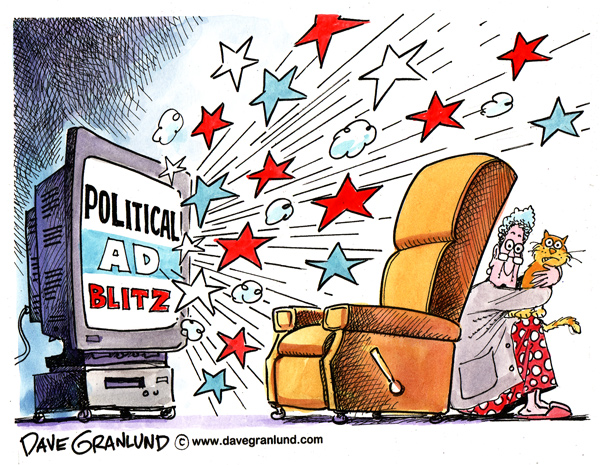
We’re approaching the end of another election season and the race couldn’t be tighter. Living in a “battleground state” I’ve seen my share of political ads, even while wielding my DVR remote control as a light saber to vanquish as many as I possibly can. With nearly a billion dollars spent on the presidential race alone, this has been a year for the record books. According to Wesleyan Media Project, this year’s presidential race has seen more than 915,000 ads air on broadcast and cable television.

TV is the medium of choice for politicians hoping to reach the masses. No other medium offers as much persuasion power as video, and a well-crafted TV spot can be a powerful tool for energizing the base and persuading the undecided voter.

Another notable characteristic of the 2012 campaign is the prevalence of negative or attack ads. Obama’s campaign was more negative (73.3%) than Romney’s (36%), while both Democratic and Republican ads by outside groups and super PACs were almost entirely negative.

Given the deluge of TV ads, what is your strategy for coping?

Ruffling Feathers at PBS

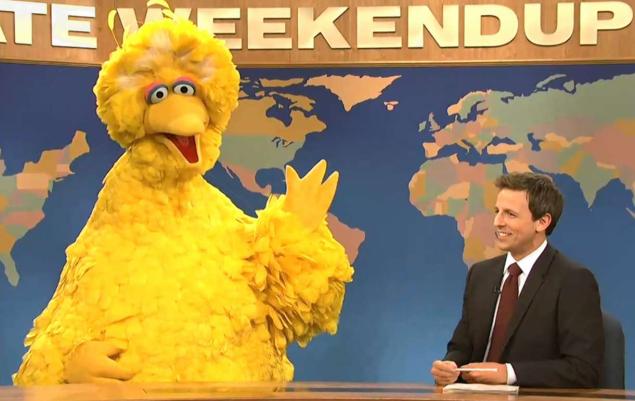
SNL invited Big Bird to the set of Weekend Update.

For a generation raised on Sesame Street, Big Bird is the poster child for all that is right and good about children’s television. A creation of puppeteer Kermit Love, Big Bird was originally designed to be played by Jim Henson. While that never quite worked out, according to Wikipedia Big Bird has been “officially performed by Caroll Spinney since 1969.” It is worth noting that Spinney is paid more than $300,000 annually for the role, according to the Sesame Workshops forms filed for 2010 tax year (the Atlantic).

So why are we talking about Big Bird? Because in the first 2012 Presidential Debate, which aired Oct 3, Mitt Romney said that in order to reduce the federal budget deficit he would makes cuts to certain domestic programs. Here’s the quote:

“I’m sorry, Jim [Lehrer, moderator of the debate]. I’m going to stop the subsidy to PBS. I’m going to stop other things. I like PBS. I love Big Bird. I actually like you too. But I’m not going to — I’m not going to keep on spending money on things to borrow money from China to pay for it.”

In response, the Obama campaign released this ad accusing Romney of going after Sesame Street while giving Wall Street a pass…

[youtube=http://youtu.be/bZxs09eV-Vc]

According to an article in the WSJ, Sesame Workshop would prefer to avoid being politicized by either candidate and has requested that the Obama campaign pull the ad.

“We have approved no campaign ads and, as is our general practice, have requested that both campaigns remove Sesame Street characters and trademarks from their campaign materials,” said Sesame Workshop, a nonprofit educational organization that produces and owns the show, in a statement.

What do you think about Big Bird, funding for PBS, and politicizing of both for the sake of political gain?

Bleeping and Blurring on Network TV

Regulating indecency on broadcast TV is a tricky business. First of all, the American public does not agree on what is or isn’t indecent. Differences of geography, background, religiosity, and age account for much of the variance…but even then it is difficult to find commonality on what is or isn’t appropriate for prime time TV when children may be in the audience. Another complicating factor is that the networks are competing with basic and premium cable/satellite TV programming which is not subject to the same regulatory scrutiny as over-the-air TV networks. To further confuse the issue, the increase in IPTV and smart TVs that stream video content over the internet makes the distinction of broadcast TV’s more restrictive content policies appear less and less relevant.

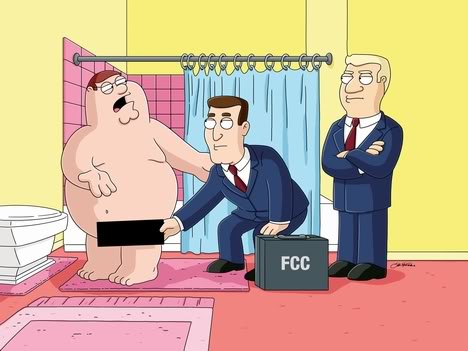
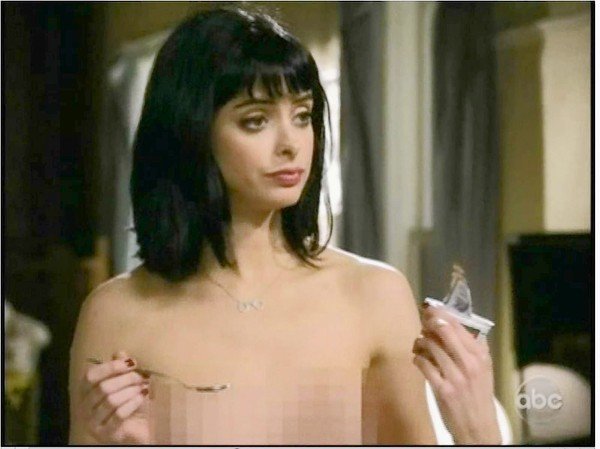
Despite–or perhaps because of–the confusion, the controversy is not going away. A study by the media watchdog group Parents Television Council revealed a significant increase in the number of instances of pixelated “full-frontal nudity” on network TV. According the PTC, there was one instance in the 2010-2011 season and 64 in the most recent season. Use of pixelation allows the networks to avoid prosecution by the FCC while implying nudity for comedic or dramatic effect.

According to a quote in the LA Times, PTC President Tim Winter said,

pixilated flesh is “unfortunate, unnecessary and offensive to the family audience” and that it happened more often in 7 to 9 p.m. shows, when kids could be watching, than in those airing after 10 p.m. Nor did the shows’ ratings always warn parents of sensitive content.

Because of the sensitive nature of these issues and the difficulty of making the right decision during the initial filming or taping, occasionally special effects are used in post production to modify the frames that might cross the line. According the same article in the LA Times,

John Gross, a veteran visual effects supervisor at L.A.-based Eden FX, said he and other effects executives are often asked to add pixels or shadow parts of actors’ bodies so network shows will pass muster with censors. They also draw clothes back on so that programs can be sold to international markets more modest than the U.S.

The FCC’s polities on indecent language are also under scrutiny. Currently the courts are wrestling with the proper interpretation of regulatory policies that prohibit “language or material that, in context, depicts or describes, in terms patently offensive as measured by contemporary community standards for the broadcast medium, sexual or excretory organs or activities.” Radio stations carrying the Howard Stern Show racked up about $2.5 million in FCC fines before Stern moved from broadcast radio to Sirius XM satellite radio, which is exempt from FCC indecency policies. After several awards show incidents, it is now common policy on live radio and TV to have a short delay which allows a censor to hit a switch to mute the sound or picture in the event of an unscripted moment of vulgarity or profanity.

This practice has become so commonplace that Jimmy Kimmel has a reoccurring segment called “This Week in Unnecessary Censorship” in which he “bleeps and blurs” video clips to give the appearance of vulgarity and indecency when in fact nothing of the sort had taken place. But viewers are easily persuaded to fill in the gaps by imagining the worst. The same phenomenon is happening with the pixelation of full-frontal nudity. Even though the actors are wearing flesh-colored undergarments, the pixelated image encourages the viewer to assume or imagine that the actor is indeed nude in the scene.

So here’s the question: where does offense over indecency happen? Is it in the word or image presented,  in the mind of the audience member, or, somewhere in between?

An Olympic-sized Effort by NBC

The Summer Olympic games have come to a close and the 10,000+ athletes and their fans have returned to their 200+ home countries. NBC Sports production personnel will be dismantling their enormous production facilities and shipping tons of equipment back to the US. I was fortunate to be part of the NBC Sports production team in 1988 at the Seoul Summer Olympics. It was a massive undertaking then, but every four years the US Olympics broadcasting team outdoes the previous effort.

NBCUniversal paid dearly for the rights to broadcast the XXX Games to a US audience…somewhere in the neighborhood of $1.18B. They spent hundreds of millions more bringing hours and hours of programming to your TV screen, laptop, tablet and cell phone.

Over a period of 17 days, NBC Universal provided 5,535 hours of coverage spread across NBC, NBC Sports Network, MSNBC, CNBC, Bravo, Telemundo, NBCOlympics.com, two specialty channels, and the first-ever 3D platform. While athletes were setting records in the pool and on the track, NBCUniversal set records of its own. Working with Panasonic, the games in London marked the first time that Olympic sports were broadcast in 3D in the US. To appreciate the size and scope of the Summer Olympic games, this is what their media guide said about the size of the audience:

To deliver the same number of gross household impressions NBC delivered during the 17 days of its primetime Beijing Olympics coverage, one network would have to own the rights and broadcast the Super Bowl, the Academy Awards, the Grammy Awards, the Golden Globes, the AFC Division playoffs, the NFC Championship Game and six games of the World Series all within a 17-day span.

Also from their media guide…

American Idol Tryouts or Presidential Campaign?

Colorado is a swing state which means we’re going to be seeing a lot of political ads between now and November. Two that just hit the web, and the airwaves, feature our presidential hopefuls breaking out into song. Both are attack ads, which means the ad for Obama features Romney’s singing and the ad for Romney features the crooning of the President.

Here’s the Obama ad for your viewing, and listening, enjoyment…

[youtube=http://www.youtube.com/watch?v=Ud3mMj0AZZk]

I wanted to include the Romney ad, featuring Obama singing Al Green’s Let’s Stay Together, but a copyright claim by BMG Music resulted in the clip being pulled from YouTube. According to the Washington Post,

Romney’s campaign plans to fight the decision. “Our use was 100 percent proper, under fair use, and we plan to defend ourselves,” a spokesperson said. Other videos featuring the same clip of Obama remain on YouTube. (It’s not clear why the company has not challenged those videos.)

Now no one would seriously claim that vocal ability is a prerequisite for the highest office in the land, but the like-ability of the candidate is an important component and these ads may strike a chord with the electorate.

July 29 Update: According to Variety magazine, the Romney campaign came back with a new version of their ad featuring the singing of President Obama. You can see it on the Romney website.

Broadcast v Cable Indecency

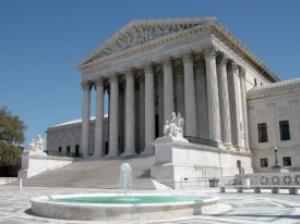
What is indecent when it comes to television programming, and does it matter whether it is delivered over-the-air or via cable or satellite or computer? Those are just some of the questions facing TV network executives today. In an 8-0 decision, the Supreme Court last week said that ABC and FOX will not have to pay fines imposed by the FCC after episodes of fleeting indecency. The ABC TV network had been fined for airing an episode of NYPD Blue that contained seven seconds of a woman’s backside while FOX had been fined for airing awards shows in which speakers used expletives in their unscripted remarks. According to the Court, the FCC policies were too vague and therefore violated the broadcasters’ rights to due process according to the Fifth Amendment.

However, despite the unanimous ruling (Justice Sonia Sotomayor recused herself), the Court left in place the FCC’s right to regulate the airwaves. This right was established by the 1978 decision FCC vs. Pacifica. The now famous case was in response to a radio station airing George Carlin’s monologue about dirty words. According to the ruling the government has a right to regulate indecent speech–which would otherwise be protected by the First Amendment–at times when children are likely to be present in the audience. This has resulted in a policy that makes the hours between 10pm and 6am a “safe harbor” for indecent (but not obscene) speech since children are not expected to be viewing TV or listening to the radio during these hours.

The real confusion for many people is that broadcast TV is indiscernible from cable TV, and neither look much different from TV programming streaming on their computer or tablet. However the FCC, and its regulatory process, only applies to over-the-air broadcast TV. When NBC TV network is only two clicks away on the remote control from ESPN, History Channel, or MTV, the fact that NBC is prohibited from showing indecent content from 6am till 10pm while the others are free to do so seems, well, odd. Historically the distinction between public airwaves and private cable networks made sense, but today is appears to be unfair or inconsistent.

According to Edward Wyatt, writing in the NY Times,

All of which leaves broadcasters with little real grasp of what is allowed and what is not. Similarly, the public has no idea what to expect; the next time Cher appears on a live awards show, should adult viewers cover the ears of their 8-year-olds, or can they depend on the broadcasters to censor indecent content?

 The National Association of Broadcasters, the trade group that represents the broadcasting industry, has asked for relaxed governmental regulation and a move towards self-regulation…a model that is used, for example, by the motion picture industry.

Breaking Through the Clutter of Superbowl Spots

It’s nearly Superbowl time again, and of course America is all excited about….the TV spots. The TV event that year-in and year-out pulls the largest audience is not just about football. Superbowl spots are sometimes the only reason people tune in to watch two teams–often hated teams, e.g. the Patriots–fight it out on the field. Watching advertisers fight it out for our attention in between the gridiron action can be quite the spectacle.

Every year, it seems, some advertiser pushes the limits of broadcast decency (as determined by the FCC) and the host TV network has to decide whether to reject that ad from airing. Of course rejection has, in itself, become a strategy for some advertisers. For example GoDaddy.com has made a TV advertising career from ads rejected by the network. GoDaddy is happy to direct curious viewers to the “banned” ad on the internet where decency regulations do not apply. Other advertisers have also pushed the limits of sexual images or innuendo to generate “buzz” and attention. PETA submitted an ad in 2009 that was rejected for sexual situations involving vegetables and ManCrunch, a website for gay dating, was rejected in 2010.

But the controversies are not always about sex. Last year CBS finally approved and aired a spot by conservative religious organization Focus on the Family (located just up the road in Colorado Springs). The spot featured Bronco quarterback Tim Tebow and his mother who decided, against her doctor’s advice, to continue her risky pregnancy. The pro-life spot was opposed by a national coalition of women’s groups. In response to the controversy, Tim Tebow was quoted by the Huffington Post as saying,

“I know some people won’t agree with it, but I think they can at least respect that I stand up for what I believe,” Tebow said. “I’ve always been very convicted of it (his views on abortion) because that’s the reason I’m here, because my mom was a very courageous woman. So any way that I could help, I would do it.”

The question for CBS was whether “issue ads” were appropriate for a TV event that has the broadest possible audience, in terms of demographics, of any TV broadcast. CBS had been criticized before for not airing an ad that they deemed to be a “contentious advocacy ad.”

This debate over what is and is not appropriate for a national TV audience is not going away. But one thing is for certain. Regardless of the network and their policies, advertisers will position themselves to benefit from the buzz that their edgy spots generate…either by being aired or by being banned.

Supreme Court Hears Arguments on Broadcast Indecency

Broadcast radio and TV have long been the most heavily regulated media when it comes to sex, violence, coarse language, and assorted unsavory behavior. Between the hours of 6am and 10pm, when children are most likely to be in the audience, broadcasters have had to be careful to not step over the fine, and sometimes shifting, line that separates decent from indecent expression. Unlike cable TV and satellite radio, broadcast programming has had to toe the line to avoid letter-writing campaigns and FCC fines. The difference has been explained by the fact that broadcasters use public airwaves to distribute their programs to every home and receiver in a given broadcast region. Listeners and viewers don’t have to subscribe to broadcast radio and TV, it just appears when they turn on their radio or TV.

But that distinction is, according to critics, becoming irrelevant as more and more of us rely on alternative technologies to receive our audio and video programming. Cable TV and satellite and web radio and TV now reach millions of homes and viewers often don’t know, or don’t care, if the channel they have selected originated over-the-air or came by way of some other distribution technology. And increasingly broadcasters feel like they are unable to compete when customers can choose from unregulated content channels just a click away. Nearly everyone recognizes that time have changed.  Even Justice Samuel Alito Jr. was quoted this week as saying, “Broadcast TV is living on borrowed time. It is not going to be long before it goes the way of vinyl records and eight-track tapes.”

However, those in favor of maintaining stricter standards for broadcast programming argue that media consumers need a safe haven and a place where they can find some relief from nudity, profanity, and graphic violence. The past decade has seen some push-back. The Jackson-Timberlake Superbowl halftime debacle, partial nudity on NYPD Blue, and fleeting profanity in awards ceremony acceptance speeches resulted in a public outcry that was soon followed by stepped-up FCC enforcement. Millions of dollars in fines were levied and have been working through the courts as broadcasters appeal lower court decisions.

Now the US Supreme Court is trying to settle the question–does the FCC have the right to enforce laws that prohibit indecent content between 6am and 10pm on broadcast media? Before they can answer that question they may have to agree on a definition of indecent content, and that won’t be easy. George Carlin’s infamous monologue “Seven Dirty Words” is a start, but not exhaustive. And of course context is important. Dropping an F-bomb in the middle of a sitcom is one thing…hearing it from the mouth of a marine in the film Saving Private Ryan is another matter.

In a few months we’ll know what the Supreme Court has decided. In the mean time, go ahead and Google “broadcast indecency” and read a few articles and essays on both sides of the issue before you make up your mind.

css.php