Sketch Artist Draws Criticism

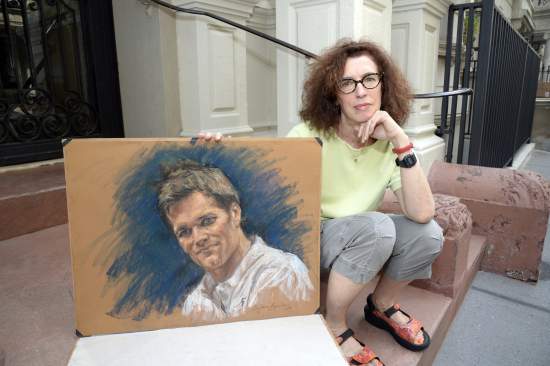
brady-sketchThe courtroom artist who drew the assignment to cover Tom Brady and the deflate-gate trial came up short her first time around…and social media pounced.

Like so many things that distract us from real life, deflate-gate is the gift that keeps on giving. This time the fiasco was the questionable depiction of the Patriot’s QB as he sat in the courtroom. Sketch artists are supposed to be impressionists, but this “sketchy” rendition attracted more derision than usual.

According to an article in CNN, the twitter-sphere lit up with people piling Courtroom artist Jane Rosenberg with a more pleasant sketch of New England Patriots quarterback Tom Brad. Rosenberg's sketch of Brady during his first appearance in Manhattan Federal Court broke the internet and lit up the Twitter-sphere after overwhelming reaction to Brady's glum look. (Photo By: Jefferson Siegel/NY Daily News via Getty Images)on courtroom sketch artist Jane Rosenberg. But just to show the world that she really can draw, Rosenberg later offered up a more careful sketch that captured the essence of the handsome and debonair defendant.

(Photo By: Jefferson Siegel/NY Daily News via Getty Images)


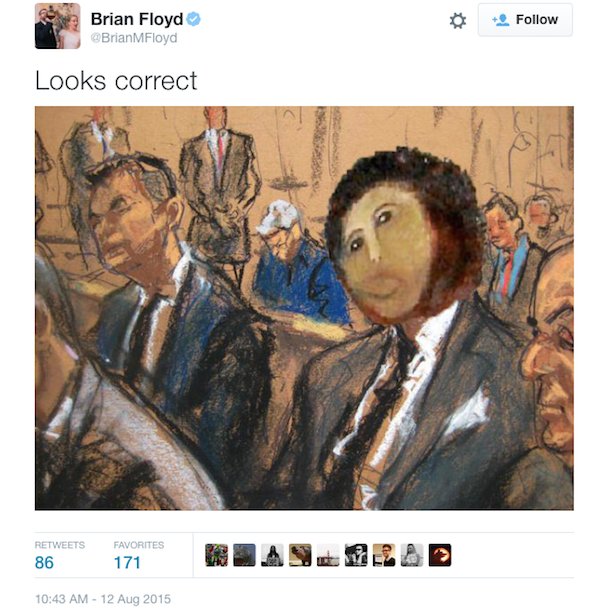
One twitterer decided to “fix” Rosenberg’s ill-conceived artwork. Brady-fix

Just in case you don’t get the joke, see this.

All of this just serves to prove that the internet, and social media, can be a mean and unforgiving place for screw-ups. Thick skin comes in handy, and not just for celebrities. When they tell you that they’re laughing with you…don’t be so sure.

Stadium Rock: 50 Years Ago

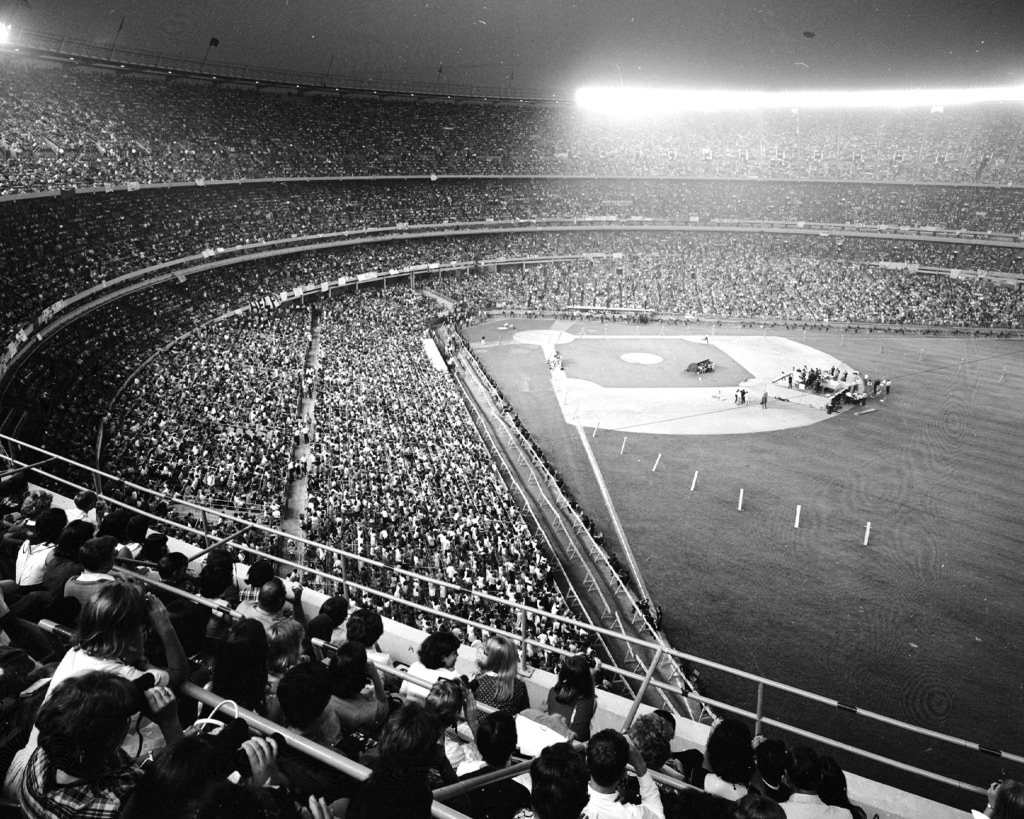
50 years ago the Beatles played to a crowd of 55,000 fans at Shea Stadium in NYC. At the time it was the largest concert crowd ever.

See more photos here.

Know what else happened 50 years ago?

Answer: the Mass Communications program was founded by professor Richard Pavlik!

Planned Parenthood’s PR Problem

You may have noticed that Planned Parenthood is in hot water. Now that a third undercover video has been released…this one featuring a PP official from Colorado discussing the selling of fetal organs…the crisis is moving from social media to front page news. But that is exactly what Planned Parenthood is trying to prevent by hiring a Public Relations firm. The firm is, according to Politico‘s website, attempting to keep media outlets from covering the story by claiming that the videos are a violation of patients’ privacy. That was the same tactic used to prevent the distribution of the Frederick Wiseman’s ground-breaking documentary Titicut Follies. That documentary was effectively banned for 24 years. Produced in 1967, the film eventually aired on PBS in 1992.

Another tactic being employed is to discredit the source of the leaked videos. According to a PR website,

Ferrero blasted the video publishers, the Center for Medical Progress, as a “well-funded group established for the purpose of damaging [PP’s] mission and services.” He said the video was heavily edited and falsely portrays the group’s participation in tissue donation programs.

This incident raises ethical questions about undercover reporting and agenda-driven journalism. Gotcha sound bites and crafty editing can be used to manipulate unsuspecting, or already convinced, audience members that this is an open and shut case. Perhaps it is…and time will tell if we can just sustain our focus and attention on the legitimate concerns.

Social media thrives on polarizing stories such as this one. With a catchy hashtag calling for the defunding of Planned Parenthood, i.e. #SToPP, social media will keep the debate front and center for at least a short time.

Rewiring my brain…this could take awhile

I’m approaching the mid-point of my year-long experiment. For 2015 I’m avoiding (as much as is professionally possible) all forms of electronic mass media. No TV news, no NPR or music on the radio, no podcasts, no Facebook or Twitter (except for an occasional post to the MCCNM department’s pages). Essentially I’m allowing myself print media. I resubscribed to the Pueblo Chieftain (newsprint edition) and have been reading a lot of books. (So far over 30, about 10,000 pages!) I continue to use email, course management software for classes, and I post content to various websites (this blog, YouTube, etc). I cannot turn off the switch entirely without taking a sabbatical from work.

I’m sure some of you may be wondering whether this constitutes professional malpractice for someone who is a professor in a Mass Communication department. Unplugging, while demanding that my students pay close attention to the media event or scandal du jour, may seem unfair or irresponsible. Perhaps you think that I’m just a curmudgeonly old fool, a closet Luddite, a technophobe, and a recluse. I can assure you that most (not all) of those assumptions are unfounded.

This has been, and continues to be, an experiment. It is not unique…many others have run this experiment before, and for many different reasons. And with such a small sample (n=1) you know that this qualitative experiment will have very little generalizability in the end. But it will matter to me. One way or the other I expect to learn a lot about myself, my media habits, my thinking process (with and without the constant barrage of media shrapnel), and my relationships.

Our discipline has a long history of media deprivation studies. Usually a researcher looks for a naturally occurring interruption in media services and uses the occasion to collect data on how people respond and react to the loss of service. Strikes by journalists or union workers who drive the delivery trucks, extended power outages, and natural disasters are all sources of media outages. Self-inflicted media blackouts are another matter altogether.

The reason for this experiment is to see if there has been a slow and steady decline in my thinking and my thought process as a result of my media consumption behavior over time. Reading Nicolas Carr’s prescient essay, Is Google Making Us Stupid, when it was published in 2008 initiated my concern. In the essay Carr bemoans his own ability to read deeply…and to think deeply about what he has read. For an academic, this is NOT good news. When I assigned Carr’s essay to students in my Media & Society class, they complained that it was too long…thus supporting Carr’s thesis. Can’t I have my internet, my social media, my podcasts, my news sound bites AND an intellectual capacity to contemplate the big issues? Not according to Carr.

A friend of mine who works with people with addictions tells me that it takes three years to change the mental processes that frequently drive compulsive behavior.  The big question that remains for me is whether this one year of partial withdraw will be sufficient to see a significant effect. I’ll keep you posted…just not on Twitter or Facebook!

Stumbling Upon a Little Slice of America the Beautiful

Monday was Memorial Day, and since I had no other plans I decided to head east of Pueblo to grab some footage of the Arkansas river at flood stage. I’m working on a documentary about the Arkansas river, and footage of it flooding might be useful as I try to explain how this precious, over-tapped resource occasionally delivers more water than anyone wants or needs. I grabbed a few shots at the bridge at Avondale and then continued east towards Rocky Ford.

On my way I noticed a small crowd beginning to gather at the Fowler Cemetery. With American flags flying, and Boy Scouts and veterans of war in uniform, it quickly occurred to me that this was a Memorial Day observance at the local cemetery. Since I wasn’t on a schedule I decided to stop and grab a few quick shots. As I moved through the crowd I saw young and old, mostly ranchers and farmers, turning out to honor those who died fighting for freedom. They sang patriotic songs, a local minister delivered an inspirational speech, and the local Boy Scouts raised the flag…to which the crowd recited the pledge of allegiance.

After returning home a few hours later I edited a short piece that attempted to capture this little slice of America…and a scene that I’m sure was repeated in hundreds, if not thousands, of small towns across America. KOAA-TV used a portion of it in their 10pm newscast and uploaded the entire video to their Facebook page where it attracted more than 17,000 views, 570 likes, and 182 shares in the first 12 hours.

https://youtu.be/6T1mKhvU4yM

Stop, or I’ll Record

StopCSU-Pueblo  MCCNM alum Daneya Esgar (class of 2001) is co-sponsoring legislation before the Colorado state legislature. Before becoming a State Representative, Esgar was a news producer for local affiliate KOAA-TV. In her new role Esgar is promoting legislation that expand protection for citizen journalists and ordinary citizens who may find themselves eye witnesses to law enforcement agencies working in the local community.

HB 15-1290 “would allow a civil suit against a law enforcement agency if an officer seizes or destroys a recording without a person’s consent, possibly resulting in damages of up to $15,000.” Recent incidents in the news have demonstrated the value of civilian video recordings that have brought to light misbehavior by law enforcement personnel.

Body cameras on officers are becoming the new norm and many expect this change to have a positive effect. Now, with nearly every citizen having the ability to record and broadcast (in near real time) video from the scene of the incident, we may have even more evidence of wrongdoing and…perhaps more important…incentive to do the right thing in the first place.

Of course one downside is the loss of privacy that we all will experience as the “surveillance state” expands.

What happened in Vegas…

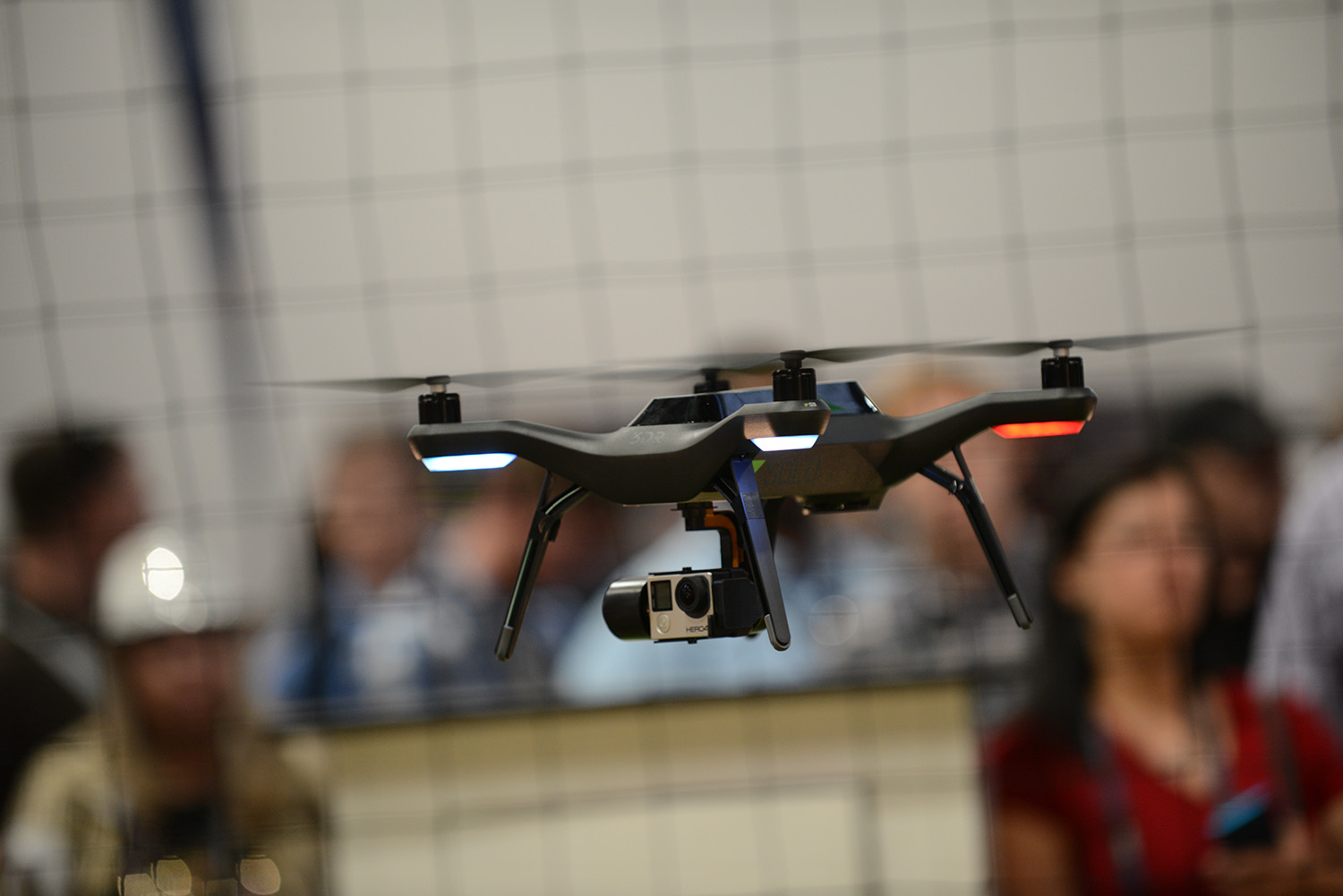
Many companies were demonstrating drone technology
Drone demo on the exhibit floor

Actually, it’s still happening. It’s the annual convention of the National Association of Broadcasters and it will be continuing through Thursday. According to their press release, “With more than 98,000 attendees from 150 countries and 1,700+ exhibitors, NAB Show is the ultimate marketplace for digital media and entertainment.” Conveniently for academics, the Broadcast Education Association annual convention runs concurrently and overlaps the NAB for a few days.

I, along with several of my colleagues from CSU-Pueblo, made presentations, attended sessions and workshops, and toured the more than 1 million square feet of exhibit space. Of course I didn’t see it all. Even if I had been there for the entire 4-day run I would have had a hard time seeing all of the booths, exhibits, and displays.

But I can tell you one thing…in just a few hours today I saw more pixels than some people see in a lifetime. There were 4K displays everywhere, and quite a few 8K displays as well. Monitor walls stretched from floor to ceiling, and there were $50,000 digital cinema cameras everywhere you looked. Companies (including: Adobe, Arri, Canon, Dolby Laboratories, GoPro,  Red Digital Cinema, Sony, and Zacuto, just to name a few) were showing off the latest and greatest hardware and, perhaps more important, software used by radio and TV broadcasters and media content producers. One of the highlights this year is the aerial robotics and done pavilion. Other buzz words for 2015 include UHD (Ultra High Definition), ATSC 3.0, Virtual Reality, and SVOD (Subscription Video On Demand, e.g. Netflix and Hulu+).

So, what was my ah-ha moment? During a State of the Industry report one of the speakers made the point that the media production/distribution industry was moving from hardware to software. More and more of the tools that we use to acquire, edit, manage, and distribute content are primarily software tools. Once media content is digital, software allows us to do any number of things to it in the process of making it available to our intended audience. The future of media production will be less about engineering breakthroughs and more about software development. And in the future most of our media and software will live in the cloud. It’s an exciting time to be in this business.

Marketing Missteps Turn Into PR Pratfalls

Companies take risks and try new things. Sometimes they work, and other times…well, let’s just say they sometimes fail to produce the intended result. Starbuck’s “Race Together” campaign is just one of the most recent examples of a well-intended effort that backfired when consumers used social media to push back. Interactivity is one of the things that makes social media so incredibly powerful and valuable. But like any powerful force, if it gets out of control (which it so frequently does) it can wreak havoc.

Mae Anderson, of the Associated Press, makes the point that this is not unique to the coffee giant. Plenty of other marketing blunders have mushroomed into PR blunders when corporations lose control of their message in social media spaces. Coke, the Gap, Lululemon, and even J.P. Morgan have felt the wrath of consumers who didn’t like the: new taste, new logo, new transparency, or lack thereof.

In another AP news article the Starbucks campaign was defended as simply a failed attempt to try to do the right thing.

At its annual meeting, Schultz said he didn’t think Starbucks would solve the country’s “centuries old problems of racism” but that he thinks it can make a difference. He said workers don’t have to participate, and that stores will make customers another drink or cover up cups if they don’t like the message. “This is not a marketing or P.R. exercise,” Schultz said.

Even if we take their word for it and accept that they did not intend for this to be a marketing or PR exercise…it is clear that it has become exactly that.

The Infamous Spaghetti Tree Harvest

April Fool’s Day is a time to prank your friends and family members with a tall-tale or fib designed to make them believe something that isn’t true. When I was growing up it was not uncommon for one of us to look out the window first thing in the morning and exclaim, “Wow, look at that…it snowed last night!” Of course one could only hope that the target of the prank would look outside before remembering what day it was.

But how would you feel if your local news broadcaster pulled a fast one on you this April 1st? In 1957 the BBC’s Panorama program broadcast a 3-minute segment about the spaghetti harvest in the south of Switzerland. Here, see for yourself…

According to the hoaxes.org website,

The Swiss Spaghetti Harvest hoax generated an enormous response. Hundreds of people phoned the BBC wanting to know how they could grow their own spaghetti tree. To this query the BBC diplomatically replied, “Place a sprig of spaghetti in a tin of tomato sauce and hope for the best.”

To this day the Panorama broadcast remains one of the most famous and popular April Fool’s Day hoaxes of all time. It is also believed to be the first time the medium of television was used to stage an April Fool’s Day hoax.

You can read more about it here.

Couch Potato Dumplings

Question: What do you call someone who binge watches TV shows about binge eating? Answer: Someone who needs to get a life. Sorry if that sounds harsh, but seriously! Apparently the new hit YouTube TV genre in South Korea involves watching people eat.

Mukbang performance artists eat in front of their webcams for live audiences who apparently get a voyeuristic thrill out of the experience. “Rachel Ahn, who goes by ‘Aebong-ee’ on her broadcasts, is kind of a big deal in the mukbang world.” For three hours a night she eats for an audience, and the audience rewards her with virtual prizes that combined amount to a salary greater than her day job.

You can read/listen here on the NPR website.

Sadly, the fact that their neighbor to the north has perennial problems with mass starvation may be lost on these seekers of fame, and their followers.

css.php