The “Holy Grail” of Advertising

In this social media saturated landscape, word-of-mouth (or word-of-MOUSE as the case may be) advertising carries a lot of clout. Because so many of us are skeptical of traditional advertising pitches, a referral from a trusted friend…yes, even a Facebook friend…is highly valued. In fact, according to Reuters, “Facebook Chief Executive Mark Zuckerberg was quoted as saying that a trusted referral was the ‘Holy Grail’ of advertising.”  And just as money is what advertising is ultimately about, money is also central to a class-action lawsuit that Facebook lost when it was accused of using Facebook users’ “likes”, without their consent, to pitch products to their Facebook friends.

This is not a new story. Most of it transpired in Summer and Fall of 2012, but the lesson is worth reviewing and repeating. The poster-child for this particular violation is Facebook user Nick Bergus. According to Venturebeat.com,

The most egregious example of a user becoming the inadvertent spokesman for a less-than-lube-in-barrelsqueaky-clean brand, of course, is Nick Bergus, who became the leading pitchman for Passion Natural Water personal lubricant — in 55-gallon allotments.

A class-action lawsuit, brought in California court, sought damages from Facebook for their use of “sponsored stories” without paying Facebook users or allowing them to opt out. According to Reuters, “A ‘Sponsored Story’ is an advertisement that appears on a member’s Facebook page and generally consists of another friend’s name, profile picture and an assertion that the person ‘likes’ the advertiser.” In the case of Nick Bergus, his likeness was used to sell 55-gallon drums of personal lubricant.

Now that the lawsuit has been settled, a potential 125 million Facebook users are eligible for a settlement of … wait for it … two cents each, or up to $10 if they apply.

One thing is certain, the advertising business is changing. Native ads, what some are calling the “next wave” of advertising, are replacing traditional banner ads, pop-ups, and pre-rolls. As new media companies attempt to find new ways to monetize their business, too often they step over boundaries intended to protect users’ privacy.
The Steubenville Fallout Continues

The tragic events that took place in Steubenville, Ohio last August are still sending shockwaves through the media. The horrific event perpetrated by two 16-year-old males, while others stood by, resulted in their conviction on charges of rape and child pornography. The two boys might have gotten away with the crime had they not incriminated themselves with pictures, messages and videos shared via social media. Additional arrests of two juvenile girls last weeks resulted when they tweeted threats directed at the victim.

Social media also played a powerful role by focusing public attention on the events after local authorities were perceived as not aggressively pursuing the case. The hactivist group Anonymous got involved and threatened to “out” the personal information of all of those even remotely involved with the incident. Making personal information public, also known as “doxing” is a common tactic used by Anonymous to embarras those who are suspected of wrong-doing.

But the most recent outrage over the Steubenville case is being leveled at the cable news outlet CNN. Anchor Candy Crowley and reporter Poppy Harlow, in reporting the trial and verdict, were perceived as displaying more empathy for the young rapists than the victim. A petition demanding an apology already has nearly 300,000 signatures. Here’s the video so you can decide for yourself.

[youtube=http://youtu.be/MvUdyNko8LQ]

Clearly there have been several lives ruined by the actions, and inactions, of a great many people. While the two rapists deserve the brunt of the blame and the punishment, there’s plenty of blame to go around: for friends and family members who were passive when they should have been proactive; for the local community and high school that allowed teens to party with alcohol; for an absent father who admitted that he, “wasn’t there for [his] son”; and for the sex-obsessed culture that devalues women and fuels misogynistic behavior by teen males.

And here’s something to consider. If the party that August night resembled something that the teens might have seen on Jersey Shore or Buckwild, does MTV share in the blame?

Where there’s smoke…

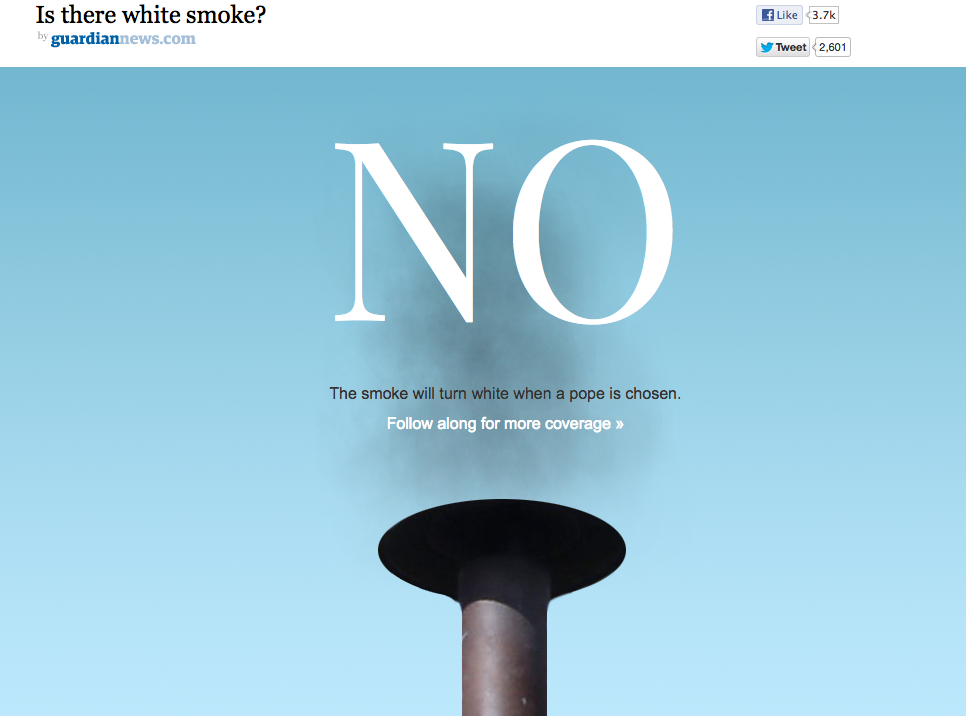
whitesmokeYou may have heard that the Catholic Church is in the process of selecting a new Pope. The Church has been slow to embrace certain changes, e.g. women priests and same-sex marriage, but they have not been as slow to adapt to new communication media. The recently retire pope, Pope Benedict XVI (@pontifex), became the first Pope to join Twitter in December of 2012 and the Catholic Church has more than 413K likes on its facebook page.

Some may find it ironic then that the Church, in this modern digital age, still uses smoke signals to announce the results of a successful election. When the bishops have selected the new Pope, the smoke from the chimney of the Sistine Chapel will switch from black to white.

In a world of high-tech solutions to most every problem, there are plenty of options for staying informed of the latest news in this breaking story. With the tag line, “when the smoke goes up, you’ll know what’s going down”, the website popealarm.com is on top of the latest developments. At the website you can sign up to receive instant notification of the election by either text or email.

For the ultimate in simplicity you can visit istherewhitesmoke.com.

Or you can download an app for your smart phone. Some of the apps provide biographic background on the candidates. All promise to keep you up to the minute with breaking news. Not to be outdone, the Pontifical Council for Social Communication has released the Pope App. Before you know it the Vatican will have its own YouTube channel.

Violence and Media

Correlation does not prove causation. That is research-speak that calls into question the claim that watching violent movies or playing violent video games makes the player a more violent person. But despite the difficulty of finding causal links, the events at Newtown and other  scenes of gun violence will likely increase  funding for research that attempts to uncover connections between violent media consumption and violent behavior.

Here’s a video clip that frames the issue…

[youtube=http://youtu.be/IdY7ehahp2M]

Even though most gun deaths are suicides and gang-related shootings, it is the mass shootings, such as the ones in Aurora and Newtown, that focus the public’s attention on violent video games and movies.

However, despite concerns about the media’s contribution to gun violence, most of the response from politicians has focused on certain types of guns and large-capacity magazines…much to the chagrin of 2nd Amendment absolutists. There are several reasons that may explain this. The first is because the media-violence link is still not conclusive in the minds of many researchers. And the other reason is something called the 1st Amendment and Freedom of Speech. Attempts to limit speech (content of TV, movies and video games) results in some pretty difficult legal challenges. Even before you consider the competing interests of the 1st and 2nd Amendments this is a difficult issue.

The Eight Million Dollar Minute

youtube-superbowl-ad-blitz-gameCompanies who want to be a player in this year’s Super Bowl are going to have to pony up some serious cash…somewhere in the neighborhood of $3.8 million dollars for a 30-second spot.  That makes the Super Bowl the most expensive advertising venue out there. So why do advertisers continue to line up to get in the game? And what do they get in return for their money?

TV’s largest audience for starters. Nielsen reported 111.3 million Americans watched last year’s game. An advertiser would have to buy a 30-second spot in each of the nine top-rated network TV shows last week (American Idol, NCIS, NCIS Los Angeles, 60 Minutes, Criminal Minds, CSI, Big Bang Theory, 2 Broke Girls, and the NFL Pro Bowl) to get a comparable number of eyeballs. Or, they could buy a 30-second spot in each of the 30 top-rated cable TV shows to get a similar “reach.”

But a Super Bowl spot is about more than raw numbers. There’s a certain prestige that comes along with being part of this American tradition. There’s also an indirect stock market gain for participating companies that is apparently part of the equation, at least according to a study reported in Kiplinger. There’s also the tradition of Super Bowl spots that live on in infamy. The 1984 90-second spot for the Apple Macintosh is still considered by many to be the greatest TV spot of all time.

And here’s another factor that some advertisers (and would-be advertisers) have exploited to their benefit. An ad that is controversial–too racy or racist for example–can ride the coat tails of the Super Bowl buzz at a fraction of the price it would have cost the advertiser to buy the time. These controversial spots can be uploaded to YouTube, or any of several other internet sites, and have a life of their own…even if they never aired! Go Daddy has played this game as well as anyone in recent years.

Mildly controversial spots can also benefit from all the talk…even if some of the talk is critical. Arabs are insulted by this year’s Coke spot…and Jamaicans are (or are not depending on who you ask) offended by the VW spot. I suspect some will be offended by the Kate Upton spot for Mercedes-Benz.

More and more advertisers are pre-releasing their ads to try to generate hype prior to game day…and often to good effect. Two years ago VW’s little Darth Vader spot was seen by more than 17 million viewers before it actually aired. Last year 34 out of 54 spots were released online before the game.

The other big news in Super Bowl ads is interactivity. Coke wants you to pick the ending of their spot. Doritos invited consumer-generated spots to compete, and then asked us to vote for the winner. And YouTube has their AdBlitz channel ready to go…inviting live voting on all the spots as they air. Which means for many of you the Super Bowl will be a two-screen experience. And with two screens, at least you’ll have something to do if the game is a dud.

Zero Dark Thirty Under Attack

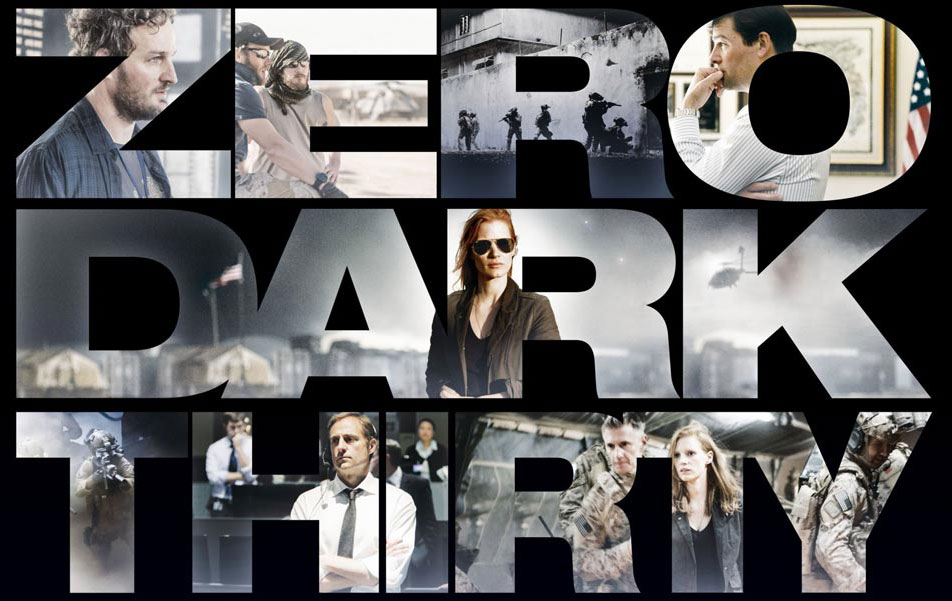
zero-dark-thirty1The Hollywood film Zero Dark Thirty, about the hunt for and killing of Osama bin Laden, is being criticized by some in the Hollywood film community because of its portrayal of “enhanced interrogation”, a euphemism for torture. According to Hollywood veterans, and liberal activists, Ed Asner and Martin Sheen (you may know him as the father of Charlie Sheen), Zero Dark Thirty is not worthy of accolades and honors because it suggests that torture played a role in the elimination of bin Laden.

First a little background. The film is directed by Kathryn Bigelow who also directed The Hurt Locker, winner of six Academy Awards. Controversy arose early on when the film’s producers and writers were accused of receiving access to classified documents. Opponents of President Obama suspected that the film would be released just before the 2012 elections, with the goal of boosting the President’s reelection efforts. However, the film was not finished in time for the elections and went into wide release this past weekend to critical acclaim. The film has received five Academy Award nominations, including Best Picture, and five Golden Globe nominations resulting in a Best Actress win for Jessica Chastain. It also topped the weekend box office taking in approximately $24 million.

In defense of the film’s portrayal of torture, Sony pictures issued a statement saying, “To not include that part of history would have been irresponsible and inaccurate.” However, this movie is a fictional account based on real events…not a documentary. I’m not sure that responsibility and accuracy were as essential as Sony would like us to believe.

In criticizing the film, one Hollywood insider said, “You can’t separate artistry from morality.” While that statement is open to debate, it is interesting to note that moral objections to content found in Hollywood movies has been a battle waged since the turn of the previous century. For most of that time Hollywood’s collective response has been, “we’re artists…don’t impose your values on our creation.” “If you don’t like it, don’t watch it.” And the always-predictable argument, “It’s only a movie…people can distinguish between reality and what they see on the screen.” Now that Hollywood activists don’t care for the tone of the objectionable content the shoe appears to be on the other foot. They’ll need to tread lightly, lest they appear overly hypocritical as they press their case for moral superiority.

Al Gore Sells Out?

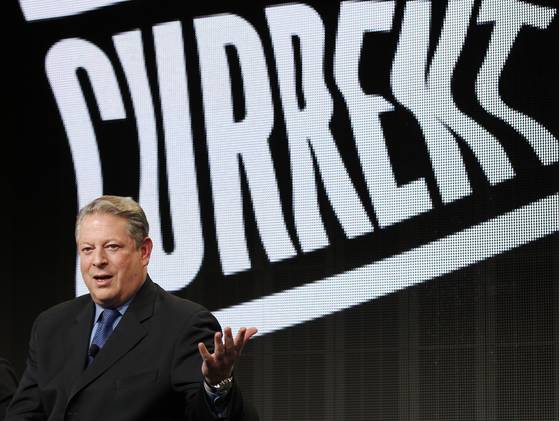
gore_currentIn what is reported to be a $500 million deal, Current TV is being sold to Al Jazeera Media Network. With headquarter located in Qatar, Al Jazeera is a global news network with an Arab point-of-view and funding from the government of Qatar. Since its debut in the mid 1990s, the network has been controversial and that controversy only increased after 9/11 and the wars in Afghanistan and Iraq. Frequently giving a voice to “terrorist”  organizations (as defined by the US government), Al Jazeera continued to expand and launched an English-language channel in 2006.

By acquiring Current TV, Al Jazeera gains access to approximately 40 million cable households…greatly expanding their reach in the US market. Current TV has struggled for viewers so 40 million potential TVHHs may not be as impressive as it first sounds. And ratings history suggests that global news (from any perspective) is a difficult product to sell to an American audience. If the new network will be able to gain any traction it will likely be at the expense of left-leaning TV news networks such as MSNBC and CNN and other international news channels such as BBC World News.

One of the founders of Current TV is former VP Al Gore. Also known for his award-winning environmental documentary An Inconvenient Truth, Gore stands to gain about $100 million from the sale of Current TV. Gore will remain on the board of the new network, tentatively titled Al Jazeera America, and will have a role in shaping its identity. Considering that Al Jazeera is financed largely by petroleum revenue, and that Al Gore is known for his outspoken views on global climate change, some have criticized Gore’s profiting from an industry that is accused of being the greatest contributor to CO2 emissions. Current TV is reported to have rebuffed an offer to buy from conservative pundit Glenn Beck on ideological grounds. According to the Wall Street Journal, “Glenn Beck’s The Blaze approached Current about buying the channel last year, but was told that ‘the legacy of who the network goes to is important to us and we are sensitive to networks not aligned with our point of view,’ according to a person familiar with the negotiations.”  But legacy was not enough of an issue, apparently, to turn down Al Jazeera’s money. As Al Gore himself once said, quoting Upton Sinclair, “It’s difficult to get a man to understand something if his salary depends upon his not understanding it.”

Someone’s about to die

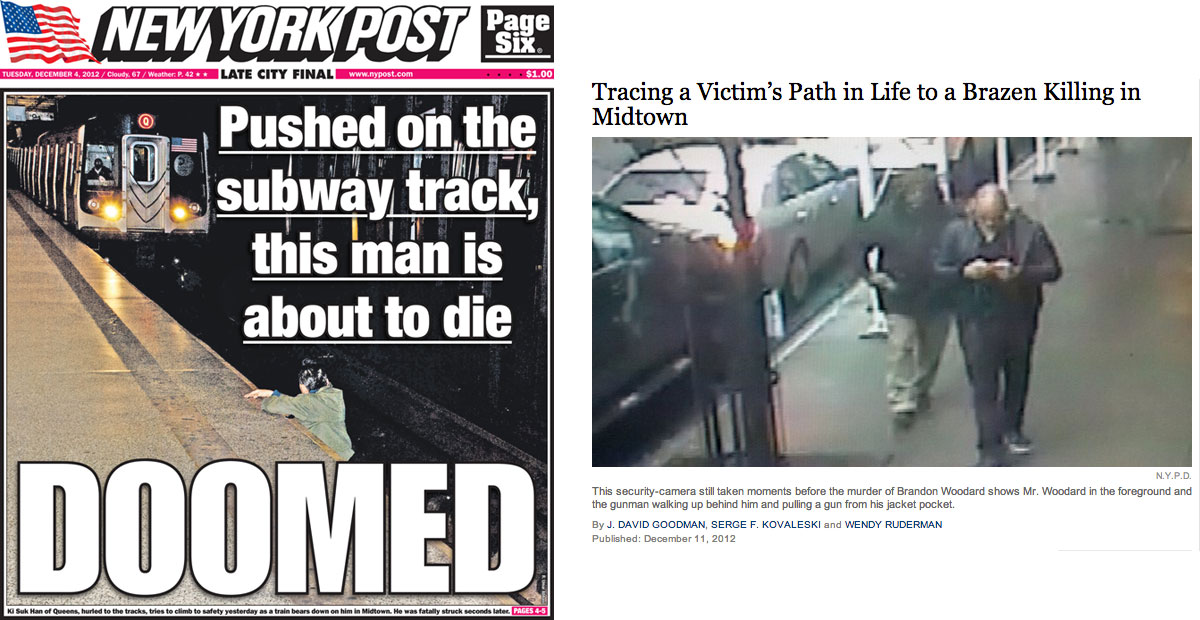
Two photos, taken within a few days of one another in NYC, of men about to die.

In the period of a week these two photos were taken and published in newspapers and online. In each photo you can see the final moment before a life is snuffed out. In the first photo the victim is about to be hit by a New York subway train. In the second, the victim is about to be shot point-blank by the man approaching from behind. The first image was taken by R. Umar Abbasi, a freelance photographer for The New York Post. The second was a still from a surveillance camera.

The ethics of shooting, publishing, and captioning photos such as these are complex and difficult. You can find plenty of blogs and essays that attempt to dissect the issues involved (here’s one and here’s another) and they make many excellent points. It can be argued that I’m just as guilty by posting the pix on my blog and using the power of these very compelling images to draw you into a conversation about their appropriateness.

I hope that you will be prepared, if and when the day comes, to make the difficult choices that may be facing you. Do you take the picture? And if the picture is taken, do you print it? Which picture do you print? Which caption do you run? When does the public’s right to know trump the family’s right to privacy?

The best that we can hope for is that our choices come from ethical foundations that understands and appreciates the complicated, and often conflicting, values at play.

The Future of Modern Warfare?

No, I’m not talking about the release of Call of Duty: Black Ops II this week, and the $500 million that players dropped on the first day. Rather, I’m talking about real conflict with real casualties, and tweets like this…

Some numbers from the last 3 days: 492 rockets fired from #Gaza hit #Israel + 245 Iron Dome interceptions = 737 rockets fired at us. @IDFSpokesperson

And this photo tweeted two days ago…

And this video posted to Youtube…

[youtube=http://www.youtube.com/watch?v=P6U2ZQ0EhN4]
If you watch the IDF YouTube channel you’ll also find a video that alleges to show Palestinian children taunting Israeli soldiers attempting to provoke a response for the cameras.

In a world where public support is necessary for democratic societies to engage in armed conflict, propaganda is a necessary and essential part of the campaign. According to an editorial in the Washington Post,

The @IDFSpokesperson Twitter account, encouraging followers to show support for the strikes, tweeted Wednesday: “More than 12,000 rockets hit Israel in the past 12 years. RT if you think #Israel has the right to defend itself.” More than 5,500 people have retweeted it.

The social media campaign being waged by the Israeli Defense Force is part PR campaign, part political posturing, part warning intended to minimize civilian casualties, and part intimidation, e.g. “We recommend that no Hamas operatives, whether low level or senior leaders, show their faces above ground in the days ahead.”

Hamas, the pro-Palestinian group responsible for the rocket attacks on Israel, has responded with their own campaign, including the twitter hashtag #GazaUnderAttack. Civilians, especially children, killed by Israeli retaliatory strikes are put on display for the TV cameras as mourners wail in the street.

The Middle East, post Arab Spring, is still a fractious place where opposing forces battle on a daily basis. While some of the conflict is physical, much of it takes place in the media where the battle is fought for the hearts and minds of both regional and global witnesses. And more and more of it is happening in near-real-time.

Is it real, or is it Photoshopped?

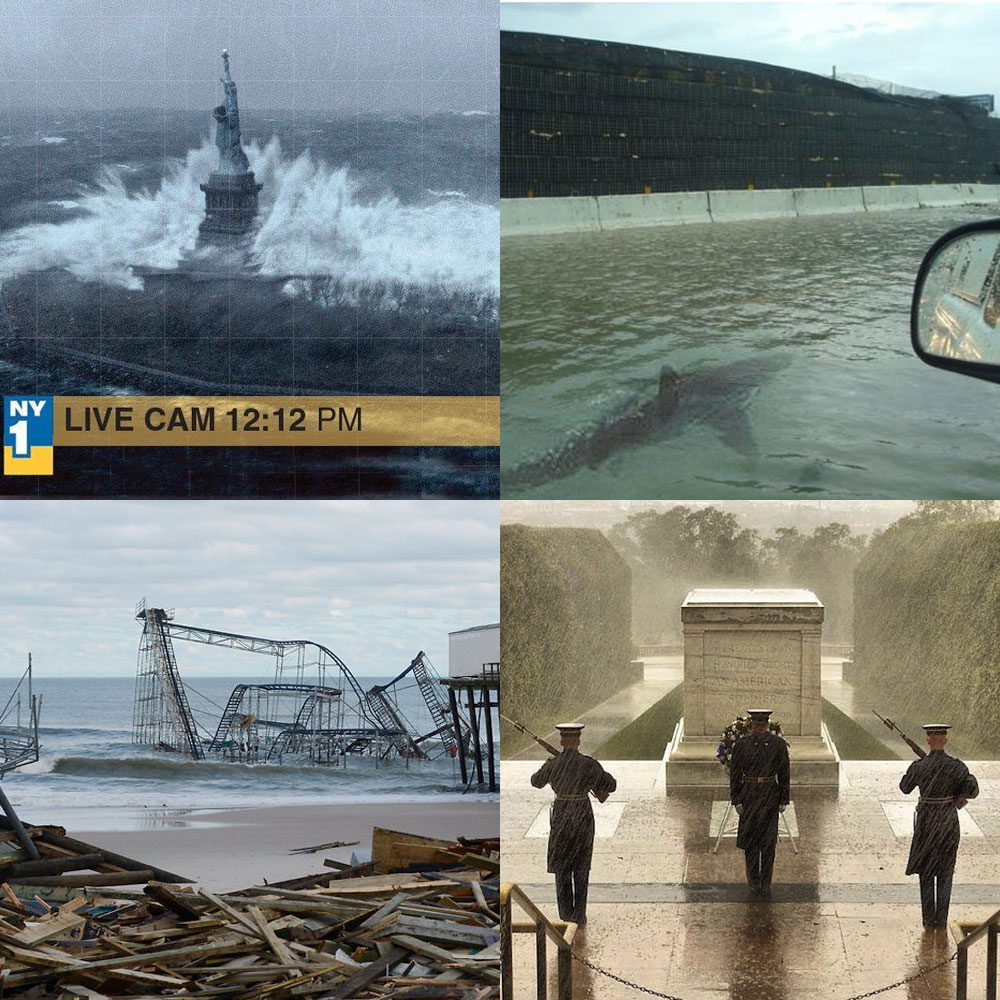
With cell-phone cameras everywhere, and digital photo sharing sites and apps like instagram so easy to use, we are seeing more photos than ever before. And while most of these photos are true depictions of real events, others are intended to mislead or deceive. Take, for example, the photos at right that came out in the days surrounding the “Superstorm” named Sandy. Of the four photos at right, only one is “true” or “real.” Can you guess which one?

Not only are fake photos easy to create, they are even easier to distribute. One cleverly made photo can go viral via social media like twitter, Tumblr and Facebook.

People with Photoshop skills can make composite photos that often defy detection. Photoshop has even become a verb, as in, “I ‘photoshopped’ him out of the picture and put Josh in his place.”

Photoshopped images in advertisements have even attracted the attention of European lawmakers who are threatening to ban the use of Photoshop or digital retouching in ads targeting those under the age of 16.

Oh, and by the way, the only photo that depicts Sandy in an accurate way is the shot of the roller coaster surrounded by water. The photo of Lady Liberty is from the movie The Day After. The shark is photoshopped, and the photo at the Tomb of the Unknown Soldier was taken in September.

css.php