
The “movie” experience

GravityI saw a movie last week. Not just any movie. Gravity, in IMAX 3D. It was amazing. Not every movie needs (or benefits from) the big screen, 3D perspective and awesome surround sound…but Gravity definitely brought it all together in a way that has to be experience to be appreciated. If you haven’t already seen Gravity, don’t wait for the DVD or Netflix. Like Lawrence of Arabia in 70mm (still remember seeing it at the Naro theater in Norfolk, VA in late 1989) some movies need to be appreciated as the “larger-than-life” event that they are.

The great thing about IMAX is the sensation that comes from having your vision and hearing FILLED with the director’s creative vision. I suppose motion-controlled seating and “Smell-O-Vision” might have heightened the experience even more, but there was plenty of sensory stimulation as it was.

Filmmakers have, almost from the start, longed to have complete control over the viewer’s experience. It didn’t take long for them to discover that a large screen in a dark room minimized visual distractions while an audio system capable of high-fidelity at high volume drowned out the coughing and fidgeting of the audience.

At the turn of the last century, when motion pictures were the only game in town, projecting a grainy black-and-white image on a draped bed sheet was good enough. But that wouldn’t last long. Soon a soundtrack replaced the live pianist and speaking characters preempted the need for title cards and subtitles. Larger screens and Technicolor soon followed. Then TV was invented. Hollywood studios and producers, worried that their audiences would stay home and stop going to the movies, decided to try to create an even bigger experience. The list of bigger-is-better movie technologies exploded; Todd-AO, Cinerama, Cinemascope,  Super and Ultra Panavision, 70mm, IMAX, and Vistavision are just a few. Advances in audio technology were just as spectacular. Stereo gave way to Surround Sound as Dolby Digital and THX found new ways to make us “feel” the soundtrack.

At 4.5 years in the making, Gravity is a tour-de-force of CGI and audio. Because I’ve never experienced space I was ill-equipped to determine whether anything looked or sounded “wrong,” but I do know that not once was I jarred back to reality by an errant shot or sound. The director launched me into space and I didn’t land on my feet until the 90-minute movie had run its course.  It was a great ride.
Partisan Politics, Partisan Media, and the Shutdown Saga

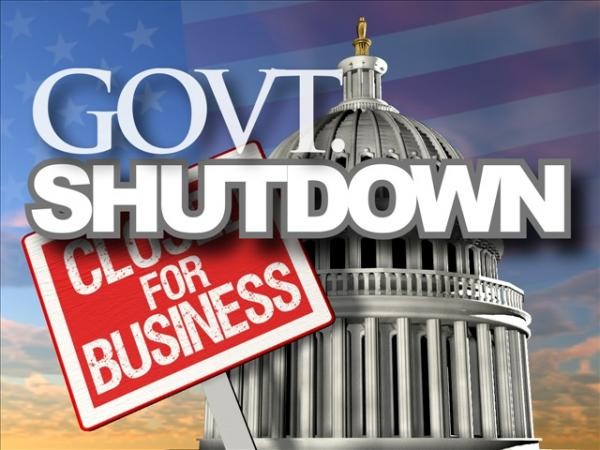
shutdownJournalists love a good story. Drama, conflict, winners and losers and high-stakes plot twists are too tempting to resist. So when the House and Senate fight and squabble over passage of a Continuing Resolution to fund the federal government, journalists are right there recording every speech and soundbite and looking for human-interest stories of citizens affected by the partial shutdown.

Some cannot resist the urge to take sides as they inject a little commentary about who’s at fault and who’s the victim. I’m talking about mainstream media (MSM) here…the supposed neutral, objective observers of all things political. The partisan media (blogs, some cable TV news networks, tabloid newspapers, etc.) don’t even try to hide their biases. They traffic in political partisanship, and a scandal–like this current conflict–is “money”.

Social media has also been lighting up with twitter hashtags #DearCongress and #MakeDCListen. And because no breaking news event is complete without viral images and memes, Know Your Meme is on the job collecting and categorizing trending topics related to the shutdown.

But back to the MSM for a moment. This is a complicated story and how journalists frame the conflict and competing narratives will determine how their audiences understand and interpret the events. Focusing on one side’s apparent rigid unwillingness to compromise may create a less favorable view of them in the public’s eye. Trying to assign motives to actions and statements can be tricky and, perhaps, misleading.

Images of closed National Parks, soundbites with frustrated visitors to D.C.’s famous museums, and reporters’ stand-ups criticizing the inability of congress to reach consensus; these are all components of a narrative that dramatizes the current government shutdown. How we interpret these sights and sounds will determine the ultimate winners and losers.

Ultimately this is a PR battle on the part of political players who are busy assigning blame and ducking responsibility. And in that game, perception is everything. If the American public get’s sick and tired of one or the other “players” in this game, there will be strong incentive to compromise…or risk the voters’ wrath.

Once was Enough

Marketing is tricky business. And creating a TV ad that strikes the right chord can be particularly difficult when sensitive issues are part of the equation. Once an effective ad is produced, the next trick is to pair it with the right audience and present it in the best possible context. One of two outstanding advertisements that seem to have hit all the right notes is the “Clydesdale Respect” spot that aired just once during the XXXVI Superbowl on February 3, 2002…just five months after the 9/11 terrorist attacks. The second is the “1984” ad for Apple Macintosh, which also aired only once. The Apple ad was broadcast during the XVIII Superbowl in 1984. Here they are in case you missed them the first time.

[youtube=http://www.youtube.com/watch?v=Px5YcOeQB4I&]

And the 1984 spot by Apple. This spot was directed by Ridley Scott, who also directed the scifi films Alien and Blade Runner.

[youtube=http://www.youtube.com/watch?v=axSnW-ygU5g&]

Jeff Bezos: Businessman or Philanthropist?

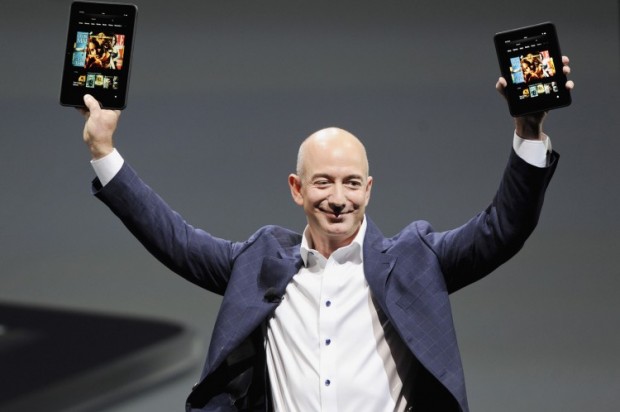
BezosJeff Bezos, billionaire founder of Amazon.com, just purchased the Washington Post newspaper for $250 million. The newspaper has struggled in recent years, as have nearly all US newspapers, with declining revenue and increasing losses. Last year the paper lost $54 million and this year they are on track to lose another $100 million. Some are asking if Bezos can do for journalism what he did for retail sales. With a personal fortune of nearly $25 billion Bezos’ “investment” in the WaPo equals just one percent of his wealth — hardly a huge financial risk if he is unable to turn things around.

But perhaps turning things around is not his first priority. Some have speculated that the decision to purchase the paper was less about adding to his financial stature and more about advancing his own political agenda. Still others suggest that is may be about enhancing his image and legacy. If we’ve learned anything from the history of the rich and powerful it is that advancing age often brings with it a strong desire to do something that will be seen as having a lasting impact…something that will endure long after they are gone. Thanks to legendary PR practitioner “Poison” Ivy Lee, the great robber baron John D. Rockefeller is as well-known today for his philanthropy as for the tragic massacre at Ludlow.

Bezos purchased the paper from the Graham family who are highly esteemed Washington D.C. insiders. Amazon is headquartered in Seattle, or as Bezos calls it, the “other Washington.” The cultural clash between East/West coast and Old/New money could make this relationship a challenge. But Amazon and Bezos are not unfamiliar with the D.C. way of life. Last year they spent a reported $2.5 million lobbying the executive and legislative branches of government.

In a letter to Washington Post employees, Bezos wrote,

There will, of course, be change at The Post over the coming years. That’s essential and would have happened with or without new ownership. The Internet is transforming almost every element of the news business: shortening news cycles, eroding long-reliable revenue sources, and enabling new kinds of competition, some of which bear little or no news-gathering costs. There is no map, and charting a path ahead will not be easy. We will need to invent, which means we will need to experiment.

It will be interesting to see what kinds of experiments Bezos has in mind. Will every new Kindle sold come with a Washington Post subscription? Will news and retail marketing somehow find a symbiotic relationship where consumers of both news and commercial products move freely between both commodities? Or will the Washington Post simply be the legacy medium that Bezos uses to burnish his personal legacy? As Bob Schieffer said on Face the Nation, “We can get along without newspapers, but we can’t get along without what newspapers do.” Let’s hope we don’t have to witness the truth of that statement.

The New McCarthyism

In the 1950s senator Joseph McCarthy made accusations that communists and communist sympathizers were taking over American institutions, including the entertainment industries.  According to Wikipedia, the term McCarthyism has come to mean “the practice of making accusations of disloyalty, subversion, or treason without proper regard for evidence.” 

jenny-mccarthy-the-view

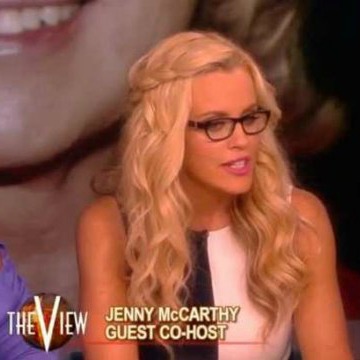
This week the On The Media podcast has a story about a new kind of McCarthyism. According to OTM, ABC recently announced, “model, comedian, and anti-vaccine activist Jenny McCarthy would be joining the hit daytime talk show The View.” OTM host Bob Garfield didn’t mince words when he weighed in on this development. He doesn’t like it and thinks it is irresponsible of ABC to give McCarthy a platform to spread her “dangerous” message that vaccines can cause autism and other illnesses.

Garfield is not alone. Over at the US News & World Report website an editorial reaches the same conclusion. And at The Nation Katrina vanden Heuvel issued a similar verdict and accused McCarthy of fear mongering. This last article makes reference to a study that found that, “24% of parents surveyed recently by the University of Michigan say they place “some trust” in information provided by celebrities such as McCarthy about the safety of vaccines.” And among Hispanics, “40% of parents reported they have ‘a lot’ or ‘some’ trust in celebrities’ insight” (cited in Time magazine).

Which raises the question: who is guilty of making accusations without regard for evidence? Garfield and others are accusing McCarthy of making claims about the danger of vaccines without regard for the scientific evidence to the contrary. On the other hand, McCarthy may feel like these powerful media personalities are using their platform to silence her by accusing her of ignorance and fear mongering.

And that raises the question: does McCarthy have credentials that permit her to question medical science? McCarthy has said that she studied at “the University of Google” which, we all know, has some pretty wacky professors. McCarthy might counter that science is never conclusive. Science is always cumulative…it builds on previous studies and moves toward certainty but never arrives. It is questioning, not blind belief, that leads the way forward. Those who approach life from a more holistic philosophical perspective even argue that the “worship” of science has prevented mankind from experiencing and understanding the natural and supernatural realms that exist outside the reach of empiricism.

What do you think? Are the media complicit by giving celebrities a platform from which to espouse their sometimes-unfounded beliefs? Does ABC have an obligation to ensure that its talk show hosts are credible and trustworthy sources, and not purveyors of pseudoscience? Or should we let the marketplace of ideas operate without oversight imposed by media authorities?

Ellsberg, Manning and Snowden: The Saga Continues

In this short list of famous leakers–Ellsberg, Manning and Snowden–each one has had to walk a delicate tightrope between  two, potentially,  very noble causes. On one hand is the exposure of wrong doing. On the other is the rule of law and the legal process designed to protect us from systemic corruption. Just like Nik Wallenda’s traverse of the Grand Canyon gorge, high-profile leakers or whistleblowers take great risks when they choose their course of action. And like a tight-rope walker, they are all alone once they leave the safety of terra firma.

The press and the government exist in a dynamic state of symbiosis: a tension between the public’s right to know, the government’s responsibility to provide security, and an individual’s right to some expectation of privacy. Individuals and organizations keep secrets because it gives them an advantage, or because it prevents others from knowing about, or exploiting, a weakness. When powerful individuals and entities (corporations, governmental agencies, organized groups) use their power for wrong…in ways that break ethical, moral, or legal rules and regulations, secrecy protects them from being outed and punished.

Enter the press. Journalists have long accepted the responsibility of shining a light into dark corners. Their job is to uncover and expose wrong-doing so that public pressure, or the law, can step in to correct the wrong. But journalists need help uncovering secrets. They often need someone on the inside, someone who has access to privately held information, who is willing to give that information to the journalist. Sometimes it is simply verbal information about where the investigative journalists should look, and what they should look for. Other times it involves documents or data that the insider gives to the journalists. The insider has the access, and the journalists has the investigative skills to collect and report on the facts that are relevant to the issue.

Daniel Ellsberg, “the most dangerous man in America“, became famous for releasing documents to the New York Times about the US Government’s failing policy in Vietnam. Public sentiment was already turning against the war when the Pentagon Papers threw gasoline on the fire. Ellsberg was prosecuted under the Espionage Act of 1917 but charges were later dismissed.

Bradley Manning, private first class in the US Army, was arrested for using his security clearance to download classified documents which he then released to WikiLeaks. Manning pleaded guilty to 10 of 22 charges earlier this year and his trial began just a few weeks ago. If convicted Manning could face life in prison.

Edward Snowden was an employee of the military contractor Booz Allen Hamilton when he downloaded, and leaked to the press, documents about the National Security Agency‘s surveillance program. According to the Guardian newspaper, “Snowden will go down in history as one of America’s most consequential whistleblowers, alongside Daniel Ellsberg and Bradley Manning.”  According to a recent poll by PEW Research, the public is split on whether the NSA leak serves the public interest. However, the public favors, by a significant margin, the criminal prosecution of Snowden. But age is a factor. Younger respondents are more likely to believe that the leak serves the public interest and are less likely to support prosecution.

The latest reports indicate that Snowden is making his way, with the help of Wikileaks legal team, to Ecuador where he will seek political asylum. The South China Morning Post is also reporting that Snowden took the job with Booz Allen Hamilton with the intent of collecting evidence of NSA spying. If that report is true, Snowden’s moral justification for his actions may be fatally damaged.

Resources for additional research:

Ask your doctor if ______ is right for you…

Advertising is everywhere. And you can pretty much bet that everything, at some time or another, has been advertised. Of course you won’t see ads for tobacco products on TV, but most everything else is advertised somewhere to someone. Sometimes an entire industry is created, with the help of advertising, when consumers become convinced that they must have a new product or service.

Take the pet food industry for example. Before the turn of the century, pet food as a product was not widely available in stores. Dogs and cats ate table scraps and whatever else they could find to eat. Advertisers discovered an untapped market and by the 1960s TV ads for dog and cat food became commonplace. Jump to the present. Not only do we have a pet food industry, but pet food comes in a wide variety of forms and flavors. To make sure that revenue continues non-stop, consumers are warned that feeding your pet table scraps is bad for their health. Consumers spend approximately $18 billion annually on pet food, and the pet food industry even has its own website.

Advertising products for human use and consumption is also experiencing significant changes. Take medications for example. Companies that develop and market remedies have been around since recorded history. Snake oil salesmen promoted their blends of turpentine and various inert ingredients to gullible customers for decades before the FDA and other agencies stepped in. Now, pharmaceutical companies have to pass stringent tests before bringing their products to market…and then they pass on those R&D costs to you, the consumer. But how do you convince the public that they need your product? Advertising of course.

In 2010 “big pharma” spent $1 million to advertise treatments for low testosterone. By 2012 that amount grew to $100 million. And according to Consumer Reports, the advertisements are creating an impression that many more men suffer from low testosterone than actually do. This may be a case where advertising is being used to create demand for a product that is often unnecessary.

Many countries are concerned about pharmaceutical ads directed at consumers. The concern is that they are, in effect, pushing products about which consumers have little or no expertise. Only New Zealand and the United States allow DTC (Direct To Consumer) advertising for prescription drugs. When you’re told to “ask your doctor…”, the pharmaceutical companies are using you, the patient, to exert pressure on your health care provider. My hunch is that coercion of this sort is unlikely to result in better health care.

Resources:

http://www.prwatch.org/news/2008/02/7026/beyond-advertising-pharmaceutical-industrys-hidden-marketing-tactics

From Wikileaks to Strongbox

leaksRecent concerns about government prosecution of “leakers” and journalists has reignited a conversation about the limits of 1st Amendment protection for journalists and sources. Journalists sometimes become recipients of very sensitive information that may have implications for national security. At the same time they feel an obligation to protect the identity of whistle-blowers to ensure the free flow of important information. Some are calling for a federal “shield law” that will provide additional protection for sources, and for the journalists who report on the information they provide.

This dilemma involves very difficult situations where the intersection of national security concerns and “the public’s right to know” appear to be in conflict. Recent news out of Washington has been focused on the government going after the phone records of AP reporters and investigating Fox News reporter James Rosen. Many have viewed these actions as prosecution of the act of journalism which will have a chilling effect on future whistle blowers and other sources. While it can be argued that much of this hand-wringing is really politically motivated, there are plenty of examples of attempts to control information by both Republican and Democratic administrations.

In February of 2013 Pvt. Bradley Manning plead guilty to 10 of 22 charges for his part in the release of what has been called the “biggest leak of classified material in U.S. history.” Manning uploaded the classified documents from the Iraq war to Wikileaks after failing to get a response from the New York Times or the Washington Post. (See earlier blog post on Manning and Wikileaks)

What Wikileaks founder Julian Assange had attempted to do as a “radical transparency activist” is now going mainstream with the release of Strongbox. The New Yorker magazine has launched Strongbox as a way to provide a greater level of security and anonymity to sources who may fear reprisal if their identity were to be revealed. According to the Strongbox website,

Strongbox is designed to be accessed only through a “hidden service” on the Tor anonymity network, which is set up to conceal both your online and physical location from us and to offer full end-to-end encryption for your communications with us. This provides a higher level of security and anonymity in your communication with us than afforded by standard e-mail or unencrypted Web forms.

At least one problem remains. Typically a journalist needs to independently verify the veracity of information received from a source, and this level of anonymity may make that difficult if not impossible. But it is one more tool in the arsenal of investigative journalists who are committed to rooting out corruption and wrong-doing at the highest levels of government and industry.

Video resources:

All the President’s Men

All the President’s Men Revisited

We Steal Secrets (trailer)

AP Phone Records and the 1st Amendment

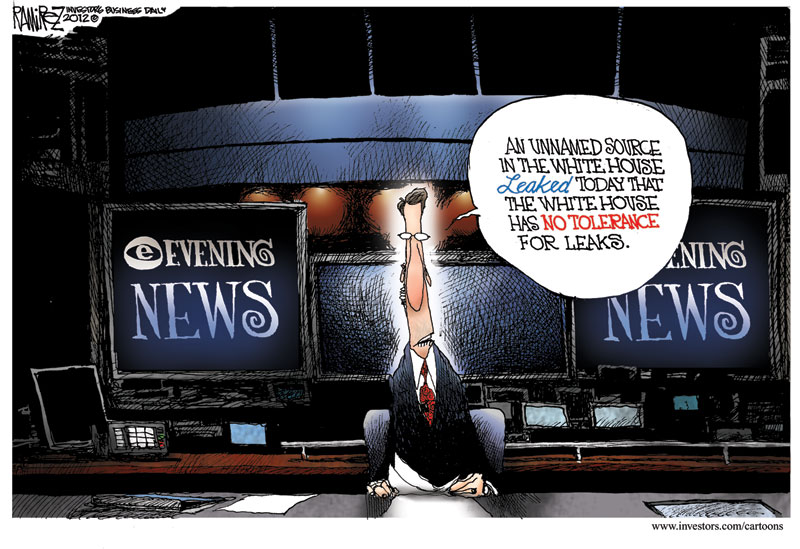
DOJ_APThe Department of Justice (DOJ) recently subpoenaed the telephone records of approximately 100 reporters working for the Associated Press (AP) in an effort to find out who, within the current administration, leaked national security information to the AP. In case you haven’t noticed, this is a big deal for journalists everywhere. Journalists take very seriously their role in serving as a check and balance to the power of government…and for government to curtail journalists’ power is a very serious matter. On the other hand, when national security is at stake, it makes sense that government be able to restrict the flow of information that could jeopardize the safety of those who protect us from those who want to do us harm.

Even without considering the political implications this is complicated and this little blog post cannot begin to get to the bottom of the story. However, it is an important issue that you should pay attention to assuming you want to be an informed citizen and an informed consumer of news. Remember, the AP is an important institution that serves our democratic ideal by helping us, the voters, understand the issues at hand. If the AP and similar non-partisan news institutions are not permitted to do their job, we all suffer and we become vulnerable to political tyrants who will stop at nothing to advance their agendas.

Gary Pruitt, speaking for the AP, claims that the actions taken by the current administration and the DOJ are unconstitutional and will result in harm to journalism as sources and whistle-blowers are already beginning to withhold information for fear of governmental reprisal. This intimidation of journalists by the DOJ on behalf of the current administration should be cause for concern for those who believe in the power of the press to reign in the abuse of political power. Remember, the press is supposed to be a watch dog on the prowl to protect the citizenry; not the lap dog of those in power.

If it quacks like a duck, it must be the Robertson family

DuckDynastyIn case you haven’t heard, the current TV ratings powerhouse is a reality TV show on A&E about a family from Louisiana that made $millions making duck calls. Duck Dynasty is cleaning up in the ratings and has surpassed the long-time ratings champ American Idol (which had fallen on hard times of late).

The season finale last Wednesday attracted an amazing 9.6 million viewers and beat everything else on TV according to Nielsen. With a 4.3 rating in the desirable 18-49 demographic, DD is the highest rated reality show on cable, and only one scripted show on cable, The Walking Dead, does better.

Broadcast TV programs traditionally pull higher ratings than cable TV shows, but DD has even been beating its broadcast competitors on Wednesday nights.

Some critics have been left scratching their heads over DD’s rise to fame. Some say it is the folksy, down-home humor of the main characters. Others point to the authenticity of the relationships between the patriarch Phil Robertson, his sons, and their Uncle Si. And still others point to the Evangelical Christianity of the family members as a draw for viewers who live in the Bible Belt.

Whatever it is, Duck Dynasty is a certifiable hit…and just one more example of how good programming ideas are difficult to come by, and impossible to predict.

css.php