iPad & the Future of Print Media

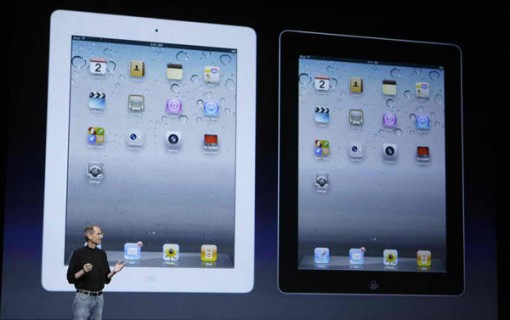
The iPad 2 will be available at Apple Stores this Friday at 5pm and the buzz on the street is that it will be another barn burner. In the first 9 months of iPad sales last year, Apple sold nearly 15 million units. Analysts expect that figure to double this year with the release of the iPad 2. The iPad is not the only tablet/e-reader/e-book/etc., it is simply the best-selling and is expected to hold that position for another 2-3 years. Unlike other tablets, the iPad is not first and foremost an e-reader. While the Amazon Kindle and the Barnes & Nobel Nook are about e-books, the iPad is about apps that range from games to business productivity. But the iPad can also be used for books, and perhaps more important, magazines. Condé Nast, one of the largest magazine publishers, has announced plans to release all of their titles as iPad apps. They already publish Wired, GQ, and Vanity Fair, amongst others, in digital format.

In deciding to go digital, Condé Nast design director Wyatt Mitchell said that the company considered the pros and cons of print and digital, and tried to capture the benefits of both. One of the benefits of print is the fixed design. Magazines ported to the web left designers frustrated by OS, browser, and html/css quirks that reduced their design decisions to mere suggestions. With the iPad, complete creative control is back in the hands of the designers and content experts. Advantages of electronic delivery are myriad and include: speed of publishing, interactivity, the compelling persuasive power of video and audio, and a much smaller carbon footprint.

If you’ve never seen a magazine on an iPad, it is certainly something to behold. More than just high-resolution images and text, iPad zines contain interactive features that make the content breath and pulse with life. What do you think, will the tablet-based digital magazine change the way you read magazines?

[polldaddy poll=4678599]
Climate Change Getting the Cold Shoulder

Early last year I wrote about the PR problem facing the global warming community. As I noted then, public interest in efforts to address global warming has fallen dramatically from earlier times when Al Gore’s documentary An Inconvenient Truth was perceived as, well, truth.

Much has changed since then, including a global recession that has taken the edge off of long-term efforts to avert possible or probable ecological disaster. Ask an out-of-work environmentalists about climate change and you may find that he is much more focused on finding a short-term solution to his economic hardship.

Another setback for the movement was the “climategate” scandal in which stolen emails suggested that climate scientists were hiding contrary data in an attempt to prop up their theories. This fall from grace was too much for some climate-change supporters who jumped ship and joined the ranks of skeptics.

Thirdly, the fact that Europe and the US have experienced a colder-than-normal winter with record snowfalls in the mid-west and east coast hasn’t exactly helped the climate change cause.

In light of the set-backs, those who want to keep climate change front and center are struggling to promote their cause.  A recent article in Der Spiegel highlights the failure of climate change advocates to find a compelling visual or spokesperson to make their case. And without a compelling hook, the climate change story has moved off the front page. (That’s a newspaper metaphor for those of you under the age of 45 who don’t read newspapers.) To try to get the story back in the limelight, climate change evangelists are resorting to marketing tricks like those mentioned in the Der Spiegel piece.

Things may change…actually, they always do. Perhaps they’ll find a compelling narrative that renews interest and concern on the part of the public. But for now, the climate change story is a hard sell to a jaded public that is significantly more interested in short term comfort and the latest tabloid gossip than a far-off environmental nightmare that may, or may not, be headed our way.

Social Media Revolution: The Whole World is Watching

It would be an overstatement to say that recent anti-government protests in Muslim countries have been caused by social media. It would NOT be an overstatement to say that social media has played a very important role in both coordinating protest activities and giving new meaning to the slogan, “the whole world is watching.” The largely peaceful transfer of power in Tunisia that began just weeks ago has been a remarkable event and the current protests in Egypt opposing long-term president Hosni Mubarak are nothing short of miraculous. The Green Revolution in Iran, aka the Twitter Revolution, is another example of the critical role that social media has played in enabling a largely youthful underclass as they’ve challenged autocratic rulers and oppressive regimes.

I’m not a political scientist, but this is what I’ve been able to learn about the current uprising in Egypt from several news accounts that I’ve read. The political unrest is rooted in sluggish economic conditions that have resulted in high unemployment for a growing demographic of young, often well-trained, citizens. Evidence of political corruption has added fuel to the fire as protesters, emboldened by what they observed in Tunisia, have called for the end of the 30-year rule by Mubarak. Protesters have been clashing with police who have been deploying water cannons, tear gas and rubber bullets in response. Just yesterday Mubarak called out the army, but may have been surprise by the results. According to reports, members of the army have been joining with protesters calling for the president to resign. But Egypt is a strong ally of the US, and that makes it complicated for our diplomatic corps. While the US supports peaceful democratic transition, it is also gravely concerned about the potential of loosing one of its strongest allies in the region.

Egypt’s response to the protests has been surprisingly heavy-handed. The government shut down internet and cell phone services on Friday in an attempt to disrupt the protesters’ activities, effectively disconnecting 80 million people from the outside world. According to some reports cell phone service was restored a day later, and dial-up internet numbers are being circulated. “The Net interprets censorship as damage, and routes around it”, a quote from 1993 attributed to John Gilmore, captures the challenge of trying to restrict a system that was built to be bomb-proof. Iranians, Tunisians and Egyptians have found, or are finding, ways around information blockades, with proxy servers and other less technical means for maintaining connection to the outside world.

The role of Twitter, Facebook, YouTube and other social media is being debated, and will continue to be debated long after these revolutions have passed. But one thing is certain; social media is a game-changer, and powerful institutions, be they governments, businesses or social movements, can either learn how to use social media to their benefit or they will have to learn to live with the consequences.

Resources:

  • NPR has published a guide to using Twitter to follow the on-going events in Egypt…you can find it here.
  • Al Jazeera, a Muslim news organization, maintains a blog of on-going events here.

Questioning Motives

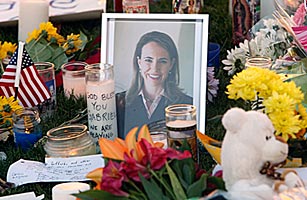
It’s still much too early to figure out what motivated Jared Lee Loughner to shoot 19 people, killing six, on Saturday…but that hasn’t stopped many from speculating. News pundits, reporters and commentators have lined up to offer their opinion of what was behind the tragic and atrocious act. On the ride home today I listened as a radio reporter speculated that political rhetoric, amplified by the media, was to blame for the shooting.

Perhaps what has been most disconcerting has been the eagerness of some to score political points by ascribing motives to Loughner that fit their personal political views. Yes Representative Gabrielle Giffords is a Democrat from a Republican district, and yes she had previously been the recipient of heated rhetoric from those who opposed her policies. But too many in the media (both mainstream and online) are trying to link the actions of a madman to social movements and political activism which may or may not be responsible.

Even the local sheriff, Clarence W. Dupnik, weighed in just hours after the shooting with his opinion linking the tragedy to “vitriolic political rhetoric.” Others suggested that talk of “second amendment remedies” and maps with cross-hairs used to target political races across the country, including Giffords’ district, were to blame. There MAY BE a connection between heated political rhetoric and the actions of Loughner, but it is too soon to try to connect the dots when one of the dots is clearly not dealing with a full deck.

Please don’t mistake my objection to those placing blame for anything less than complete repudiation of Loughner and his heinous act. Blame should–and will–come to rest on Loughner, and anyone or anything that contributed to his decision to use deadly violence. I’m simply saying that to make pronouncements about causal relationships so soon after such a shocking event says more about the motives of the speaker than it does about the motives of those under the microscope.

UPDATE: According to Broadcasting & Cable magazine, Rep. Bob Brady (D-Pa.) is working on a bill to make it a federal crime to use “language or symbols” that could be interpreted as inciting violence against a member of Congress.

UPDATE 2: I just came across a thoughtful commentary from Jon Stewart’s show last evening that addresses this very issue. Stewart said, “you know we live in a complex ecosystem of influences and motivations, and I wouldn’t blame our political rhetoric any more than I would blame heavy metal music for Columbine, and by the way that is coming from someone who truly hates our political environment.” Read and/or watch more here.

The End of Secrecy?

Julian Assange, the Australian founder (and some might say diabolical mastermind) of WikiLeaks, would like to put an end to secrets. And now, modern internet technology is bringing us closer to that reality. For as long as there have been secrets, people have been revealing them. A few months ago a college student outed his gay roommate by using a strategically placed webcam connected to the internet. The same global internet technology is now being used to anonymously distribute state secrets and classified military documents to a global audience.

I’ll briefly summarize recent events in the news. A 22-year-old Army PFC by the name of Bradley Manning is alleged to have downloaded hundreds of thousands of classified military and diplomatic documents while on assignment in Bagdad. Manning then allegedly gave the documents to Julian Assange and WikiLeaks – an organization of volunteer hackers devoted to, depending on whom you believe, “opening governments” or destabilizing the US and other world powers.* Because of the structure of WikiLeaks, the identity of leakers is protected by destroying any link between documents and their source. The reason Manning is a suspect is because he bragged online that he downloaded the docs and copied them onto his home-made Lady Gaga CD to make it easier to get them past security.  WikiLeaks has made several “dumps” of these documents over recent months, the most recent being this weekend’s release of approximately 250,000 documents related to world diplomatic efforts. One world leader called it the “9/11 of diplomacy.”

It should be noted that WikiLeaks is not acting alone. First, WikiLeaks’ technical infrastructure is supported by servers rented from Pirate Bay and Amazon (Update: according to the NYT, Amazon has booted WikiLeaks from its servers). Additional server resources have been necessary as WikiLeak servers have suffered DOS attacks at the hands of a self-described “hacktivist for good” who goes by the name of the Jester. Second, WikiLeaks depends on disgruntled insiders to feed it with information. And third, and perhaps most importantly,  it needs the cooperation of the world press to make its actions visible to society. In this most recent case WikiLeaks has the cooperation of the New York Times in the US, and the Guardian in the UK. Once leading mainstream media report on document releases the story is out and the effect is fully realized.

This the not the first time the NYT has been involved in a leak of US government secrets. Perhaps the most famous example is Daniel Ellsberg and the Pentagon Papers. In late 1969, Ellsberg used an earlier technology (photocopying) to leak classified military papers to the NYT and other newspapers. Convinced that the US government was misleading congress and the American public, Ellsberg acted hoping that the revelations revealed by the documents would force the government to change course. Many believe that the release of the Pentagon Papers was a significant turning point in our commitment to the war in Vietnam. Time will tell if Pfc. Bradley Manning’s actions will have a similar effect on the wars in Iraq and Afghanistan. In the mean time, those who believe that his actions are those of a patriot, and not a traitor, can join the Bradley Manning Support Network here.

The recent actions of WikiLeaks remind us of the challenge of balancing first amendment freedom and national security in a modern world where technology allows us to set in motion significant actions with a few clicks of a mouse. And while the ends sometimes justify the means, it is also true that actions taken for what may appear to be a noble cause may have far-reaching implications that demand and deserve careful consideration.

P.S. It’s not easy being a rogue leaker. US Senators are calling for Julian Assange to be tried under the Espionage Act of 1917. Assange, who is already on-the-run, is now listed on INTERPOLs Most Wanted List for an alleged crime of rape and molestation that took place in Sweden. Not surprisingly, the timing of these allegations is questioned by WikiLeak supporters.

*There is an interesting interview on TED Talks that will give you some additional background on Assange.

Apple PR v Student Journalist

An online spat with Apple may have contributed to a student journalist’s invitation to cover the release of Microsoft’s Windows Phone 7. Chelsea Kate Isaacs, a journalism major at Long Island University, received a class assignment that involved finding out more about an initiative at her college to buy iPads for all incoming students. As any good journalist, Chelsea contacted Apple requesting a quote about using iPads in an academic setting. But after the Apple PR department failed to return multiple phone messages, she sent an email to Steve Jobs…who, in hindsight, probably wished he hadn’t responded. But he did respond, leading to a back-and-forth that quickly deteriorated. A final email from Jobs reportedly said, “Please leave us alone.” You can read more about the reported email exchange here.

That might be the end of the story, except that Microsoft saw an opportunity to promote its Windows Phone 7 by selecting Isaacs to travel, all expenses paid, to the Microsoft launch event. According to CNET news, “Despite two radically different experiences, Isaacs said she has no plans to cover either company any differently.
Read more.

What corporate PR lesson, if any, should we take away from this incident?

NPR fires Juan Williams over comments about Muslims

Last evening National Public Radio fired commentator Juan Williams for a comment he made on Fox News. Williams was being interviewed by Bill O’Reilly when he admitted to feeling “worried” and “nervous” when flying with people dressed in Muslim garb. For the remainder of the interview Williams defended the Muslim faith against those who failed to distinguish moderate Muslims from extremists.

You can watch a segment about the initial comment, and the aftermath, on YouTube.

Juan Williams responded to his firing in an essay posted at Fox News, his new employer. You can read it here.

Here’s a quote from his statement…

Now that I no longer work for NPR let me give you my opinion. This is an outrageous violation of journalistic standards and ethics by management that has no use for a diversity of opinion, ideas or a diversity of staff (I was the only black male on the air). This is evidence of one-party rule and one sided thinking at NPR that leads to enforced ideology, speech and writing. It leads to people, especially journalists, being sent to the gulag for raising the wrong questions and displaying independence of thought.

Global Feel-Good Story May Take Turn for the Worse

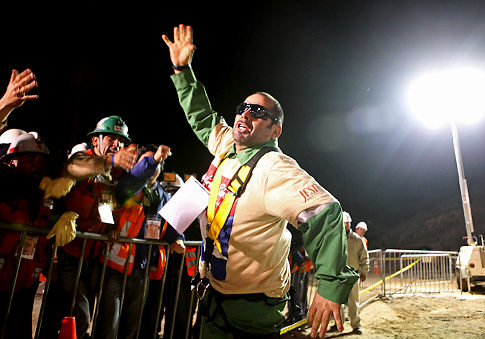
The rescue of 33 Chilean miners, who had spent 70 days under more than 2000 feet of solid rock, was the feel-good story of the month…perhaps of the year. It was a tremendous feat of engineering and a testimony to the power of human endurance. The world gathered around TV sets (audiences were estimated at 1 billion) and watched in awe as the miners were hoisted to the surface and into the arms of their waiting families, friends, and, in one awkward case, a mistress. It was worthy of the celebration that ensued…and the national festivities that followed.
But there may be a dark side to this story…one that is coming to light as the media executives and attorneys sweep in to fight over the goldmine that is not in the ground, but in the story. News reports tell us that the miners made a pact while underground that they would act together to sell their story, and share the revenue equally. So far so good. Rumors are that each miner could stand to make tens, maybe hundreds of thousands of dollars for their stories…quite a bit more than their average annual salaries that range from $4,000 – $19,000 US.

According to Bloomberg.com, the media attention was anticipated.

Chilean authorities gave the men some media training before their rescue, conducting classes over phone lines. They have been invited to make appearances in Spain, England and Greece, and mining entrepreneur Leonardo Farkas gave each 5 million pesos ($10,400).

A book deal is already in the works with an early 2011 publication date. TV rights could bring in tens of thousands of dollars and movie rights could easily bring in hundreds of thousands. Oh, and Steve Jobs reportedly sent each miner the latest iPod! According to one report the miners are quoted as saying, “If we do this properly we won’t have to work for the rest of our lives.”

No one would argue that the miners deserve to share in the revenue that others will make by marketing this wonderful story to the world. But before we get too excited we might consider the sad stories of instant millionaires, lottery winners mostly, who come to realize that money often brings as much pain and suffering as it does happiness.

And speaking of pain and suffering, personal injury lawyers are no-doubt looking for ways to parlay the miners’ 70 days underground into something that they can take to the bank.

What started out as a heart-warming story of hope, faith, courage, endurance, and, finally, deliverance, may now turn into a story of greed and exploitation. Some might argue that’s what happens when the TV/film cameras focus their attention on people who start out with good intentions.

Mocking the legislative process, or just having a little fun?

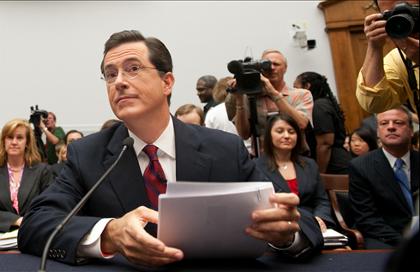
Fake news shows on Comedy Central, e.g. The Daily Show and The Colbert Report, have a history of poking fun at news-makers, politicians, the media, and the whole news-as-entertainment phenomenon. But when Stephen Colbert testified before the House Judiciary Committee’s Subcommittee on Immigration, Citizenship, Refugees, Border Security, and International Law yesterday, some saw it as mockery of an institution that should be above the cheap laughs and clever word-play that are standard fare for comedians.

Colbert, who stayed in character for his entire testimony, spoke about the difficult working conditions that migrant farm workers endure. Allegedly Colbert testified from personal experience after spending a day working in the fields beside migrant workers. But with his typical dead-pan delivery of a script that was clearly more about laughs than substance, few in the room seemed prepared to take his testimony seriously. You can watch a news clip of his testimony here.

This led some critics to call the appearance, “a huge waste of taxpayer time and money” and others to call it an embarrassment. But apparently this is not the first time that a committee hearing featured an entertainer who was invited to entertain. Sesame Street‘s Elmo excepted, most celebrity witnesses testify from an area of expertise. What do you think? Does one day in a bean field give Colbert the kind of credibility necessary for an appearance on Capitol Hill?

Book Burning, the 1st Amendment, and Global Media

In case you haven’t heard, a pastor of a small church in Florida is planning to burn copies of the Qur’an on Saturday, the anniversary of the 9/11 terrorist attacks. The thing that makes this isolated incident the focus of our attention is that media attention is turning this into a global news story that will be seen by millions of Muslims around the world. And what they see will likely inflame passionate anger directed at the US. The Qur’an is a book, and books are a form of media. So in one sense this is a media story about media coverage of an act that involves the desecration of a media artifact.

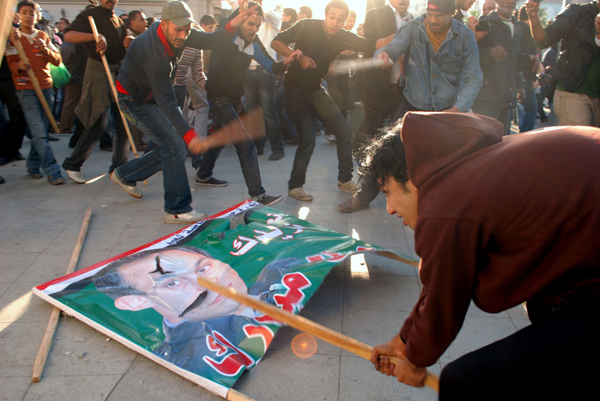
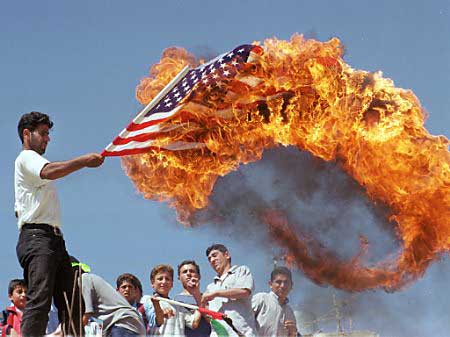
Burning patriotic or religious symbols is nothing new. Flags and effigies of heads-of-state are commonly burned to send strong messages of disapproval to the “other side.” In America, the 1st Amendment’s protection of free speech specifically protects these kinds of political acts and we have a long history of protecting speech that is highly offensive. And while no one is debating the “right” of this pastor and his congregants to burn the Qur’an, many are critical of his decision to do something that will be seen as an extremely offensive act to millions of Muslims around the world. Much like the discussion of the mosque proposed for construction near Ground Zero, the right to proceed is not  in question, but the appropriateness of the act certainly is. Secretary of State Hillary Clinton, Sarah Palin, and General Petraeus have publicly condemned the proposed burning and have asked the pastor to reconsider. General Petraeus went to far as to say that the burning will endanger the lives of US soldiers in Afghanistan.

Book burning has a long and sordid history of its own…but to fully understand the gravity of this situation one needs to understand the esteem that Muslims have for  their sacred scripture. In 2005 a firestorm of controversy erupted in Muslim countries when it was reported that a copy of the Qur’an was flushed down a toilet in the process of interrogating an enemy combatant at Gitmo. While the Pentagon has been unable to find credible evidence that the desecration took place, the response was rioting that led to many deaths. If the book burning takes place this Saturday, the response may make the 2005 riots look like child’s play.

Of course, without media coverage this isolated incident would happen in a vacuum. Just like a tree falling in an empty forest, the silence would be deafening. But that is not the case in a world of 24/7 news coverage with instantaneous global reach. Secretary of State Clinton asked the media to deny coverage as an act of patriotism, but she knows that won’t happen. The Associated Press quoted Secretary Clinton as saying,

“It is regrettable that a pastor in Gainesville, Fla., with a church of no more than 50 people can make this outrageous and distrustful, disgraceful plan and get the world’s attention, but that’s the world we live in right now,” Clinton said. “It is unfortunate, it is not who we are.”

So what do you think? Is this a case where the 1st Amendment goes too far, protecting speech that does not deserve protection? Or is this the very essence of the kind of political protest that the Founding Fathers so passionately intended to protect?

css.php