#GamerGate

Over at Vox, Ezra Klein has written an interesting, 25-paragraph essay Gamergate and the Politicization of Absolutely Everything. For those who have not been introduced to the raging debate swirling around the video game industry, gamergate is a controversy that touches on many of the media topics and themes that we’ve been addressing this semester: media effects and concerns related to sexual and violent content, politically incorrect stereotypes, censorship, and journalistic ethics just to name a few. Here’s Gawker‘s attempt to explain what all the fuss is about. Want more?  Here’s a great article by Erik Kain at Forbes.

Klein’s thesis is premised on the idea that everything has been politicized in the extreme. The gamergate battle lines have been drawn between waring factions. On one side the “young, white, male” demo (that has historically been at the core of the gamer community) and on the other side, feminists (more here). It’s hard to ignore the fact that real differences exist between gamers who like to blow things up and those who like to build things together. And finally, differences exist between those who feel marginalized by the present systems and,…well…those who feel marginalized by the present system. In fact the entire controversy has something to offend nearly everyone. It’s as though the controversy is a kind of ink blot test on which we are invited to project our own worldview and moral objections. As Klein notes, “Video games are the excuse for this fight, not the cause of it.” For those with political biases on the left, it’s about “sexism and online harassment,” but for those on the right it’s about “political correctness and speech policing.”

Klein’s essay ends on a cautionary note that predicts other battles, like gamergate, but with even greater consequences. As the culture wars escalate and battles lines are drawn, the battlefield itself will be the online space where digital avatars battle to the death over controversies large and small. Thankfully, digital wars are not nearly as painful as analog wars. After all, when your digital self is mortally wounded or killed a quick reboot is all that’s needed to get back in the fight.

An Epidemic of Fear

about-ebolaI watched a few Sunday news shows today and, thanks to the DVR, was able to fast-forward through their Ebola coverage. It’s not that I don’t want to know what’s going on in the world. Rather it is precisely because the coverage that I have seen this past week has been long on sensationalism and short on useful information.

Journalists have a difficult job and I don’t want to Monday-morning quarterback their attempt to cover this fast-moving and emotional story. But I also don’t want to defend the fear-mongering and ratings-whoring that is being pawned off as journalism.

There’s always a delicate balance between keeping people informed and keeping things in proper perspective. For example, Ebola is a deadly disease that does not have a vaccine or a cure. It is spread by contact with bodily fluids of an infected carrier. And because of modern air transportation, any viral disease can travel around the world in a matter of hours. On the other hand, as of October 19th only two individuals have contracted Ebola in the US and both were healthcare workers who were treating a patient who had carried the disease from Liberia to the US. Most medical experts are confident that modern treatment and aggressive containment can prevent the virus from becoming an epidemic.

If you saw the movie Contagion (2011), you may recall that this fictional account of a global pandemic shares some similarities with the Ebola crisis. Hollywood loves a narrative because we, the viewing public, love narratives. A story allows us to make sense of the onslaught of information that is frequently confusing and contradictory. In this case the storyline is simple: a deadly disease appears (usually in some dark corner of the globe) because of mankind’s lack of respect for nature. It quickly spreads and threatens population centers in the western world. Science comes to the rescue and the hero is usually someone who defies conventional wisdom to save the day.

Sadly, life doesn’t follow the script. While we obsess over the fate of folks on a plane or cruise ship who MAY have come in contact with someone who MAY have been exposed to Ebola, fear keeps people from living life.  And meanwhile, in Western Africa, the true crisis continues out of the glare of the media spotlight.

Protecting the Brand

NFLShieldThe Broncos and Seahawks gave us a great game this afternoon. Millions tuned in to see the rematch of last year’s Superbowl, and this time it was a much more interesting affair. But if you’ve been paying attention to the news the past few weeks you know that the NFL is in the spot light…but not for the right reasons.

The PR debacle that has the media in an uproar didn’t start with Ray Rice and Adrian Peterson, nor will it end there. But eventually the media attention focused on NFL players behaving badly will come to an end because the NFL is first and foremost about money…and these momentary distractions, if left unchecked, will get in the way of making money and that would be (according to owners and league officials) an even greater problem than this current mess.

Anheuser-Busch spends upwards of $200M a year advertising on NFL broadcasts and have publicly said that they are “disappointed” in the NFL. That kind of money talks, and Commissioner Goodell is listening. That’s why Goodell made a public apology…or at least I think that’s what the press conference a few days ago was supposed to be. The top three rated TV programs last week were…you guessed it…Sunday Night Football, Monday Night Football, and Thursday Night Football. As long as American continue to watch NFL broadcasts, and as long as advertisers pay big bucks to reach those viewers, the NFL will continue. Sure they’ll make a few changes and get rid of a few bad actors. But when the average “career” of a pro player lasts only four years, losing a player or two over bad behavior off the field will not change the game or the bottom line.

I realize this perspective comes across as cynical and jaded. I wish it were different. I wish that the institutions surrounding professional sports, including the media empires that have learned to monetize and merchandize athletic achievement, were more sensitive to the long-term cultural implications of their choices. I wish the NFL brand stood for something more.


Cutting the Cord

antennaHigh price of cable or satellite TV got you down? Not a fan of their customer service? Looking for a cheaper way to access your favorite TV shows and sporting events? Never fear…cord cutting is getting easier every day, and you don’t have to be a computer geek to pull it off. I’m not going to explain the details of what ‘s involved, there are plenty of sites that do that. Here are a few links: WSJ How To,  WSJ MarketWatch, WSJ Q&A, Digital Trends, Reddit, and Gizmodo. And for those unsure of the difference between a streaming box, (e.g. Apple TV or Roku) and a Chromecast stick, see dealnews.

The availability of Over The Air (OTA) TV reception using good old rabbit ears or an outdoor antenna may also be an option. Modern TV antennas don’t look like your grandfather’s TV antenna and they are designed to receive digital TV signals. Many of those born after 1980 have never known anything besides cable or satellite TV so the idea of an antenna sounds pretty old-school. But for access to HD TV for only a small upfront investment and no monthly bills, it may be just what you’re looking for. The picture is of an outdoor antenna designed for digital TV reception. And if all you need is ABC, CBS, NBC, PBS, FOX, Telemundo, and CW (along with their subchannels), and are willing to put up with the usual TV ads, you’re all set.

To be fair, there are a number of half-truths swirling around the free-TV ether. Lifehacker has assembled the most common myths that you should take into account before you pull out the scissors.

Cannibalism, Cable News Style

newsI can’t take credit for the catchy title…it is a line by Joe Concha of the website Mediaite. Concha is referring to the over-the-top coverage of Malaysia Airlines flight 370 by one cable news network in particular, and how other networks have taken to bashing CNN for their overboard speculation and sensational reporting for the past three weeks. The thing that is most disconcerting about the coverage is that there has been very little new information to report. Imagine being asked to fill the airwaves for 24/7 for three weeks with little to no new information. This kind of over-coverage has made CNN and easy target for competitors MSNBC and Fox News.

CNN has taken this “all-in” approach before with the Boston Marathon bombing and the Trayvon Martin story/trial. Critics of MSNBC and Fox News have pointed to MSNBC’s obsessive coverage of Governor Chris Christy’s Bridgegate and Fox News’ relentless coverage of ObamaCare.

For now it appears that CNN has found success with their approach. Wall-to-wall coverage of “Breaking News” (regardless of whether there is anything currently “breaking”) seems to be attracting ratings and advertising dollars…and that will no-doubt ensure that the practice continues.

Concha was interviewed by Howard Kurtz on his show Media Buzz. You can watch the clip at the link below.

http://video.foxnews.com/v/3410330300001/pundits-sniping-over-missing-plane/

Cashing in on Legal Pot

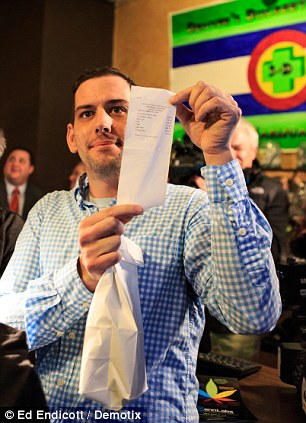
retail potThe state of Colorado is involved in a grand social experiment. Recreational marijuana is now legal for adults (over the age of 21), and since January 1st is available through retail establishments known as dispensaries. A similar experiment is underway in the state of Washington, but for now I’ll focus attention on the state that I call home.

Plenty of time and energy has been devoted to the debate over the wisdom of making marijuana available over the counter. This post is not about the decision itself, but how media outlets are responding to the opportunity to cash in by carrying advertising for dispensaries. Any discussion about the legality and propriety of accepting advertising is compounded by the fact that marijuana use remains a federal crime. And while federal authorities have promised to look the other way with regard to Colorado’s new law, the fact that radio and TV broadcasters are licensed by the Federal government is having a chilling effect on local broadcasters. According to Justin Sasso, president and CEO of the Colorado Broadcasters Association, the CBA doesn’t think it’s wise for stations “to risk their license–or the legal fees required to fight for their license–if the federal government decides to crack down on broadcasters” (Broadcasting & Cable, Feb 3, 2014, p. 28).

The State of Colorado has a few things to say about advertising retail pot. Last fall the Colorado Department of Revenue issued a 136-page document that stipulates, among other things, that advertisers must have reliable evidence that the audience for the ad does not contain more than 30% under the age of 21. According to the website The Cannibist, the publications High Times and Westword have sued the State of Colorado claiming that the restriction on advertising is an infringement of First Amendment rights. In addition to age restrictions, advertisers may not use outdoor advertising, may not buy out-of-state ads, nor promote marijuana tourism.

Cable TV is subject to different regulations than broadcast TV so if we see TV ads anytime soon we would expect them to appear first on select cable channels. Websites, of course, are subjects to even fewer regulatory restrictions. The Cannabist, a website by The Denver Post newspaper, is staking out territory on the web and will likely become a venue for advertising in the future. The Post even has its own marijuana editor, Richardo Baca.

In some ways this debate is made moot by the fact that marijuana dispensaries have been overwhelmed with business. That, and the free publicity provided by the news media, makes advertising unnecessary for now. However, as more vendors compete for customers, as supply matches and exceeds demand, and the novelty and media attention fades away, advertising will become increasingly important. And then the difficult decisions will have to be made.

Partisan Politics, Partisan Media, and the Shutdown Saga

shutdownJournalists love a good story. Drama, conflict, winners and losers and high-stakes plot twists are too tempting to resist. So when the House and Senate fight and squabble over passage of a Continuing Resolution to fund the federal government, journalists are right there recording every speech and soundbite and looking for human-interest stories of citizens affected by the partial shutdown.

Some cannot resist the urge to take sides as they inject a little commentary about who’s at fault and who’s the victim. I’m talking about mainstream media (MSM) here…the supposed neutral, objective observers of all things political. The partisan media (blogs, some cable TV news networks, tabloid newspapers, etc.) don’t even try to hide their biases. They traffic in political partisanship, and a scandal–like this current conflict–is “money”.

Social media has also been lighting up with twitter hashtags #DearCongress and #MakeDCListen. And because no breaking news event is complete without viral images and memes, Know Your Meme is on the job collecting and categorizing trending topics related to the shutdown.

But back to the MSM for a moment. This is a complicated story and how journalists frame the conflict and competing narratives will determine how their audiences understand and interpret the events. Focusing on one side’s apparent rigid unwillingness to compromise may create a less favorable view of them in the public’s eye. Trying to assign motives to actions and statements can be tricky and, perhaps, misleading.

Images of closed National Parks, soundbites with frustrated visitors to D.C.’s famous museums, and reporters’ stand-ups criticizing the inability of congress to reach consensus; these are all components of a narrative that dramatizes the current government shutdown. How we interpret these sights and sounds will determine the ultimate winners and losers.

Ultimately this is a PR battle on the part of political players who are busy assigning blame and ducking responsibility. And in that game, perception is everything. If the American public get’s sick and tired of one or the other “players” in this game, there will be strong incentive to compromise…or risk the voters’ wrath.

Jeff Bezos: Businessman or Philanthropist?

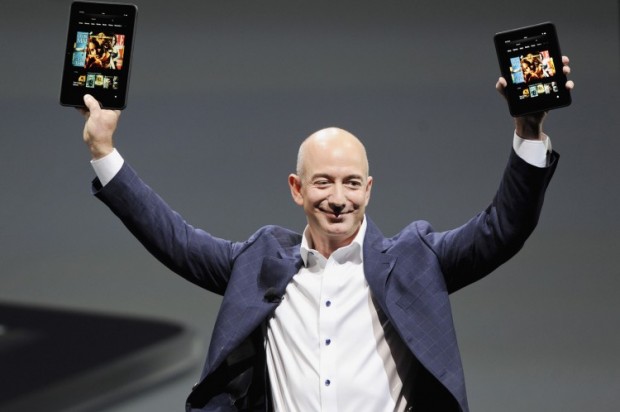
BezosJeff Bezos, billionaire founder of Amazon.com, just purchased the Washington Post newspaper for $250 million. The newspaper has struggled in recent years, as have nearly all US newspapers, with declining revenue and increasing losses. Last year the paper lost $54 million and this year they are on track to lose another $100 million. Some are asking if Bezos can do for journalism what he did for retail sales. With a personal fortune of nearly $25 billion Bezos’ “investment” in the WaPo equals just one percent of his wealth — hardly a huge financial risk if he is unable to turn things around.

But perhaps turning things around is not his first priority. Some have speculated that the decision to purchase the paper was less about adding to his financial stature and more about advancing his own political agenda. Still others suggest that is may be about enhancing his image and legacy. If we’ve learned anything from the history of the rich and powerful it is that advancing age often brings with it a strong desire to do something that will be seen as having a lasting impact…something that will endure long after they are gone. Thanks to legendary PR practitioner “Poison” Ivy Lee, the great robber baron John D. Rockefeller is as well-known today for his philanthropy as for the tragic massacre at Ludlow.

Bezos purchased the paper from the Graham family who are highly esteemed Washington D.C. insiders. Amazon is headquartered in Seattle, or as Bezos calls it, the “other Washington.” The cultural clash between East/West coast and Old/New money could make this relationship a challenge. But Amazon and Bezos are not unfamiliar with the D.C. way of life. Last year they spent a reported $2.5 million lobbying the executive and legislative branches of government.

In a letter to Washington Post employees, Bezos wrote,

There will, of course, be change at The Post over the coming years. That’s essential and would have happened with or without new ownership. The Internet is transforming almost every element of the news business: shortening news cycles, eroding long-reliable revenue sources, and enabling new kinds of competition, some of which bear little or no news-gathering costs. There is no map, and charting a path ahead will not be easy. We will need to invent, which means we will need to experiment.

It will be interesting to see what kinds of experiments Bezos has in mind. Will every new Kindle sold come with a Washington Post subscription? Will news and retail marketing somehow find a symbiotic relationship where consumers of both news and commercial products move freely between both commodities? Or will the Washington Post simply be the legacy medium that Bezos uses to burnish his personal legacy? As Bob Schieffer said on Face the Nation, “We can get along without newspapers, but we can’t get along without what newspapers do.” Let’s hope we don’t have to witness the truth of that statement.

The New McCarthyism

In the 1950s senator Joseph McCarthy made accusations that communists and communist sympathizers were taking over American institutions, including the entertainment industries.  According to Wikipedia, the term McCarthyism has come to mean “the practice of making accusations of disloyalty, subversion, or treason without proper regard for evidence.” 

jenny-mccarthy-the-view

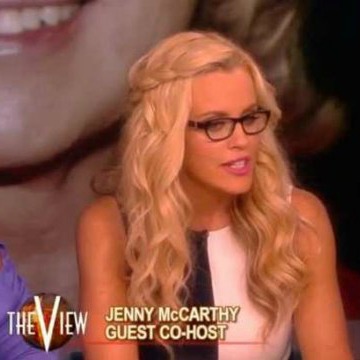
This week the On The Media podcast has a story about a new kind of McCarthyism. According to OTM, ABC recently announced, “model, comedian, and anti-vaccine activist Jenny McCarthy would be joining the hit daytime talk show The View.” OTM host Bob Garfield didn’t mince words when he weighed in on this development. He doesn’t like it and thinks it is irresponsible of ABC to give McCarthy a platform to spread her “dangerous” message that vaccines can cause autism and other illnesses.

Garfield is not alone. Over at the US News & World Report website an editorial reaches the same conclusion. And at The Nation Katrina vanden Heuvel issued a similar verdict and accused McCarthy of fear mongering. This last article makes reference to a study that found that, “24% of parents surveyed recently by the University of Michigan say they place “some trust” in information provided by celebrities such as McCarthy about the safety of vaccines.” And among Hispanics, “40% of parents reported they have ‘a lot’ or ‘some’ trust in celebrities’ insight” (cited in Time magazine).

Which raises the question: who is guilty of making accusations without regard for evidence? Garfield and others are accusing McCarthy of making claims about the danger of vaccines without regard for the scientific evidence to the contrary. On the other hand, McCarthy may feel like these powerful media personalities are using their platform to silence her by accusing her of ignorance and fear mongering.

And that raises the question: does McCarthy have credentials that permit her to question medical science? McCarthy has said that she studied at “the University of Google” which, we all know, has some pretty wacky professors. McCarthy might counter that science is never conclusive. Science is always cumulative…it builds on previous studies and moves toward certainty but never arrives. It is questioning, not blind belief, that leads the way forward. Those who approach life from a more holistic philosophical perspective even argue that the “worship” of science has prevented mankind from experiencing and understanding the natural and supernatural realms that exist outside the reach of empiricism.

What do you think? Are the media complicit by giving celebrities a platform from which to espouse their sometimes-unfounded beliefs? Does ABC have an obligation to ensure that its talk show hosts are credible and trustworthy sources, and not purveyors of pseudoscience? Or should we let the marketplace of ideas operate without oversight imposed by media authorities?

Ask your doctor if ______ is right for you…

Advertising is everywhere. And you can pretty much bet that everything, at some time or another, has been advertised. Of course you won’t see ads for tobacco products on TV, but most everything else is advertised somewhere to someone. Sometimes an entire industry is created, with the help of advertising, when consumers become convinced that they must have a new product or service.

Take the pet food industry for example. Before the turn of the century, pet food as a product was not widely available in stores. Dogs and cats ate table scraps and whatever else they could find to eat. Advertisers discovered an untapped market and by the 1960s TV ads for dog and cat food became commonplace. Jump to the present. Not only do we have a pet food industry, but pet food comes in a wide variety of forms and flavors. To make sure that revenue continues non-stop, consumers are warned that feeding your pet table scraps is bad for their health. Consumers spend approximately $18 billion annually on pet food, and the pet food industry even has its own website.

Advertising products for human use and consumption is also experiencing significant changes. Take medications for example. Companies that develop and market remedies have been around since recorded history. Snake oil salesmen promoted their blends of turpentine and various inert ingredients to gullible customers for decades before the FDA and other agencies stepped in. Now, pharmaceutical companies have to pass stringent tests before bringing their products to market…and then they pass on those R&D costs to you, the consumer. But how do you convince the public that they need your product? Advertising of course.

In 2010 “big pharma” spent $1 million to advertise treatments for low testosterone. By 2012 that amount grew to $100 million. And according to Consumer Reports, the advertisements are creating an impression that many more men suffer from low testosterone than actually do. This may be a case where advertising is being used to create demand for a product that is often unnecessary.

Many countries are concerned about pharmaceutical ads directed at consumers. The concern is that they are, in effect, pushing products about which consumers have little or no expertise. Only New Zealand and the United States allow DTC (Direct To Consumer) advertising for prescription drugs. When you’re told to “ask your doctor…”, the pharmaceutical companies are using you, the patient, to exert pressure on your health care provider. My hunch is that coercion of this sort is unlikely to result in better health care.

Resources:

http://www.prwatch.org/news/2008/02/7026/beyond-advertising-pharmaceutical-industrys-hidden-marketing-tactics

css.php