Disaster du jour and Limited Attention Spans

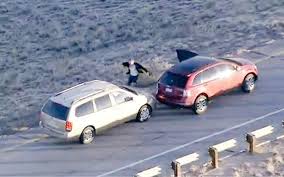
carjackLast week I was late for work because I was watching a live, high-speed car chase near Denver. The driver had car-jacked a vehicle which, unfortunately, had a 4-year-old in the back seat. At times going the wrong way on the interstate, the suspect was involved in several accidents and car-jacked two more cars before being captured by police. You can see the highlights here.

In the end nobody was hurt, but at any point in time it could have turned into a disaster. It can be hard to look away from real life as it is imploding. Maybe it is the novelty that comes from the possibility that you’ll see something that has slipped by the gate-keepers and editors.

Live television and breaking news can be a powerful combination. Watching events unfold and listening to reporters and anchors search for words to describe the indescribable is unscripted TV at its best and worst. The best is the energy and excitement that comes with the immediacy and urgency of the dramatic pictures and sounds. The worst is the exploitation of disaster and mayhem for ratings.

According to some, the recent wall-to-wall coverage of the missing airliner, Malaysia Flight 370, is another case of media exploitation. While reporting has given way to speculation by a long line of experts and analysts, audience members continue to flock to their TVs to watch the story unfold one drop at a time. The New York Times is reporting that the story has led to exceptional ratings for CNN. But CNN’s coverage has not been without its critics. The Times reported that “comedian Bill Maher, referring to the CNN founder, posted on Twitter: ‘Ted Turner wishes he was dead so he cld roll over in his grave.'”

Perhaps the greatest tragedy is that the coverage of Flight 370 has distracted us from paying attention to Russia’s play for the Ukraine…which was a distraction from the atrocities in Syria…which became the topic of attention after we grew bored with the uprising in Egypt…which…well, you know.
Social Media & Breaking News

If you’ve been paying attention to international news you’ve probably noticed that while the Winter Olympic Games in Sochi, Russia were winding down, a geo-political revolution was heating up in the neighboring state of Ukraine. Demonstrators battled riot police and security forces in the capital city of Kiev and, as the saying goes, the whole world was watching.

Over the weekend the tide appears to have shifted in favor of the demonstrators. Charged with mass murder, former president Yanukovych fled leaving behind a palatial estate complete with zoo and  golf course. Corruption has been a problem for this democratic state for many years, and it is still too soon to tell if this latest revolution will put them on the road to political stability.

But this is a blog primarily about media, not politics. Conveniently social media was an important component in the Kiev uprising of 2014, and one viral video in particular helped to focus attention on the plight of the Ukrainians. In case you didn’t see it…

Social media is being used increasingly as a source of news for teens and young adults. A recent survey of >5,000 adults by the Pew Research Journalism Project found that Reddit, Twitter and Facebook lead other social media for users reporting that they get news online. Of those who report using social media sites for news, most use only one site for news, while 26% get news from two sites, and 9% get news from 3 or more sites. It is also worth noting that the study found that social media news consumers also seek out news from traditional legacy media outlets such as cable TV and radio.

But social media as a source of news has some interesting strengths and weaknesses. One obvious strength is the speed of social news. A twitter feed from the front lines can literally provide a play-by-play account in near-real-time. Another strength is the democratization of sources. Citizen journalists and eyewitnesses can now transmit to a global audience. The barrier to entry has never been lower. As Mathew Ingram asserted in GigaOm, “social media is the only media that matters” in these contexts.

Of course these strengths are also weaknesses. Speed is frequently the enemy of accuracy. And the lack of gate-keepers and editors to vet content means that a lot of half-truths and out-right lies also make it into the mix. As Mark Twain once said, “A lie can travel half way around the world while the truth is putting on its shoes.” And these criticisms don’t even begin to raise questions about overt and covert propaganda. Who is behind the I am a Ukrainian video on YouTube and what should we believe about their efforts to elicit support? Remember, if you get your news from social media, you need to be prepared to be your own filter and fact-checker.

Partisan Politics, Partisan Media, and the Shutdown Saga

shutdownJournalists love a good story. Drama, conflict, winners and losers and high-stakes plot twists are too tempting to resist. So when the House and Senate fight and squabble over passage of a Continuing Resolution to fund the federal government, journalists are right there recording every speech and soundbite and looking for human-interest stories of citizens affected by the partial shutdown.

Some cannot resist the urge to take sides as they inject a little commentary about who’s at fault and who’s the victim. I’m talking about mainstream media (MSM) here…the supposed neutral, objective observers of all things political. The partisan media (blogs, some cable TV news networks, tabloid newspapers, etc.) don’t even try to hide their biases. They traffic in political partisanship, and a scandal–like this current conflict–is “money”.

Social media has also been lighting up with twitter hashtags #DearCongress and #MakeDCListen. And because no breaking news event is complete without viral images and memes, Know Your Meme is on the job collecting and categorizing trending topics related to the shutdown.

But back to the MSM for a moment. This is a complicated story and how journalists frame the conflict and competing narratives will determine how their audiences understand and interpret the events. Focusing on one side’s apparent rigid unwillingness to compromise may create a less favorable view of them in the public’s eye. Trying to assign motives to actions and statements can be tricky and, perhaps, misleading.

Images of closed National Parks, soundbites with frustrated visitors to D.C.’s famous museums, and reporters’ stand-ups criticizing the inability of congress to reach consensus; these are all components of a narrative that dramatizes the current government shutdown. How we interpret these sights and sounds will determine the ultimate winners and losers.

Ultimately this is a PR battle on the part of political players who are busy assigning blame and ducking responsibility. And in that game, perception is everything. If the American public get’s sick and tired of one or the other “players” in this game, there will be strong incentive to compromise…or risk the voters’ wrath.

Jeff Bezos: Businessman or Philanthropist?

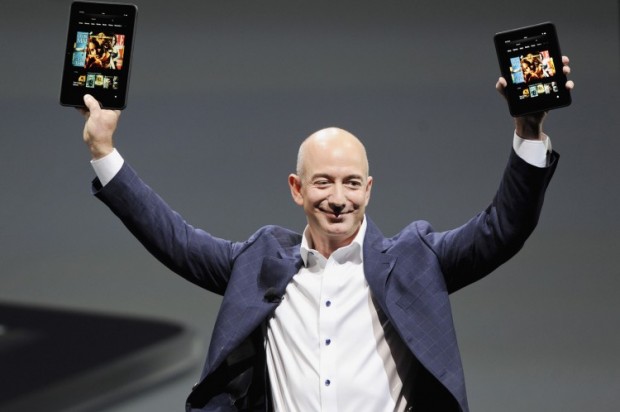
BezosJeff Bezos, billionaire founder of Amazon.com, just purchased the Washington Post newspaper for $250 million. The newspaper has struggled in recent years, as have nearly all US newspapers, with declining revenue and increasing losses. Last year the paper lost $54 million and this year they are on track to lose another $100 million. Some are asking if Bezos can do for journalism what he did for retail sales. With a personal fortune of nearly $25 billion Bezos’ “investment” in the WaPo equals just one percent of his wealth — hardly a huge financial risk if he is unable to turn things around.

But perhaps turning things around is not his first priority. Some have speculated that the decision to purchase the paper was less about adding to his financial stature and more about advancing his own political agenda. Still others suggest that is may be about enhancing his image and legacy. If we’ve learned anything from the history of the rich and powerful it is that advancing age often brings with it a strong desire to do something that will be seen as having a lasting impact…something that will endure long after they are gone. Thanks to legendary PR practitioner “Poison” Ivy Lee, the great robber baron John D. Rockefeller is as well-known today for his philanthropy as for the tragic massacre at Ludlow.

Bezos purchased the paper from the Graham family who are highly esteemed Washington D.C. insiders. Amazon is headquartered in Seattle, or as Bezos calls it, the “other Washington.” The cultural clash between East/West coast and Old/New money could make this relationship a challenge. But Amazon and Bezos are not unfamiliar with the D.C. way of life. Last year they spent a reported $2.5 million lobbying the executive and legislative branches of government.

In a letter to Washington Post employees, Bezos wrote,

There will, of course, be change at The Post over the coming years. That’s essential and would have happened with or without new ownership. The Internet is transforming almost every element of the news business: shortening news cycles, eroding long-reliable revenue sources, and enabling new kinds of competition, some of which bear little or no news-gathering costs. There is no map, and charting a path ahead will not be easy. We will need to invent, which means we will need to experiment.

It will be interesting to see what kinds of experiments Bezos has in mind. Will every new Kindle sold come with a Washington Post subscription? Will news and retail marketing somehow find a symbiotic relationship where consumers of both news and commercial products move freely between both commodities? Or will the Washington Post simply be the legacy medium that Bezos uses to burnish his personal legacy? As Bob Schieffer said on Face the Nation, “We can get along without newspapers, but we can’t get along without what newspapers do.” Let’s hope we don’t have to witness the truth of that statement.

Ellsberg, Manning and Snowden: The Saga Continues

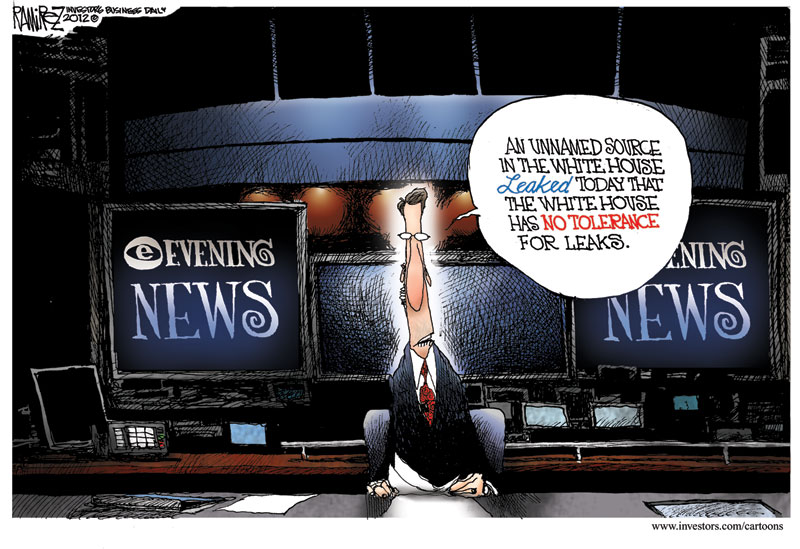
In this short list of famous leakers–Ellsberg, Manning and Snowden–each one has had to walk a delicate tightrope between  two, potentially,  very noble causes. On one hand is the exposure of wrong doing. On the other is the rule of law and the legal process designed to protect us from systemic corruption. Just like Nik Wallenda’s traverse of the Grand Canyon gorge, high-profile leakers or whistleblowers take great risks when they choose their course of action. And like a tight-rope walker, they are all alone once they leave the safety of terra firma.

The press and the government exist in a dynamic state of symbiosis: a tension between the public’s right to know, the government’s responsibility to provide security, and an individual’s right to some expectation of privacy. Individuals and organizations keep secrets because it gives them an advantage, or because it prevents others from knowing about, or exploiting, a weakness. When powerful individuals and entities (corporations, governmental agencies, organized groups) use their power for wrong…in ways that break ethical, moral, or legal rules and regulations, secrecy protects them from being outed and punished.

Enter the press. Journalists have long accepted the responsibility of shining a light into dark corners. Their job is to uncover and expose wrong-doing so that public pressure, or the law, can step in to correct the wrong. But journalists need help uncovering secrets. They often need someone on the inside, someone who has access to privately held information, who is willing to give that information to the journalist. Sometimes it is simply verbal information about where the investigative journalists should look, and what they should look for. Other times it involves documents or data that the insider gives to the journalists. The insider has the access, and the journalists has the investigative skills to collect and report on the facts that are relevant to the issue.

Daniel Ellsberg, “the most dangerous man in America“, became famous for releasing documents to the New York Times about the US Government’s failing policy in Vietnam. Public sentiment was already turning against the war when the Pentagon Papers threw gasoline on the fire. Ellsberg was prosecuted under the Espionage Act of 1917 but charges were later dismissed.

Bradley Manning, private first class in the US Army, was arrested for using his security clearance to download classified documents which he then released to WikiLeaks. Manning pleaded guilty to 10 of 22 charges earlier this year and his trial began just a few weeks ago. If convicted Manning could face life in prison.

Edward Snowden was an employee of the military contractor Booz Allen Hamilton when he downloaded, and leaked to the press, documents about the National Security Agency‘s surveillance program. According to the Guardian newspaper, “Snowden will go down in history as one of America’s most consequential whistleblowers, alongside Daniel Ellsberg and Bradley Manning.”  According to a recent poll by PEW Research, the public is split on whether the NSA leak serves the public interest. However, the public favors, by a significant margin, the criminal prosecution of Snowden. But age is a factor. Younger respondents are more likely to believe that the leak serves the public interest and are less likely to support prosecution.

The latest reports indicate that Snowden is making his way, with the help of Wikileaks legal team, to Ecuador where he will seek political asylum. The South China Morning Post is also reporting that Snowden took the job with Booz Allen Hamilton with the intent of collecting evidence of NSA spying. If that report is true, Snowden’s moral justification for his actions may be fatally damaged.

Resources for additional research:

From Wikileaks to Strongbox

leaksRecent concerns about government prosecution of “leakers” and journalists has reignited a conversation about the limits of 1st Amendment protection for journalists and sources. Journalists sometimes become recipients of very sensitive information that may have implications for national security. At the same time they feel an obligation to protect the identity of whistle-blowers to ensure the free flow of important information. Some are calling for a federal “shield law” that will provide additional protection for sources, and for the journalists who report on the information they provide.

This dilemma involves very difficult situations where the intersection of national security concerns and “the public’s right to know” appear to be in conflict. Recent news out of Washington has been focused on the government going after the phone records of AP reporters and investigating Fox News reporter James Rosen. Many have viewed these actions as prosecution of the act of journalism which will have a chilling effect on future whistle blowers and other sources. While it can be argued that much of this hand-wringing is really politically motivated, there are plenty of examples of attempts to control information by both Republican and Democratic administrations.

In February of 2013 Pvt. Bradley Manning plead guilty to 10 of 22 charges for his part in the release of what has been called the “biggest leak of classified material in U.S. history.” Manning uploaded the classified documents from the Iraq war to Wikileaks after failing to get a response from the New York Times or the Washington Post. (See earlier blog post on Manning and Wikileaks)

What Wikileaks founder Julian Assange had attempted to do as a “radical transparency activist” is now going mainstream with the release of Strongbox. The New Yorker magazine has launched Strongbox as a way to provide a greater level of security and anonymity to sources who may fear reprisal if their identity were to be revealed. According to the Strongbox website,

Strongbox is designed to be accessed only through a “hidden service” on the Tor anonymity network, which is set up to conceal both your online and physical location from us and to offer full end-to-end encryption for your communications with us. This provides a higher level of security and anonymity in your communication with us than afforded by standard e-mail or unencrypted Web forms.

At least one problem remains. Typically a journalist needs to independently verify the veracity of information received from a source, and this level of anonymity may make that difficult if not impossible. But it is one more tool in the arsenal of investigative journalists who are committed to rooting out corruption and wrong-doing at the highest levels of government and industry.

Video resources:

All the President’s Men

All the President’s Men Revisited

We Steal Secrets (trailer)

AP Phone Records and the 1st Amendment

DOJ_APThe Department of Justice (DOJ) recently subpoenaed the telephone records of approximately 100 reporters working for the Associated Press (AP) in an effort to find out who, within the current administration, leaked national security information to the AP. In case you haven’t noticed, this is a big deal for journalists everywhere. Journalists take very seriously their role in serving as a check and balance to the power of government…and for government to curtail journalists’ power is a very serious matter. On the other hand, when national security is at stake, it makes sense that government be able to restrict the flow of information that could jeopardize the safety of those who protect us from those who want to do us harm.

Even without considering the political implications this is complicated and this little blog post cannot begin to get to the bottom of the story. However, it is an important issue that you should pay attention to assuming you want to be an informed citizen and an informed consumer of news. Remember, the AP is an important institution that serves our democratic ideal by helping us, the voters, understand the issues at hand. If the AP and similar non-partisan news institutions are not permitted to do their job, we all suffer and we become vulnerable to political tyrants who will stop at nothing to advance their agendas.

Gary Pruitt, speaking for the AP, claims that the actions taken by the current administration and the DOJ are unconstitutional and will result in harm to journalism as sources and whistle-blowers are already beginning to withhold information for fear of governmental reprisal. This intimidation of journalists by the DOJ on behalf of the current administration should be cause for concern for those who believe in the power of the press to reign in the abuse of political power. Remember, the press is supposed to be a watch dog on the prowl to protect the citizenry; not the lap dog of those in power.

The Steubenville Fallout Continues

The tragic events that took place in Steubenville, Ohio last August are still sending shockwaves through the media. The horrific event perpetrated by two 16-year-old males, while others stood by, resulted in their conviction on charges of rape and child pornography. The two boys might have gotten away with the crime had they not incriminated themselves with pictures, messages and videos shared via social media. Additional arrests of two juvenile girls last weeks resulted when they tweeted threats directed at the victim.

Social media also played a powerful role by focusing public attention on the events after local authorities were perceived as not aggressively pursuing the case. The hactivist group Anonymous got involved and threatened to “out” the personal information of all of those even remotely involved with the incident. Making personal information public, also known as “doxing” is a common tactic used by Anonymous to embarras those who are suspected of wrong-doing.

But the most recent outrage over the Steubenville case is being leveled at the cable news outlet CNN. Anchor Candy Crowley and reporter Poppy Harlow, in reporting the trial and verdict, were perceived as displaying more empathy for the young rapists than the victim. A petition demanding an apology already has nearly 300,000 signatures. Here’s the video so you can decide for yourself.

[youtube=http://youtu.be/MvUdyNko8LQ]

Clearly there have been several lives ruined by the actions, and inactions, of a great many people. While the two rapists deserve the brunt of the blame and the punishment, there’s plenty of blame to go around: for friends and family members who were passive when they should have been proactive; for the local community and high school that allowed teens to party with alcohol; for an absent father who admitted that he, “wasn’t there for [his] son”; and for the sex-obsessed culture that devalues women and fuels misogynistic behavior by teen males.

And here’s something to consider. If the party that August night resembled something that the teens might have seen on Jersey Shore or Buckwild, does MTV share in the blame?

Zero Dark Thirty Under Attack

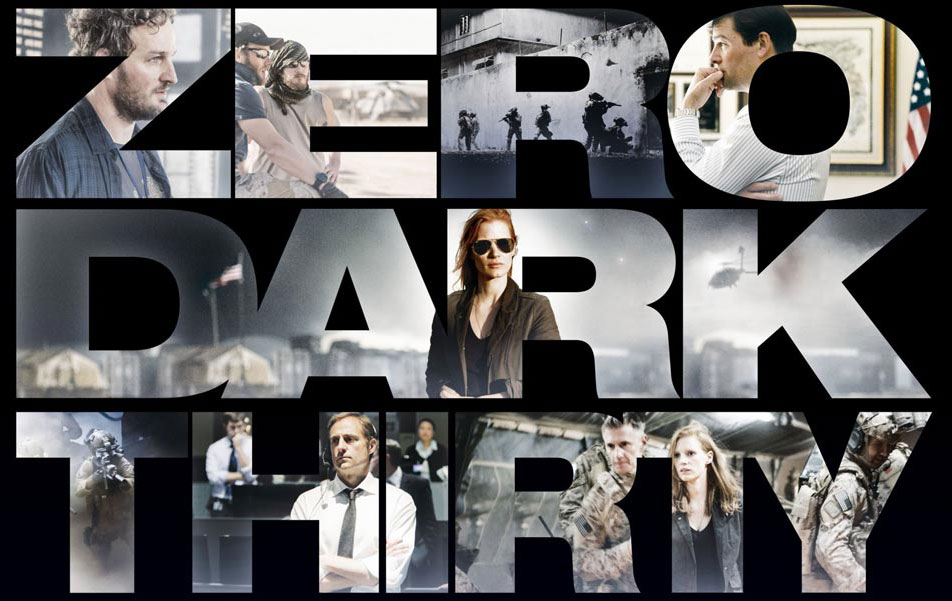
zero-dark-thirty1The Hollywood film Zero Dark Thirty, about the hunt for and killing of Osama bin Laden, is being criticized by some in the Hollywood film community because of its portrayal of “enhanced interrogation”, a euphemism for torture. According to Hollywood veterans, and liberal activists, Ed Asner and Martin Sheen (you may know him as the father of Charlie Sheen), Zero Dark Thirty is not worthy of accolades and honors because it suggests that torture played a role in the elimination of bin Laden.

First a little background. The film is directed by Kathryn Bigelow who also directed The Hurt Locker, winner of six Academy Awards. Controversy arose early on when the film’s producers and writers were accused of receiving access to classified documents. Opponents of President Obama suspected that the film would be released just before the 2012 elections, with the goal of boosting the President’s reelection efforts. However, the film was not finished in time for the elections and went into wide release this past weekend to critical acclaim. The film has received five Academy Award nominations, including Best Picture, and five Golden Globe nominations resulting in a Best Actress win for Jessica Chastain. It also topped the weekend box office taking in approximately $24 million.

In defense of the film’s portrayal of torture, Sony pictures issued a statement saying, “To not include that part of history would have been irresponsible and inaccurate.” However, this movie is a fictional account based on real events…not a documentary. I’m not sure that responsibility and accuracy were as essential as Sony would like us to believe.

In criticizing the film, one Hollywood insider said, “You can’t separate artistry from morality.” While that statement is open to debate, it is interesting to note that moral objections to content found in Hollywood movies has been a battle waged since the turn of the previous century. For most of that time Hollywood’s collective response has been, “we’re artists…don’t impose your values on our creation.” “If you don’t like it, don’t watch it.” And the always-predictable argument, “It’s only a movie…people can distinguish between reality and what they see on the screen.” Now that Hollywood activists don’t care for the tone of the objectionable content the shoe appears to be on the other foot. They’ll need to tread lightly, lest they appear overly hypocritical as they press their case for moral superiority.

Al Gore Sells Out?

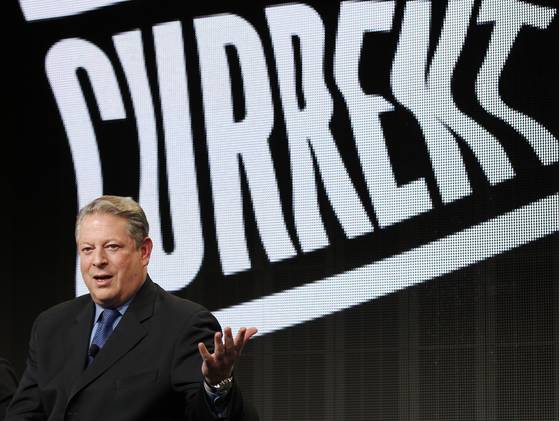
gore_currentIn what is reported to be a $500 million deal, Current TV is being sold to Al Jazeera Media Network. With headquarter located in Qatar, Al Jazeera is a global news network with an Arab point-of-view and funding from the government of Qatar. Since its debut in the mid 1990s, the network has been controversial and that controversy only increased after 9/11 and the wars in Afghanistan and Iraq. Frequently giving a voice to “terrorist”  organizations (as defined by the US government), Al Jazeera continued to expand and launched an English-language channel in 2006.

By acquiring Current TV, Al Jazeera gains access to approximately 40 million cable households…greatly expanding their reach in the US market. Current TV has struggled for viewers so 40 million potential TVHHs may not be as impressive as it first sounds. And ratings history suggests that global news (from any perspective) is a difficult product to sell to an American audience. If the new network will be able to gain any traction it will likely be at the expense of left-leaning TV news networks such as MSNBC and CNN and other international news channels such as BBC World News.

One of the founders of Current TV is former VP Al Gore. Also known for his award-winning environmental documentary An Inconvenient Truth, Gore stands to gain about $100 million from the sale of Current TV. Gore will remain on the board of the new network, tentatively titled Al Jazeera America, and will have a role in shaping its identity. Considering that Al Jazeera is financed largely by petroleum revenue, and that Al Gore is known for his outspoken views on global climate change, some have criticized Gore’s profiting from an industry that is accused of being the greatest contributor to CO2 emissions. Current TV is reported to have rebuffed an offer to buy from conservative pundit Glenn Beck on ideological grounds. According to the Wall Street Journal, “Glenn Beck’s The Blaze approached Current about buying the channel last year, but was told that ‘the legacy of who the network goes to is important to us and we are sensitive to networks not aligned with our point of view,’ according to a person familiar with the negotiations.”  But legacy was not enough of an issue, apparently, to turn down Al Jazeera’s money. As Al Gore himself once said, quoting Upton Sinclair, “It’s difficult to get a man to understand something if his salary depends upon his not understanding it.”

css.php